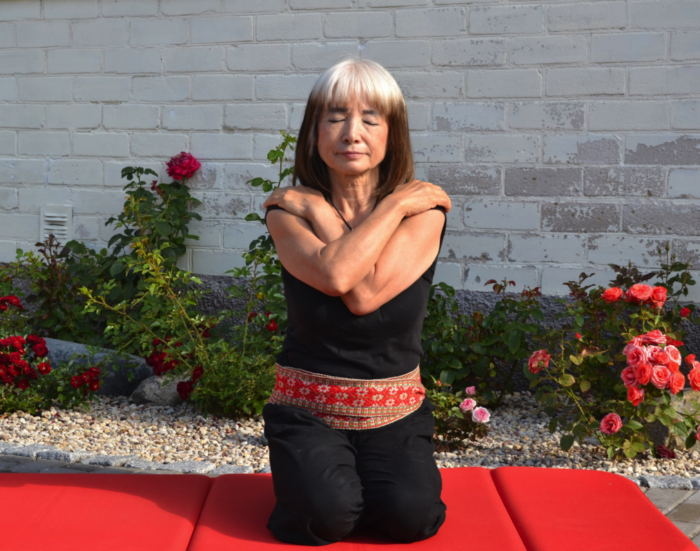
What is Shindo and how does it help your body?
The Shindo® massage method is a healing system developed nearly twenty-five years ago with roots in Eastern traditions, particularly those of ancient Japan. It was created by Sensei (teacher) Kazuko Kuratomi. Shindo® is a comprehensive therapeutic method that uses stretching and breathing exercises, along with massage techniques, to influence the 12 energy meridians running through the human body.
Shindo takes a holistic view of the person. Each organ and energy channel has specific functions to fulfil. Various states of imbalance (stress, physical and emotional tension) disrupt your natural equilibrium. Shindo techniques can bring your body and mind into balance by releasing the physical and emotional tension that has accumulated within them. Shindo balances the body’s energies.
The Shindo® method is a registered trademark belonging to Sensei (teacher) Kazuko Kuratomi (Japan). You can find Kazuko Kuratomi’s website here.
How did Shindo® begin?
Shindo® originated in Japan in the early 80s, when Sensei Kazuko Kuratomi was looking for help treating her daughter’s asthma and allergy. After seeking help and answers from doctors without success, she decided to look for a solution in her childhood experiences. There, she found touch and warmth. At a conference on Eastern traditions, she came across a book about foot massage and its significance for people. Kuratomi tried these techniques on her daughter every day, and after a while her daughter began to recover, eventually making a full recovery. Over time, Shindo has developed into a broad and versatile yet simple method of self-help and self-care for people of all ages and fitness levels. The method is continually evolving and being refined, and it is not associated with any philosophical or religious movement. Its creator, Sensei Kazuko Kuratomi, continues to learn and develop herself, encouraging an openness to learning new things. This also brings new knowledge, forms and possibilities to the method.
Shindo®’s view of the person
The word Shindo means guidance from the heart: through Shindo, you find your way into your inner world. The Shindo method (kata in Japanese), with its approach to exercises and massage, helps you open up, relax and see yourself more clearly. The encouragement to do this comes from the support that is an essential part of Shindo: approaching and touching another person with respect. This creates a two-way interaction in which the instructor and the person being guided are equals. Performing the various exercises gives you greater courage and joy in life, helping you embrace life in all its richness.
Shindo® and Jomon
SHINDO has its roots in Jomon culture. Shindo’s development draws on wisdom thousands of years old, reaching back to the so-called Jomon period (810000 BC), the forgotten roots of Japanese culture. It was a time of peace, when people lived in harmony both with one another and with the natural world
around them. This relationship between people and nature in Jomon culture also lies at the roots of Shindo. The Jomon period was a flourishing time for art, especially pottery. Clay vessels from this period have a simple cylindrical shape, with decorative spiral patterns made by pressing twisted cord into their upper sections. The vertical inner surface, covered in a geometric pattern with no beginning or end, represents the Jomon vision of a world expanding upwards, as well as a belief in continuity between nature and people. Through its roots in Jomon culture, Shindo shares this ancient belief. Meridian stretching exercises, in which you twist your body while holding your toes with your fingers, express the endless pattern imprinted by Jomon twisted cord, uniting the inner and outer worlds into a single whole. The spiral movements in foot exercises also resemble the twisting of the vertical threads (the warp) in Jomon textiles.
Article on Shindo stretching exercises in TERVIS+ magazine (Oct. 2009)
“Stretch your way to freedom and alertness”
Heli Randoja, Shindo teacher
Article by Kai Siidirätsep
Simple, effective Shindo stretching exercises relax your body and mind, creating a bridge between your heart and the world.
Your thoughts and feelings, joys and fears are reflected in your body. The body is the home of the soul. A tense, anxious body houses a constrained, joyless spirit, where creativity and love struggle to thrive. Yet everyone longs to be full of vitality, joy and love. To feel safe and be happy. All too often, you look for these good things somewhere far away. Outside yourself. And entirely in vain, because the source of vitality and love lies within you. When the burdens of everyday life—too much work, illness, tangled relationships—make you lose touch with that inner source, you need to find it again. This takes effort. It is like searching for a spring to supply a well: first, you have to remove the soil, sand and stones, and only then do you reach the water.
Stretch yourself free
Shindo stretching exercises are safe and simple. You can do them in a group under a teacher’s guidance or on your own at home. As you stretch, you focus on the areas of your body through which the 12 main energy meridians run. Like other Eastern traditions, Shindo is based on the idea that life energy flows through energy channels, or meridians, within you. When this energy flows freely, you are healthy and able to function, while blockages in its flow lead to imbalance and health problems. You are a whole person, and each organ has its own role to play in the energy flow system through the meridians. Shindo stretching exercises open the energy meridians and help keep them open. Because each organ and each area of the body is associated with different emotions, stretching exercises can also influence these emotions effectively.
Breathe yourself awake
Breathing is an important part of the process. Deep, rhythmic exhalations through your mouth enhance the relaxing, tension-relieving effects of the stretches. This makes the movements more effective, as breathing helps release energy blockages while also helping you relax so your body does not tense up.
When doing Shindo stretches:
· find your body’s central axis before you begin stretching,
· breathe rhythmically from your abdomen, through your mouth, focusing mainly on the exhalation,
· hold the stretch for at least 6 deep breaths; preferably for 3-5 minutes; advanced practitioners can hold it for up to 10 min. Let the inhalation come naturally.
· tuck your chin toward your chest and relax your shoulders,
· stay focused and hold the position to allow external tension to release,
· focus on the painful area and allow the blockage to leave your body as you exhale,
· if you feel pain and/or tension while holding a stretch, massage the area: use gentle stroking movements with light pressure and/or tap lightly with a loosely clenched fist.
How and when should you practice?
Each exercise lists the areas governed by the energy meridian: personality traits, ways of acting and emotions. Neither too little nor too much of these is beneficial. They need to be in balance. This is precisely what stretching helps you achieve.
Lung–large intestine meridian stretch
· stand with your feet shoulder-width apart and your toes turned slightly inward
· place your hands behind your back and hook your thumbs together
· bend slowly and deeply forward from your hips
· raise your arms behind you
· keep your arms and legs straight.
Area of influence: sadness, worry, guilt, the desire to make the right decision, decision-making, finding your own stance, taking offense.
Liver–gallbladder meridian stretch
· sit on the floor with your legs as wide apart as possible
· bend toward your right leg
· grasp your big toe with your right hand, keeping your palm facing upward
· then reach your left arm over your head and grasp your 4th toe
· repeat on the other side
Area of influence: anger, resentment, courage, patience, pushing things through, perseverance, aggression, impulsiveness, self-centeredness.
Kidney–bladder meridian stretch
· sit on the floor with your legs straight and parallel in front of you
· bend forward, cross your left hand over your right and grasp your little toes
· keep your legs straight and your head resting on your knees
Area of influence: fear, timidity, insecurity, being startled, willpower
Heart–small intestine meridian stretch
· sit on the floor with the soles of your feet together
· clasp your hands around your toes with your fingers interlaced
· bend forward as far as possible
Area of influence: joy, love, hatred, enthusiasm, calmness, excitement
Pericardium–triple heater meridian
· sit on the floor with your legs and arms crossed
· rest your fingers on your knees
· bend forward as far as possible
· keep your buttocks on the floor
Areas of influence: inner balance, regulation of the hormonal and nervous systems, sexual energy
Stomach–spleen meridian stretch
· sit in a kneeling position on the floor
· sit on the floor between your feet and lower yourself onto your back
· extend your arms overhead
Note: you can also stretch one leg at a time
Areas of influence: skepticism, excessive emotionality, melancholy, harmony, intelligence, complaining.
Healing self-massage
When you hold a stretch for longer, you may notice tension and/or mild soreness in your body. Massage the area yourself! Use gentle strokes with light pressure!
Tap gently with a loosely clenched fist! This helps release tension that is beginning to loosen and seeking a way out.
What is shindo?
Heli Randoja, shindo teacher and practitioner, student of Sensei Kazuko Kuratomi
Shindo is a system of massage, stretching and relaxation exercises, making it a combined approach to treatment. It originated in Japan in the early 80s and was created by Sensei (teacher) Kazuko Kuratomi. Although it is a relatively young method, its roots lie in ancient Eastern traditions, particularly those of Japan. In keeping with Eastern tradition, shindo treats the person as a whole. Everyday life throws us off balance, and various health problems begin to trouble us. Shindo aims to free the body and mind of accumulated physical and emotional tension and bring them into balance. On a physical level, stretching exercises are effective in relieving musculoskeletal problems: muscle tension; back, shoulder girdle and neck problems such as stiffness, pain and restricted mobility; radiculitis and sciatica (except during the acute phase of these last two conditions); and joint problems. The method has no contraindications.
Like everything in life, shindo is constantly evolving and improving. It is also unaffiliated with any philosophical or religious movement. The word shindo means guiding the heart. In other words, through shindo we find our way to ourselves. Learning to listen to your heart and its message is central to shindo. This method helps you open up, relax and see yourself and your choices more clearly.
“Pain is a message from the heart. It stays within you and, if help does not come, manifests as illness.” Heli Randoja
Source: avantia.ee
Come for a workout! ArtGym