
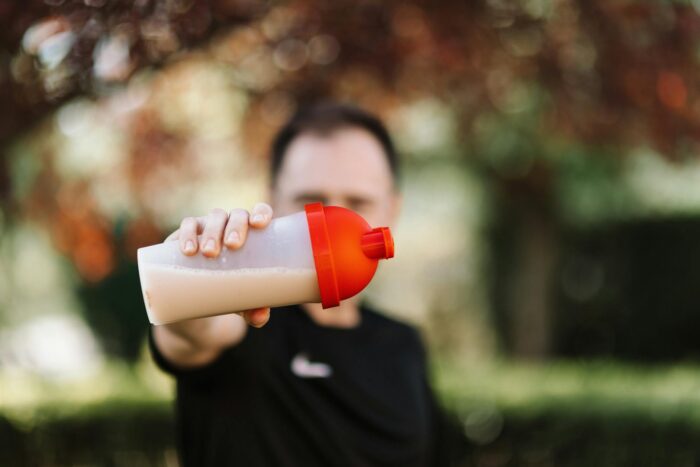
Whey protein isolate: why choose it?
Whey protein isolate is a good choice when you want to get protein quickly after a workout, without large amounts of fat, carbohydrates and lactose. It won’t work miracles or replace a proper meal, but at the right moment it can be a very practical aid for recovery.
Why does whey protein isolate matter at all?
After a hard strength workout, your muscles are tired and your body is looking for building material. It’s simple: if you don’t get enough protein over the day, recovery suffers and you may not get the full benefit of your training. This is where whey protein isolate comes in.
Regular food is always the foundation. Chicken, fish, eggs, quark, legumes and other protein-rich foods should come first on your menu. Powder is not a magic shortcut. It is, however, convenient when your workout ends late, you don’t feel like a big meal, or the day is so busy that getting enough protein tends to slip away.
Isolate differs from regular whey protein concentrate mainly in its degree of purification. During production, the whey proteins are separated from most of the fat, cholesterol and lactose. The result is a powder with a high protein content and fewer extras.
So what actually happens? During digestion, protein is broken down into amino acids. These enter the bloodstream, and the body uses them, among other things, to rebuild muscle tissue. What isolate is valued for is that it is a light, fast option, especially compared with a heavier or lactose-richer protein powder.
How does whey protein isolate work in the body?
Protein powder is absorbed quickly. That doesn’t mean everyone has to drink it right after the last set, stopwatch in hand. The body doesn’t work in such a rush. But if the workout was intense and your next proper meal is a long way off, a protein shake is an easy solution.
The advantage of isolate shows especially well in people for whom regular whey protein causes a heavy feeling, bloating or stomach discomfort. Because whey protein isolate usually contains less lactose, it can be friendlier to digestion. That doesn’t mean it suits everyone, but for many people the difference is noticeable.
- Whey protein isolate has the fastest absorption rate.
- Whey protein isolate contains minimal carbohydrates and fats.
- Whey protein isolate is easier to digest.
- Whey protein isolate has the best amino acid profile.
These points don’t mean concentrate is bad. It works very well for many people. The question is more about your goal and tolerance. If you want the purest, lightest protein supplement possible, isolate is the logical choice. If your digestion is strong and your daily menu is in order, a simpler protein powder can do the job too.
When should you choose whey protein isolate?
The most common moment is after a strength workout. You’ve done squats, presses, rows or a longer full-body workout, and you know your next meal is still a while away. In that case, a protein shake helps you quickly get the protein you need.
Another good situation is the morning or a workday when your eating ends up patchy. For some people it’s easier to mix powder with water or milk than to rush to put together a new meal. Honestly, convenience is exactly why many people use protein powder at all.
A third situation is a fat-loss phase. When calories are kept under control, every food choice matters more. Whey protein isolate gives you protein but adds little fat and few carbohydrates. That can make it easier to keep your menu on track.
That said, you don’t have to drink it only on workout days. If your daily protein intake falls short, isolate can suit a rest day too. Muscles recover even when you’re not at the gym.
Practical tips before you buy
First, look at the ingredients. A good isolate doesn’t need a long, muddled list of ingredients. The clearer the label, the easier it is to understand what you’re actually buying.
If your stomach is sensitive, start with a smaller amount and pay attention to how you feel. Even a purer protein powder may not suit everyone. Your digestion will let you know fairly quickly whether the choice is right.
Taste is also a practical matter, not a trivial detail. If you don’t like the powder, it ends up sitting in the cupboard. A more neutral flavor works well in porridge, a smoothie or yogurt. A sweeter one is convenient mixed with water.
FAQ: whey protein isolate
Does whey protein isolate build muscle?
Not on its own. Muscle growth needs training, enough food, sleep and consistency. Whey protein isolate helps you cover your protein intake, which supports recovery and muscle development.
Is isolate suitable for someone who is lactose sensitive?
For many people it suits better than regular whey protein because it contains less lactose. If your sensitivity is strong, it’s still worth reading the ingredients carefully and, if needed, choosing a lactose-free option.
Is whey protein isolate better than concentrate?
It depends on your goal. Isolate is purer, lighter and often more comfortable for digestion. Concentrate can be perfectly adequate if it sits well with your stomach and helps you reach your daily protein target.
Author: Turg.Fitness.ee
Source: WHO – healthy eating.
Learn more: HERE!
Come and train! ArtGym




