Young athlete health check: what to know
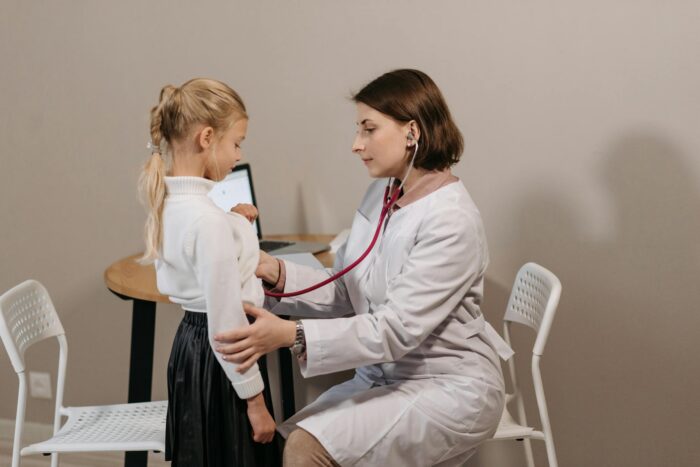
A young athlete health check is a simple examination that helps catch health risks before the training load grows too heavy. If a child or teenager trains regularly and competes, this is not just a form to fill in, but part of a safe sporting path.
Why is a young athlete health check necessary?
Youth sport has become more serious over the years. Training sessions are more frequent, there are more competitions, and the training load can grow faster than the body can keep up with. This is exactly where a health check has its place.
Since 1 April 2009, sports medicine health examinations for young athletes have been carried out under the prevention project “Health Check for Young Athletes for the Prevention of Sports-Related Health Risks”. The idea is clear: a possible danger should be spotted first, rather than waiting for pain, fainting, constant fatigue or recurring injuries.
The general aim is to ensure the health and safety of young athletes in both training and competition. This does not mean that every child is being searched for illness. Rather, the check looks at whether the training load is appropriate, whether recovery is sufficient, and whether there are signs that need a doctor’s attention.
Who is the young athlete health check for?
The target group of the young athlete health check is young people aged 9-19 who take part regularly in training groups at a sports club, sports school or school. The key threshold is the volume of training: 5 or more hours per week.
It pays to be careful here. 1 training hour = 60 minutes, and school physical education classes are not counted. If a young person does, for example, football, swimming, athletics, dance or general gym training, and the hours add up to 5 or more per week, a health check is already a very sensible step.
You can have your health checked by a sports physician free of charge if you meet these conditions.
- you are aged 9-19;
- you take part regularly in a training group at a sports club, sports school or school;
- you train 5 or more hours per week;
- remember that 1 training hour = 60 minutes;
- do not count school physical education classes toward your training hours.
How does a health check help a young athlete?
It is advisable to have a health check when starting training. The examination is then repeated, depending on the training load, either every following year or every two years, in line with the health examination guidelines. A simple truth: the greater the training load, the more important it is to know how the body is coping with it.
During the examination, general health can be assessed and, where necessary, physical fitness as well. This gives the parent, the coach and the young person a better picture. Is the training load appropriate? Is recovery in order? Are there signs of overload? These questions are especially important during growth spurts, when the body changes a lot in a short time.
The main aims of the project are to identify health risks in children and young people who play sports, where contraindications or restrictions apply to regularly doing high-intensity sport.
The aims of the health check are:
- identifying life-threatening and/or disabling conditions;
- detecting pre-illness and pre-injury conditions;
- identifying cardiovascular risk factors;
- preventing overload;
- assessing health status and, where necessary, physical fitness.
The young athlete health check in practice
In practice, everything starts with an honest assessment of the training load. If a young person says they train only a little, it is worth putting the sessions into a calendar together. Sometimes it turns out only then that, on top of the main training, there is also general physical preparation, competition weekends and independent exercises at home.
A parent’s role here is big. Fatigue, frequent illness, recurring pain, dizziness, heart palpitations or difficulty recovering from training are not things to simply endure through willpower. Frankly, with a young athlete it is wiser to ask early than to regret it later.
The participating institutions, i.e. the project website, were referenced separately in the original material, but that link is no longer available. The project is carried out in cooperation between the Estonian Health Insurance Fund and the Estonian Sports Medicine Federation.
FAQ
Is a health check necessary even if the child feels well?
Yes, because the point of the check is prevention. Many signs of overload or health risk may not be clearly visible in everyday life at first.
Do school physical education classes count toward the training load?
No, they do not. School physical education classes are not counted toward training hours, so the load from the sports club, sports school or training group has to be looked at separately.
How often should a young athlete go for a check?
A health check is advisable when starting training, and it should then be repeated, depending on the training load, either every following year or every two years.
Author: Tartu University Hospital
Come and train! ArtGym