Zumba: a dance workout for body and mood
Zumba® arrived in Estonia at a time when group training classes needed a fresh boost. It’s not just counting steps in front of a mirror, but a workout built on Latin American rhythms, where your heart rate goes up and your mood gets better.
Arctic Sport Club brought Zumba® classes to Tallinn as early as December. If regular aerobics felt dry or too strict, this class offered something different: movement, music and a chance to take yourself less seriously.
Why did Zumba get attention so quickly?
By then, over 500,000 people around the world were hooked on a workout style that started in Colombia. The reason is simple: Zumba® doesn’t ask whether you’ve danced before or whether you know all the steps. You walk into the room, listen to the rhythm and move with it.
That was exactly the big difference back then. Many group classes demanded precise technique and a fixed sequence of steps. Zumba® let you start more freely. If you got a step wrong, nothing happened. By the next song, you’d found the rhythm again.
Honestly, that is still one of the main reasons dance workouts suit people. Training doesn’t have to feel like an exam. Sometimes it’s better when the body gets to move before the head starts overthinking.
How does Zumba training work?
In the late 90s, ZUMBA® creator Beto Perez put together a dance-fitness style that was already gaining momentum around the world in 2001. The workout centers on Latin American rhythms and simple movements that repeat often enough during a song for you to pick them up.
A class might feature merengue, salsa, samba, flamenco, tango and reggaeton. They aren’t there just for show. Each rhythm gives the body different work: sometimes the hips move more, sometimes the legs, sometimes the shoulder girdle, sometimes the whole body.
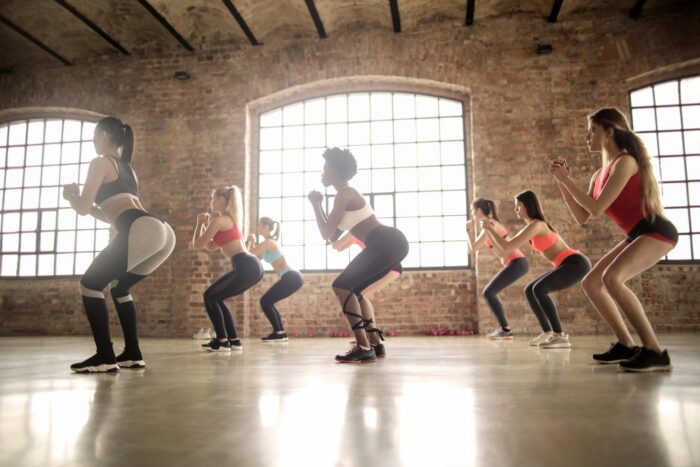
So what actually happens? You’re doing endurance training, but it’s hidden inside the dance. Your heart rate rises, your breathing speeds up and your body gets a solid training load. At the same time, you don’t have to count repetitions or keep checking the clock.
Do you need dance experience?
No. Participants in ZUMBA® workouts don’t need any previous dance experience. The steps are built so that people of different ages and fitness levels can move along. Self-consciousness is a poor companion here, because the point of the class isn’t performing.
The simple truth: if you can pick up the rhythm from the music and dare to try, you’ll get something out of the class. Not everyone has to look like they’re on stage. In a group workout, steady movement matters more than a perfect dance line.
What to keep in mind in a Zumba class?
For your first class, it’s worth wearing comfortable shoes. Dance training means turns, side steps and quick changes of direction, so footwear that is too slippery or too heavy will make life difficult. Wear clothes you’re not afraid to sweat in.
At the beginning, don’t try to do every movement perfectly. Watch the instructor’s general direction: is the movement going forward, back, right or left? Once you have that, the arms and the small details come later.
ZUMBA® is not ordinary dance aerobics. It’s more a workout for the soul and body, as the original announcement promised. For some people it works precisely because the class doesn’t feel like a dry obligation. Others enjoy the music. And for a third, it’s simply a good reason to show up and move.
In Tallinn, you could take part in ZUMBA® workouts at Arctic Sport Club starting from December 19. The location was Ehitajete tee 114 B.
More information: Arctic Sport Club, Tel 65 12 400, email: info@arcticsport.ee.
FAQ: Zumba and your first classes
Is Zumba suitable for beginners?
Yes. A beginner doesn’t need to know all the steps right away. In your first class, it’s enough to move along and keep the tempo within your own abilities.
Is ZUMBA® more dance or more workout?
It’s both. The dance brings emotion and rhythm, the workout brings the training load. It was exactly this mix that made ZUMBA® so popular.
What should you do if you lose the steps?
Keep moving. Watch the instructor, find the rhythm again and join in on the next repetition. Nobody expects your first class to be flawless.
Author: Arctic Sport Club
Come and train! ArtGym