
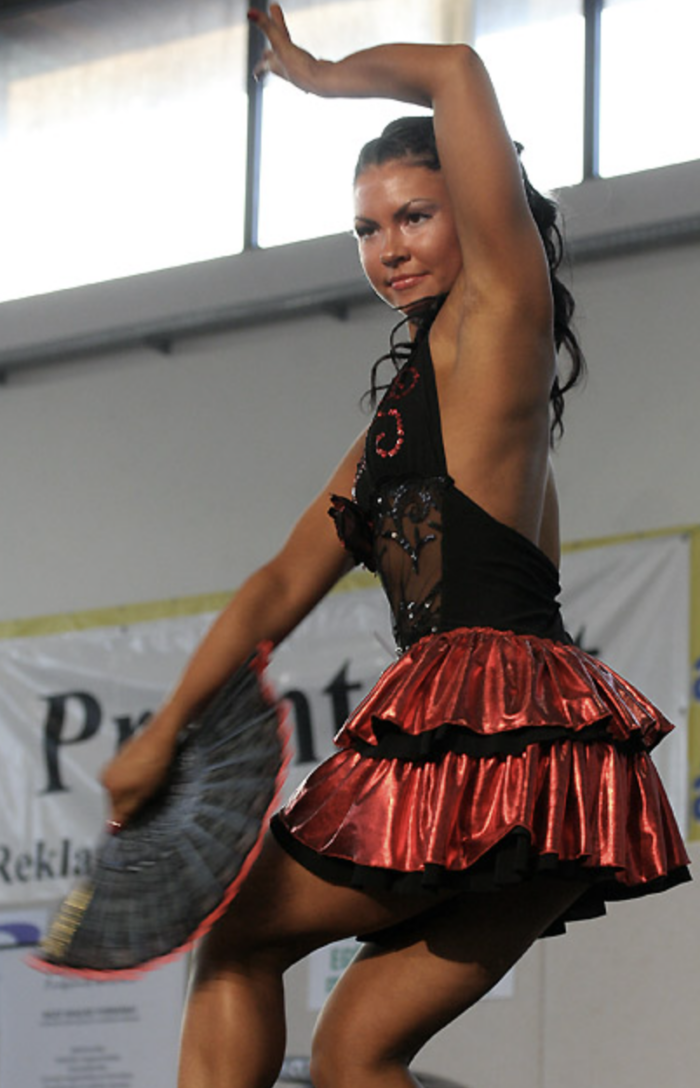
Liisa Otsus: fitness, work and goals
Liisa Otsus was 23 when she spoke to Fitness.ee about her journey into the gym, onto the stage and to a European championship title. This article brings her answers together in a clearer format: how she got into fitness, the role of her family and coaches, and why you cannot get far without goals.
Liisa Otsus and her path into fitness
When Liisa Otsus first started going to the gym, she had no plans to step onto a competition stage one day. In broad terms, she was building muscle in the gym; her specific competitive discipline was fitness in the -163cm category. She started going to the gym around 2005-2006, began training more seriously in 2006-2007 and entered her first competition in the autumn of 2007.
Before that, she had tried rhythmic gymnastics, athletics and a year or so of flamenco dancing. When she stopped dancing, she felt a simple need: she had to do something physical. Her mother was training at Reval Sport at the time, and Liisa went along with her, admittedly with some fairly strong preconceptions about whether women and muscles belonged together at all.
At first, she followed a gym programme put together by her father. It included a minimal selection of exercises for the main muscle groups, except for her legs, which she initially did not want to train. After all, legs were supposed to be slim. Over time, her body began to change, and so did her thinking: muscles did not spoil a physique; they could actually make it more beautiful.
The Kiivikas family played a major role in getting her into competition. Ott gradually dropped hints and persuaded her, and later Natalia provided very practical help in getting her to her first competitions.
How did Liisa Otsus train and prepare?
Liisa had two coaches. Her father, Indrek Otsus, handled her gym training and helped her get into competition shape. Natalia Nazarenko-Kiivikas provided essential help with her free routine, stage presence, costumes and bikinis. That division of responsibilities says a lot: fitness involves more than just gym training or appearance. On stage, conditioning, movement, performance and confidence all have to come together.
She said her greatest sporting moments always came when she exceeded expectations. The first strong sign came at her very first international competition: 3rd place at the 2007 Junior World Championships. That raised the bar. But the achievement she valued most was her recent European championship title at senior level.
So what really matters when getting into competition shape? According to Liisa, it takes effort. Preparation is easier, though, if you keep your body weight from getting out of control in the off-season. That does not mean dieting all year round. It means maintaining a sensible routine so that getting into competition shape does not involve starting from scratch.
She kept her supplement use modest. Creatine was the only supplement she took from time to time. Her everyday diet was much like the average person’s, but she followed the basics of nutrition and planned her own meals. When dieting, she reduced her calorie intake proportionally rather than overhauling her entire diet. She continued to eat a varied range of foods.
Goals, motivation and rest
It is a simple truth: you cannot get far without goals. Liisa was clear that her goals reflected where she wanted to go: to the top of her sport. At the same time, she did not see fitness as work. It was an important hobby that she devoted herself to in pursuit of her goals, but work meant something else to her.
She did not want her whole life to revolve around the gym. Spending all day there can make even an enjoyable hobby feel tedious. Balance truly mattered to her; it was more than a nice line to end an interview.
Her motivation came mainly from within. There are days when you feel less motivated, but they pass. After just a couple of days of inactivity, she would start to feel bad, and the urge to get moving would return. She also drew energy from other active people, major sporting events on television, such as the Olympic Games and World and European Championships, and, of course, her beloved family.
She found it easiest to unwind in nature. It calmed her and cleared her mind. She did not need a large group of people around her to relax. Being with the people who mattered most was enough. The same principle applied to training and dieting: taking a break and changing things up are part of keeping going, rather than a sign of weakness.
What would Liisa Otsus tell an athlete just starting out?
Her advice to a young athlete just starting out was very clear: be patient; things do not all happen overnight. She also recommended seeking help from a specialist in your sport—a coach. When you are starting from scratch, it is very difficult to judge everything correctly on your own, especially when you do not yet know what training load suits your body and what simply leaves you tired.
She did not see herself as the leading athlete in her sport in Estonia, despite her strong results. She noted that being the leader in Estonia would not be particularly difficult to handle, as the media attention is neither overwhelming nor disruptive to everyday life. She was fairly optimistic about the sport’s future: fitness was becoming increasingly popular in Estonia, and there were certainly new athletes coming through.
Physical education was her favourite subject throughout her 12 years at school. Longer-distance running suited her best; by her own account, she had little to offer in the sprints. She competed frequently in both ball games and athletics, and often demonstrated acrobatic exercises. Her memories were entirely positive.
When asked about her ideal physique, she was reluctant to name a single person. Instead, she has people she looks up to and draws inspiration from. In fitness, she admired Oksana Grishina, especially her mastery of the free routine. But when asked which part of her own body she was happiest with, her answer was brief: she has no favourite, so she must be happy with them all.
Talking about the photo shoot, she admitted that she generally avoids having her picture taken. Posing does not come naturally to her. Still, it is nice to look at the photos afterwards. Kaspar’s guidance made the experience enjoyable, and having someone else in the shoot made it easier.
Check out the latest photo gallery of Liisa, too!
FAQ
Which category did Liisa Otsus compete in?
She competed in the fitness -163cm category and also worked on developing her muscles in the gym.
Who were Liisa Otsus’s coaches?
Indrek Otsus guided her gym training and physique development. Natalia Nazarenko-Kiivikas helped with her free routine and stage appearance.
What advice did she give to a beginner athlete?
Be patient and seek help from a coach. She said that things do not happen overnight, and that professional support is very important when you are starting from scratch.
Author:Turg.Fitness.ee
Source: WHO – Physical activity.
Come and train! ArtGym




