Fat burners, part 1
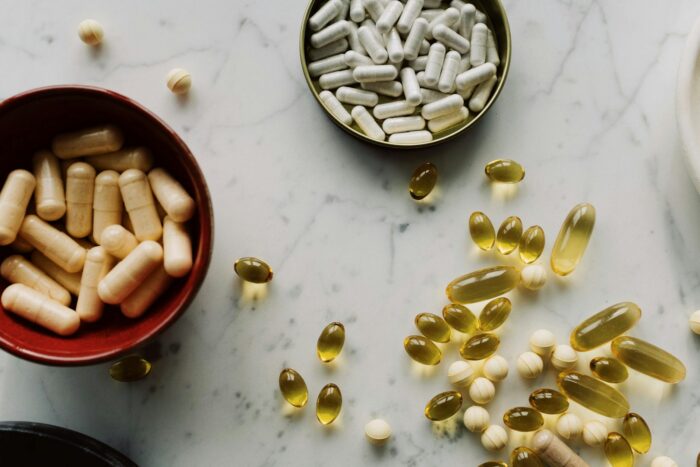
Fat burning and fat burners are hugely popular topics. Type fat burners or fatburners into Google.ee and look at what comes up. Unbelievable! And who is supposed to sift anything sensible out of that flood of information?!
Since I get asked about fat burners quite often, I decided to write about fat-burning supplements and foods. Maybe next time you’re standing there with a box of fat burners in your hand, you’ll know what to look for in the ingredients. And perhaps you’ll decide to review your nutrition altogether and discover that you’re lacking ordinary vitamins and minerals, which is what’s actually slowing down your metabolism. I’ll say up front that fat burners work mainly only together with healthy eating and training. If the goal is a long-term result, “miracle pills” alone aren’t enough… unfortunately or fortunately. Finding the right fat burner may not be an easy task either. Sometimes you have to try different ones to find the one that suits you.
A fat burner shouldn’t be used all year round. It’s advisable to use fat burners for a certain period to speed up your metabolism, together with training and healthy eating!
Are all vitamins fat burners?
If you ask which vitamin or mineral is a fat burner, the answer is: all of them! For the body to function normally, it needs to get all the necessary vitamins and minerals. A shortage of anything slows down processes in the body, because you aren’t giving it enough of the necessary “fuel”. The body switches itself to a conservation mode so that it doesn’t use up its already scarce reserves completely by running at full speed. And it really is the case that if you’re lacking something, your metabolism is likely to slow down. So the first step if you want to speed up your metabolism is to check whether you’re getting everything you need from ordinary food.
I put together a short summary of an article published in the magazine Muscle & Fitness. It covered the most important vitamins, minerals and fat burners. I added the recommended daily amounts for women and their sources, which come from the www.toitumine.ee website. For athletes and men, these amounts are higher. In this article I use the recommended amounts set by the National Institute for Health Development. I’m also including a table from the training magazine showing how to use these same supplements as fat burners by temporarily increasing the amounts.
Muscle Fitness magazine readers’ favorite fat-burning vitamins and minerals
Vitamin C
According to researchers at the University of Arizona, vitamin C improves the body’s ability to burn fat. The study looked at 2 groups of people. The first group was given a placebo during 4 weeks of training and the second was given vitamin C. The group given vitamin C over the 4 weeks burned 11% more fat.
The minimum daily amount we should get from ordinary food is 55-75mg. Sources: fruit and vegetables, berries, juice – sea buckthorn, rose hips, blackcurrants, gooseberries, strawberries, bell pepper, rutabaga, broccoli, tomato, cabbage, potato, citrus fruits, kiwi
Carnitine
Carnitine has various functional roles in our body, but one of them is to take part in transporting fats into the mitochondria of cells, where they are used to produce energy. So carnitine burns fat and reduces the feeling of fatigue during training.
The main sources of carnitine are meat and dairy products.
Calcium
We know calcium mainly as a mineral that’s good for the bones, but it also plays an important role in relation to the fat in our body. Sufficient calcium reduces the absorption of fat in the digestive tract.
The recommended daily amount is 800-900mg. Sources: milk and other dairy products, fish, dark green plant parts.
Zinc
If we don’t get enough zinc from our food, it interferes with the work of the thyroid gland, which slows down metabolism and makes it harder to get rid of body fat. A University of Massachusetts study found that participants on a low-zinc diet had a significantly slower metabolism.
The average recommended daily amount of zinc is 7-9mg. Sources: seafood, meat, whole grain products, eggs, legumes, liver, seeds, sprouts
Selenium
Like zinc, selenium affects the production of thyroid hormones. Too little selenium in the diet promotes an overactive thyroid or low thyroid hormone levels.
The daily amount of selenium for women is on average 40 mg. Sources: protein-rich animal foods (meat, eggs), fish, mushrooms and whole grain products
Above were the vitamins and minerals that, according to the magazine, influence fat burning. To these we can add 2 more of the most famous fat burners: green tea extract and caffeine.
Green tea extract
Green tea extract (like caffeine) is found in most fat burners. Green tea contains EGCG compounds, which are the tea’s main fat-burning component.
Caffeine
Caffeine binds to fat cells, helping to release fat from the cells and preventing it from being stored. Caffeine also supports fat burning while you train.
For comparison, here is a table of the daily amounts of supplements when they are used as short-term fat burners.
Supplement – – – – – Dose
Vitamin C – – – – – – 500 mg with breakfast
Carnitine – – – – – – – 1000 mg in the morning, before training and in the evening
Selenium – – – – – – – – – 200 mg with breakfast
Calcium – – – – – – – 1000 mg with breakfast
Zinc – – – – – – – – – – 30 mg before going to bed
Green tea extract – 500 mg before breakfast, before training and before dinner
Caffeine – – – – – – – – 100 mg with breakfast and 1-2 hours before training
These amounts are considerably higher than what you get daily from an average diet.
So, to activate your metabolism, you first need to find out whether you get enough vitamins and minerals from your regular food. In the next article, I will introduce other fat burners.
Author: Egle Eller-Nabi
Come and train! ArtGym