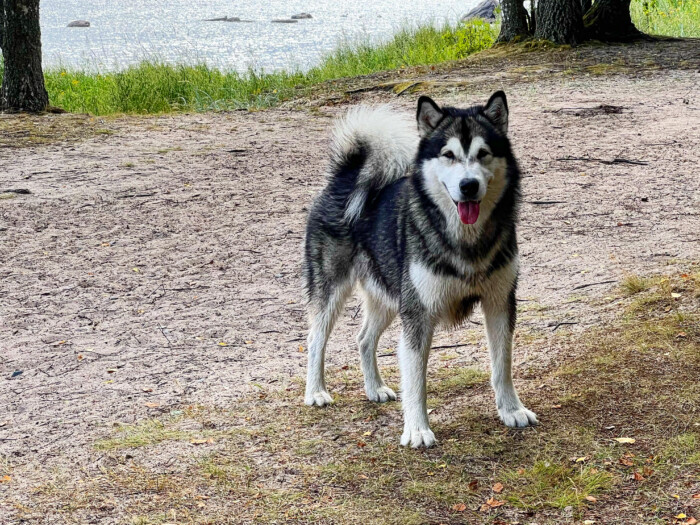
Dogs help you move more every day
Dogs get you out the door even when the couch seems like a much better plan. It doesn’t have to be a sporting project: regular walks, play and a small routine are enough to add more movement to your day.
Why do dogs get us moving?
An Estonian autumn can be wet, the winter dark and the spring windy. A dog doesn’t much care. When it needs to go out, you put your jacket on and go. It’s exactly this simple obligation that often makes a dog owner’s activity more consistent than some fancy training plan.
A dog doesn’t replace the gym or well-planned training, but it helps bring back into your day those minutes of movement that would otherwise disappear. A short morning loop, a quick lunchtime round or a longer evening walk tells your body that the day won’t be spent only sitting.
So what actually happens? First, moving becomes ordinary. You don’t have to talk yourself into it every single time. Leash, shoes, keys and out. Some days the pace is calm. Some days you pick up the speed, because the dog has more energy than you do.
This is especially valuable for people who work at a computer or get around by car between home, work and the shop. A dog interrupts long sitting in a pretty honest way. It doesn’t count steps, but its needs help you collect them.
How do dogs help increase your activity?
The easiest place to start is a daily walk. It doesn’t have to be a long hike. If you’re in a rush in the morning, take a shorter loop. In the evening you can go at a calmer pace and take a longer route. What matters is consistency, not one heroic walk a week.
If your dog is young, healthy and energetic, it may also suit as a jogging or hiking companion. Still, be sensible here. Not all dogs enjoy running, and not all breeds tolerate hot summer weather equally well. Start short, watch how your dog is doing and don’t build your training around your own ambition alone.
Play is another good option. Fetch, hide-and-seek, a gentle game of tug or obedience exercises get both the dog and the owner moving. On top of the physical side, the dog also gets mental work. A tired dog doesn’t only mean lots of kilometers run; often it’s concentration that wears them out.
A good trick is to tie moving with your dog to the daily schedule you already have. Morning coffee before or after a loop. A short walk on your lunch break. In the evening, phone in your pocket and one calmer round. A simple truth: the less you have to decide, the more likely you are to move.
Dogs and a safe movement routine
A dog’s need for exercise depends on its age, health, breed and temperament. A puppy doesn’t need the same training load as an adult athletic dog. An older dog may want more sniffing and a calm pace rather than a long, fast walk. If your dog has a health problem, it’s worth discussing the training load with a vet.
The weather plays a role too. In winter, sidewalks can be slippery and salt is bad for a dog’s paws. In summer, avoid hot asphalt and bring water along, especially on a longer loop. The same logic applies to the owner: comfortable shoes, layered clothing and a visible reflector make moving easier.
If your goal is to improve your own fitness, don’t rely on the dog alone. Walks give you a good base, but for muscle and strength you need other kinds of movement as well.
The big plus of moving with a dog is that it doesn’t always feel like a workout. You go out because someone is waiting for it. On the way you notice the weather, your surroundings and how you feel. Honestly, that is sometimes exactly what the body and the mind need.
Practical tips for dog owners
- Pick at least one fixed walking time for every day, and don’t push it back at the first excuse.
- Keep the pace right for your dog. A walk is not a competition if the dog wants to sniff along the way.
- Once a week, take a longer loop somewhere new, for example a park, a forest trail or the seaside.
- Add play and simple exercises so that your dog gets to use its head as well as its body.
- Watch your dog’s tiredness, breathing and movement. If something seems wrong, reduce the training load.
A dog doesn’t have to be a coach to help its owner move better. Its influence comes from routine. A little every day. More on some days, less on others. Over time, it makes quite a big difference.
FAQ: dogs and daily exercise
Does walking a dog count as real exercise?
Yes, definitely. A relaxed walk isn’t the same as a hard workout, but it reduces sitting, improves your daily activity and helps build a movement habit.
How long should a walk with a dog be?
It depends on the dog. Some do well with several shorter loops, while others need longer activity. Consider your dog’s age, health, the weather and its energy level.
Are all dogs suitable as running partners?
No. Running has to suit the dog’s build, age and health. If you’re unsure, start with walking and ask a vet for advice if needed.
Illustrative image: Theodor Regent
Edited by: Arnold Tokko
Come and work out! ArtGym