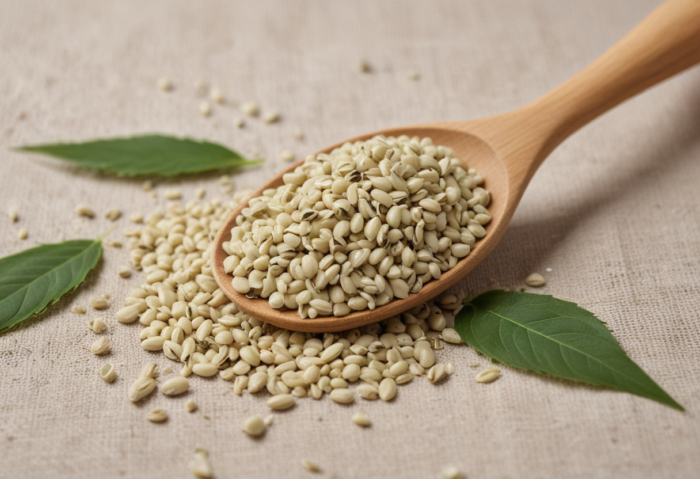
Most Estonians know just one thing about hemp seeds: they come from a plant whose name causes confusion. In fact, edible hemp seed is the fruit of an industrial variety that doesn’t cause intoxication and isn’t classed as a narcotic. It is, however, one of the most nutrient-dense plant foods you can buy.
In Estonia, growing seed hemp is permitted within the European Union, and the seeds themselves are a common product in health stores and larger grocery stores. Below, I go through why hemp seeds deserve a place in your kitchen cupboard, what exactly they contain and who they suit best.
Why are hemp seeds more than a trend?
Humans have cultivated hemp (Cannabis Sativa L.) for millennia. The world’s first Bible was printed on paper made from hemp, and the first Levi Strauss jeans were sewn from hemp fabric. Today, two industrial varieties are distinguished: fiber hemp, which is used to make fabric, paper and building materials, and seed hemp, which is grown specifically for its edible seeds.
What sets hemp seed apart from an ordinary trend is that it was a food long before the term “superfood” was even invented. The reason is simple: its composition is unusually dense and balanced. Few plant foods offer complete protein, good fatty acids and a solid range of minerals all at once.
Hemp seed nutrient composition per 100 g
Per 100 g, seed hemp seeds contain about 12 g of high-quality oil, nearly 50 g of protein and an average of 26 g of carbohydrates. They also provide 21 g of dietary fiber, which is a strong figure for a plant food. The polyunsaturated fatty acids omega-6 and omega-3 are present in hemp seed in a 3:1 ratio that is ideal for the human body — it is precisely this balance that makes hemp oil especially valued among nutrition scientists.
The amino acid profile is strong as well. Hemp seed contains all 21 known amino acids, including the 8 essential amino acids that the body cannot produce on its own. That is why it is called a complete protein source — which, among plant foods, is more the exception than the rule.
In addition to protein and fat, hemp seed contains chlorophyll, vitamins and minerals: potassium, magnesium, iron, calcium, phosphorus, sodium, manganese, zinc, copper, vitamins A, C, D and E, and the B vitamins B1, B2, B3, B5, B6 and B9. A single handful of seeds therefore covers a significant share of your daily mineral needs.
Edestin deserves a special mention. It is a globular protein that makes up 65% of the protein in hemp seeds and resembles the globulin found in human blood plasma. Edestin is easy to digest, is absorbed well and supports the work of the immune system, including the production of antibodies. This is one reason hemp protein is usually better tolerated than many other protein powders.
Who are hemp seeds especially good for?
The short answer: almost everyone. Hemp seed is gluten-free and allergy-free, which makes it suitable for people with celiac disease and for those whose food choices are otherwise limited. Its easy digestibility means that even people who struggle to digest ordinary protein powders can tolerate it.
For athletes, hemp seed is convenient because it delivers energy, protein and good fatty acids all at once. Polyunsaturated fatty acids go straight into energy metabolism, so they are less likely to settle into fat stores than saturated fats are. For vegetarians and vegans, the protein in hemp seed is one of the few plant sources of complete protein — here it is simply irreplaceable.
For anyone trying to lose weight, a hemp protein shake works well between meals — it fills you up, prevents hunger-driven snacking and provides high-quality protein without excess carbohydrates. In practice, that means one to two tablespoons of the powder stirred into kefir, yogurt, porridge or a smoothie. Whole seeds can be sprinkled over a salad, mixed into bread dough or added to muesli.
You can find hemp seeds here.
FAQ about hemp seeds
Does edible hemp seed cause intoxication?
No. The seed hemp grown for food is a strictly regulated variety in the European Union and contains only trace amounts of psychoactive THC. It can’t get you high — only full, and on proper food at that.
How much hemp seed should you eat per day?
A typical serving is 1–3 tablespoons (about 15–45 g) of whole seeds or a couple of spoonfuls of protein powder. It’s worth starting with a smaller amount and listening to your body — a food rich in dietary fiber takes your digestion a little while to get used to.
How should you store hemp seeds?
In a sealed jar in the refrigerator. Oil-rich seeds go rancid over time at room temperature and lose their flavor. In the cold, they stay fresh for several months.
Author: Veronika Otter
Source: Turg.Fitness.ee
Come and train! ArtGym