
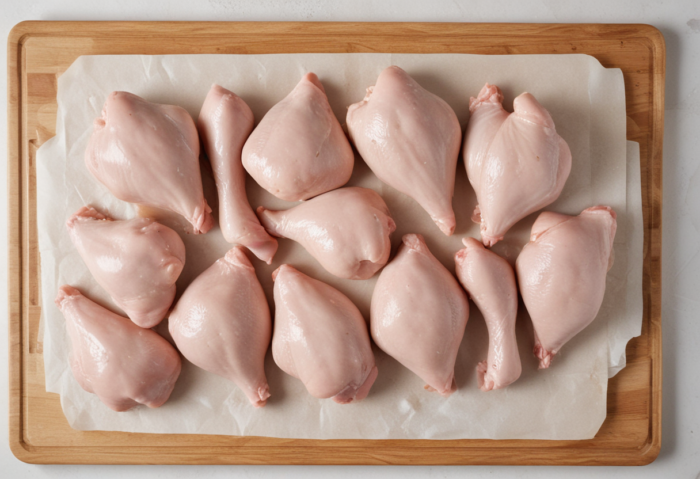
Chicken cuts: how to choose good-quality chicken
The cut of chicken you choose largely determines what ends up on your plate: more protein, more fat or simply a convenient piece for a quick dinner. Knowing what breast, thigh, drumstick and skin each offer makes it easier to choose something that suits both your training and your everyday diet.
Why do chicken cuts matter?
Chicken seems straightforward enough. You buy a pack, cook it and eat it. But not all parts of a chicken are the same. Some cuts are leaner, some are juicier, some provide more protein and others come with more fat, especially if you leave the skin on.
Poultry farming and egg production are enormous industries worldwide. People in most countries eat at least some kind of game bird or poultry, but chicken is undoubtedly the most common choice. It is inexpensive, easy to prepare and works in a wide variety of dishes.
When it comes to training, chicken’s main value is its high protein content and the fact that it provides complete protein. It is generally lower in fat than many cuts of red meat. The comparison given in the original is quite striking: chicken contains about 11 % fat, while beef typically contains 30-40%.
But there is a simple point to remember: chicken is not nutritionally uniform. The average values for a whole bird do not tell you what the thigh or breast on your plate provides. The ratio of protein to fat can vary considerably between cuts.
Chicken cuts and their nutritional value
If you want to eat leaner, the simplest rule is to remove the skin. Most of the fat in chicken is in the skin. Skinless chicken contains only 5% fat, making it a sensible choice if you are keeping calories in check or want a lighter meal.
White meat contains almost half as much fat as dark meat. That is why chicken breast is such a popular choice if you track your protein and fat intake. Breast meat also has the highest protein content, which has long made it a staple for bodybuilders.
Thighs and drumsticks are juicier. That does not make them a bad choice; they simply have a slightly different place in your diet. They work well as long as your daily fat intake stays within your plan. If you want a very lean meal, opt for skinless breast or remove any visible fat before eating.
Backs and drumsticks have the highest fat content, followed by thighs and breasts. This ranking can help you decide what to buy. If you buy a whole chicken, you can divide the cuts between several meals: use the leaner parts for a post-workout meal and the juicier cuts in a stew or an oven-baked dish.
Chicken provides other nutrients too. It contains small amounts of vitamin A and some B vitamins, including niacin and pantothenic acid. It also contains pyridoxine ( B6 ) and cobalamin ( B12 ). Notable minerals include potassium, sodium, phosphorus, zinc and iron. Calcium and magnesium are present in small amounts, along with traces of other minerals.
How should you prepare chicken?
Frankly, it is often the cooking method that lets good ingredients down. Chicken itself may be lean, but breading, plenty of oil and cream sauces quickly change the picture. If you want to keep your meals simple and suited to your training, the most reliable options are baking, grilling, stewing or pan-cooking with a little fat.
Fried chicken is not automatically off the menu, but you should not treat it as equivalent to an oven-baked skinless breast fillet. The extra fat and calories often come from added ingredients: oil, breading and sauce. By eating chicken meat and avoiding fried chicken, you can avoid some of the fat and calories associated with this bird.
There are so many chicken recipes and ways to eat it around the world that there is little point in listing them all. Whether you are a bodybuilder or simply thoughtful about your training, the basic approach stays the same: choose a suitable cut, remove the skin, keep added fat in check and do not cook the meat until it is dry. Dry chicken does not make anyone stronger.
How chicken cuts compare with other poultry
Turkey is a fairly similar choice to chicken. White turkey meat contains more protein than dark meat, while the fat content of both is roughly the same. As with chicken, two thirds of the fat in turkey is unsaturated, and its vitamin and mineral composition is similar to that of chicken.
Duck and goose are different kinds of poultry. Compared with leaner turkey and chicken, duck and goose meat contain more than four times as much fat and more than four times as many calories. That does not mean you should not eat them. It means they are better treated as a deliberate choice rather than an automatic source of lean protein.
So what actually happens if you choose a cut of chicken at random? Sometimes, nothing much. But if you eat chicken often, small differences start to matter. Breast, thigh, drumstick and skin affect how much protein and fat you get, and how easy it is to manage your daily diet.
FAQ
Which cut of chicken is the leanest?
Skinless breast is generally the leanest choice. It provides plenty of protein and less fat than darker cuts and those with the skin on.
Are thighs and drumsticks bad choices?
No. They are simply fattier and juicier. If the rest of your daily diet is balanced, thighs and drumsticks can easily be part of it.
Should you always remove chicken skin?
If your goal is to reduce fat and calories, then yes: removing the skin is an easy win. If you eat chicken less often and it fits into your diet, you do not need to worry about the skin every time.
The best chicken in Tallinn! ARMUDU
Author: M.M.
Source: WHO – physical activity.
Come and train! ArtGym




