Quit smoking and train better
Quit smoking if you want to breathe better in the gym, recover faster and get more out of your training. This isn’t a lecture. It’s an honest talk about a habit that can quietly hold back your strength, endurance and how you feel.
The original story is based on Michael Quon’s experience, published on bodybuilding.com. They trained and played sports while smoking for nearly 10 years. At some point a simple truth became clear: smoking a pack a day doesn’t go together with a body you expect progress from.
Why quit smoking, especially as someone who trains?
A cigarette outside the gym door seems like no big deal to some people. The workout is done, the body moved, you sweated. But what actually happens? You put a training load on your body and then immediately take back part of its ability to recover.
Smoking affects your breathing, endurance and how training feels. If you run out of air too early at the end of a set, the problem may not be just your fitness level. Habits tied to nicotine can also make it harder to finish the last repetitions properly.
The author described shortness of breath and poor endurance as the worst of it. Later, they realized progress could have been faster. Many people will recognize this: you make a plan, eat more or less right, push hard, but somewhere the brakes are on.
Quitting smoking won’t turn you into a new person overnight. It does, however, give your body a better chance to do what you expect from training: recover, grow, move and breathe.
How to actually make quitting smoking work
Quitting starts with a reason. It doesn’t have to be big or solemn. Saving money, smelling better, cleaner breathing, a sharper sense of taste or wanting to be less breathless in your workouts: any of them will do. What matters is that the reason is your own.
- Stop right now. If you start looking for the perfect date, it can slip by another day, week, month or year. Once you’ve made the decision, do it today.
- Get rid of any cigarettes within reach. A carton or a couple of packs at home makes slipping up far too easy. “One last pack” is an old trap.
- Avoid smoking-related situations for a while. If the bar, beer or coffee always goes together with a cigarette in your head, take a break from them for a bit. The author gave up beer for a while until the habit weakened.
- Work out. Training puts a load on your body and you feel better afterwards. Endorphins aren’t a magic word, but movement helps you get through a tense moment.
- Replace smoking with another activity. The author chewed ordinary gum. For some people a glass of water, a walk or simply standing a few minutes away with their hands in their pockets works.
- Take it one day at a time. “I won’t smoke a single cigarette today” is easier than “I will never smoke again.” One day at a time can eventually add up to years of smoke-free life.
Honestly, the first part is often the most uncomfortable. You’re not fighting only nicotine but also routine. Your hand reaches for a cigarette at a specific moment: after a meal, after a workout, in the car, with coffee or in company.
What helps when a craving hits?
A craving isn’t a command. It’s a wave. The author wrote that later on, a strong urge usually lasted less than a minute. You can get through that minute if you have a small activity ready: drink water, step outside without a cigarette, chew gum or start your warm-up.
If you slip, don’t treat it as the end of quitting. Get back in the saddle and start again. It took the author several tries too. A failed attempt doesn’t mean you can’t do it. It means the next attempt has to be smarter.
Practical changes after quitting
After quitting, the author noticed a difference within just a few days. Their sense of taste began to recover and their sense of smell came back. That can be both pleasant and annoying, because suddenly you smell things you never noticed before.
Within a month, they gained 15 pounds (7kg). In their own assessment this was a good sign, because they were training hard at the same time and much of the weight came from muscle. Not everyone’s weight will change the same way, but appetite, recovery and how training feels can clearly improve after quitting.
They felt stronger and their endurance improved. They also noted that smoking can raise cortisol levels in many people, which can inhibit muscle growth. There’s no need to overcomplicate this: if your body gets less strain from smoking and more room to recover, training has better ground to work with.
The social side can be trickier. If your friends smoke, at first you feel like you’re temporarily left out of the group. That passes. At some point you can be in the same room, have a beer if you want one and not feel that you have to have a cigarette.
Quitting smoking without fooling yourself
The most dangerous thought is that one cigarette doesn’t count. True, one cigarette won’t kill you right away. But the thought of one cigarette takes many people right back to where they started: a pack a day again, labored breathing again, the same old cycle again.
If you don’t smoke, don’t start. If you smoke and train, don’t comfort yourself with the idea that training makes up for the damage. Training helps your body, but it doesn’t turn smoking into a good habit.
The simple truth: quitting smoking can be one of the best decisions a lifter can make for their progress. Not the easiest one. But one with a very big impact.
FAQ
Does training help you quit smoking?
Yes, for many people it does. Training won’t magically take the craving away, but it gives your body something to do, reduces tension and reminds you why you decided to quit in the first place.
Will you gain weight after quitting?
Some people do, some don’t. In the original account, the person gained 15 pounds (7 kg) in a month, but they were also training hard at the same time. What matters is keeping an eye on your eating, sleep and training, rather than replacing every cigarette with snacking.
What should you do if you have one cigarette?
Don’t use it as a reason to give up. Acknowledge the slip, remove the next trigger and start again right away. One mistake doesn’t have to turn into an old habit.
Author: Fitness.ee
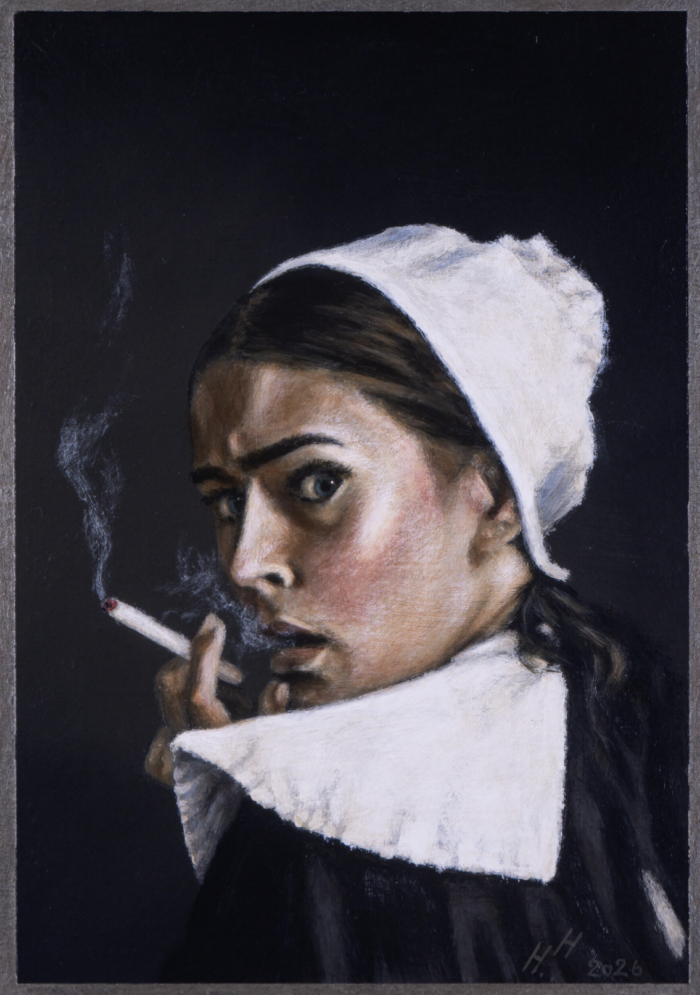
Illustration: Henrik Hürden “Holy Spirit” 2026, 56×46; see more about the artist: https://henrikhyrden.com/
Source: WHO – physical activity.
Come and train! ArtGym