
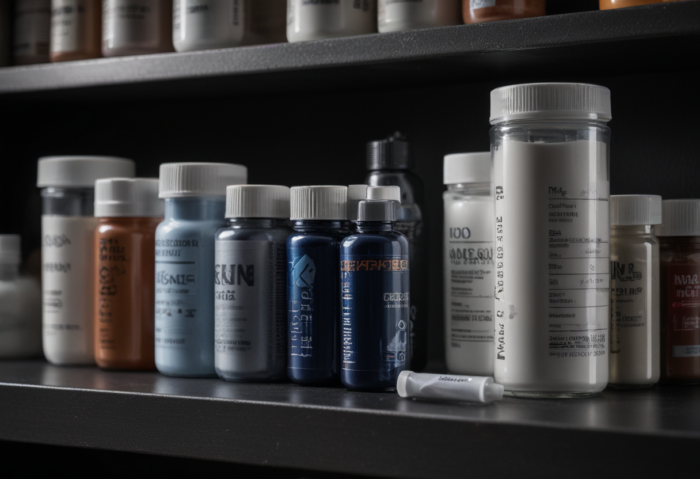
Doping in the gym: pros and cons
Doping can look like a shortcut in the gym: the weight moves more easily, the mirror gives faster feedback and recovery seems shorter. But that shortcut costs you in health, in honesty and sometimes in the eyes of the law.
Why does doping appeal in the first place?
In spring, when talk of beach season starts up again, many gyms present the same scene.
That is where the lure of doping comes from. One person hears from an acquaintance that their strength shot up quickly. Another sees before-and-after photos on social media and wonders whether they are training too slowly. Honestly, that’s only human. Nobody wants to labor for years when it seems someone else gets the same result in a couple of months.
But a result in the gym isn’t just a number on the bar. It’s also sleep, blood pressure, mood, digestion, hormonal balance and whether you’ll still want to train in a few years. Doping may add something in the short term, but it doesn’t make your training smarter or your lifestyle more lasting.
Doping: possible pros and the real price
The pros deserve an honest discussion, otherwise the whole piece sounds like a moral lecture. Some banned substances may give a temporary boost in strength and endurance. Some users may recover faster and tolerate more frequent training. That can mean heavier weights, more sets and faster-growing muscle mass.
A simple truth: these pluses are short-sighted. The body can’t live on credit forever. When training load grows faster than your tendons, joints, heart and nervous system can keep up, the risk of injury rises. If the hormonal system is pushed from the outside, it may not go back to working the same way afterwards.
The list of risks isn’t pretty. People talk about heart problems, liver damage, kidney trouble and hormonal disorders. Mood swings, anxiety, sleep disturbances and irritability can also appear. For some people it becomes a psychological dependence too: without the substance a workout feels empty and the body feels too small.
So what actually happens? At first the feeling can be powerful. Later the same person may end up in a situation where the gym is no longer a place for looking after health, but a place driven by fear of losing the shape they’ve achieved. That is a bad trade.
How can you make progress without falling into the doping trap?
If your goal is strength, muscle mass or better shape, the first tool is a solid plan. Not a perfect plan, but one you actually follow. Three to four well-planned training sessions a week often give a recreational lifter more than six muddled workouts where a new trick gets tried every time.
The second thing is progress. Write down your exercises, weights, reps and how you feel. If your squat, deadlift, press or rows improve over the months, your body gets the signal to adapt. If the numbers stand still, that doesn’t immediately mean you need banned help. Maybe you need more sleep, an easier week or better technique.
The third thing is food. Muscle doesn’t grow on willpower alone. You need enough energy, protein and ordinary food: potatoes, rice, porridge, eggs, fish, meat, quark, legumes, vegetables. You don’t have to cook like a gourmet. You have to do it consistently.
The fourth thing is recovery. The Estonian winter is dark and workdays easily drag on. If your sleep is broken, your caffeine intake is up and your stress is through the roof, no training trick will save you. The body grows while resting, not only under the bar.
Doping and the warning signs to watch for
Be cautious if someone promises quick results without clear work. Talk that side effects are “only for the weak” or that “everybody uses” is also suspicious. They don’t. And even if they did, that wouldn’t make the decision sensible.
If a training partner suddenly becomes very closed off, irritable or starts hiding what they are using, it’s worth talking calmly. Blaming doesn’t help. Ask what their goal is and whether they understand the risks. If needed, steer them toward a doctor or a qualified coach.
For yourself, ask one simple question: would I be ready to risk, for this result, a health that can’t be bought back later with money? Usually an honest answer points the way.
FAQ: doping and the gym
Does doping really give faster results?
In some cases it can give a short-term advantage in strength, muscle mass or recovery. That doesn’t mean the choice is safe. The health risks, the risk of dependence and the ethical problem remain.
Is doping only an issue for elite athletes?
No. Banned substances circulate among recreational lifters too. That is where the risk is sometimes higher, because decisions are made based on rumors, forums or an acquaintance’s recommendation rather than medical supervision.
What should I do if I want to progress faster?
First review your plan, technique, sleep and diet. If progress stalls for a long time, ask a coach or doctor for help. Usually there is plenty to improve long before the thought of risky substances even comes up.
Edited by: Arnold Tokko
Come and train! ArtGym




