
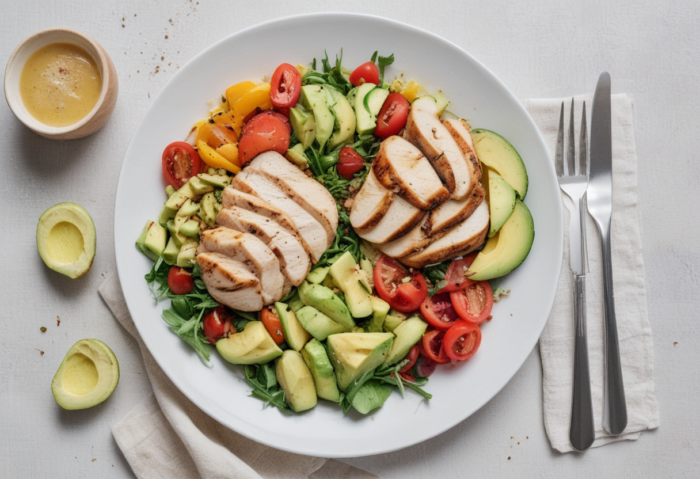
Making sense of healthy eating
When we talk about healthy eating, we quickly arrive at a simple question: how much should you eat to keep your weight, energy levels and well-being in check? There is no single number that works for everyone, but there are clear principles to help you make better choices.
Healthy eating and calorie expenditure
11. How many calories you need from food each day depends on several factors working together. These include your metabolism, body weight, body composition, the nature of your job, your overall lifestyle, the sport you take part in, your overall physical activity, age, sex and stress levels.
The simple truth is that someone who moves a lot generally needs more energy than someone who spends much of the day sitting. Yet even two people who weigh the same may need different amounts of food. One has more muscle mass, the other less. One sleeps well, while the other is under constant stress. Your body does not follow a chart; it responds to the whole picture.
That is why it helps to see calories as a tool, not a punishment. Whether your body weight rises, falls or stays the same gives you feedback. You can use that feedback to adjust your portions and activity without making drastic changes.
Healthy eating and clean foods
12. When people talk about “clean foods” or suggest that you should “eat clean,” they usually mean choosing foods that are as natural and minimally processed as possible. The English terms for this are “clean foods” and “clean eating.”
What does that mean in practice? Boiled potatoes rather than chips. Rolled oats rather than a sugary breakfast cereal mix. Fish, eggs, cottage cheese or quark rather than food with an ingredient list longer than your shopping receipt.
Examples of suitable foods include root vegetables, fruit, grain products, buckwheat, rolled oats, brown rice, raw vegetable salads, beans, peas, cottage cheese, quark, milk, eggs, dairy products, meat and fish. These do not have to be “perfect” at every meal. What matters is the overall approach.
Processing changes a food’s GI, or glycemic index, and therefore the glycemic load of the entire portion. The more a food is heated, boiled or broken down into smaller pieces, the higher its GI generally becomes. For example, a raw apple has a lower GI than an apple cooked in compote.
Healthy eating and body fat percentage
13. Body fat percentage gives a clearer picture than the number on the scale alone. For people with the fitness level of a recreational athlete, a normal body fat percentage is considered to be 15-20% for men and 20-25% for women. This does not include elite athletes.
The average relatively inactive man has a body fat percentage of 20-25%, and the average relatively inactive woman has 25-30%. These ranges do not automatically mean that you are in poor or good shape. They are reference points. There are countless body fat classification charts online, and their ranges vary considerably.
As you age, fat makes up a greater percentage of your total body weight. This does not happen overnight. Physical activity often declines, you gain less muscle mass or gradually start losing it, while the amount you eat stays the same.
Healthy eating beyond your late 30s
14. It is often said that problems with excess body weight begin in your late 30s. The reason is simple: muscle mass starts to decline from middle age, and this is usually accompanied by a drop in physical activity.
When you are young, you often move more, even if you do not call it training. You walk more, recover faster and expend more energy throughout the day. Later, your work may become more sedentary, your evenings shorter and your sleep poorer. If you keep eating the way you did when you were more active, your body fat percentage starts to rise.
There is no need to panic. It makes sense to keep strength training in your routine, eat enough protein and check whether your portions match how active you actually are. A small change to your daily routine works better than a sudden promise that “everything changes on Monday.”
Healthy eating and the mistake of starving yourself
15. Starving yourself is not a good way to lose body weight through fat loss. Besides being unhealthy, starvation tends to cause your body to lose muscle. Yet muscles are the “tools” that help burn body fat for fuel and keep your metabolic rate up.
It is like having firewood but no stove to put it in: you still cannot get any heat. Losing muscle mass makes it harder to maintain your weight later. On top of that, once you stop starving yourself, you tend to regain twice the weight you lost.
Honestly, the best diet is one you can actually stick to. Not just for 5 days, but for months at a time. If your diet drains your energy, lowers your mood and leaves you without the strength to train, it is not sustainable.
FAQ
Do you always need to count calories?
No. Detailed tracking helps some people, while adjusting portions and monitoring changes in body weight is enough for others. What matters is understanding whether you are taking in more energy, less energy or roughly the same amount as you expend.
Does clean eating mean sweets are off limits?
No. The bulk of your diet should consist of simple, nutrient-rich foods, but no single food ruins your entire diet. It comes down to how often you eat it and how much.
Why might you lose weight without getting into better shape?
If you lose weight too quickly and stop training, some of that loss may come from muscle. The number on the scale may then fall without your body composition changing in the way you want.
To be continued…
Author: Janar Rückenberg
Come and eat! Armudu
Come and work out! ArtGym




