In short:
- Women lose up to 20% of their bone mass within five years after menopause — prevention has to start in young adulthood.
- Progressive strength training 2–3 times a week is the evidence-based most effective form of training for increasing bone density.
- Adequate vitamin D and calcium intake is the cornerstone of bone health — during Estonian winters a vitamin D supplement is especially important.
- Preventing osteoporosis is more effective and cheaper than treating it — start with strength training and mindful nutrition right now.
Women’s bone health is a topic that concerns every woman regardless of age — yet it often gets attention too late. The drop in estrogen levels during menopause markedly accelerates the loss of bone density, but the right training and nutrition can slow this process considerably. The guide below brings together evidence-based recommendations for strengthening your bones at every stage of life.
How does women’s bone health work, and why is it especially vulnerable?
Women’s bone health differs from men’s primarily because of hormonal regulation. Bone is living tissue, renewed by osteoclasts (cells that break bone down) and osteoblasts (cells that build it). Estrogen restrains osteoclast activity — the drop in this hormone at menopause tips the balance toward bone breakdown. In the first five years after menopause, women are estimated to lose up to 20% of their bone mass (Weaver et al., 2016).
Peak bone mass is reached at around age 30, which is why prevention is most effective in young adulthood. Our article on women’s training and working out explains in more detail how overall physical activity supports both the muscles and the skeleton. Osteoporosis is estimated to affect 200 million women worldwide and is one of the main causes of disability and premature mortality among older adults — as confirmed by WHO data.
Which exercises strengthen women’s bones most effectively?
According to the position stand of the American College of Sports Medicine (ACSM), mechanical loading stimulates bone tissue renewal and increases bone density, especially in the spine and hip (Kohrt et al., 2004). The two most effective types of exercise are:
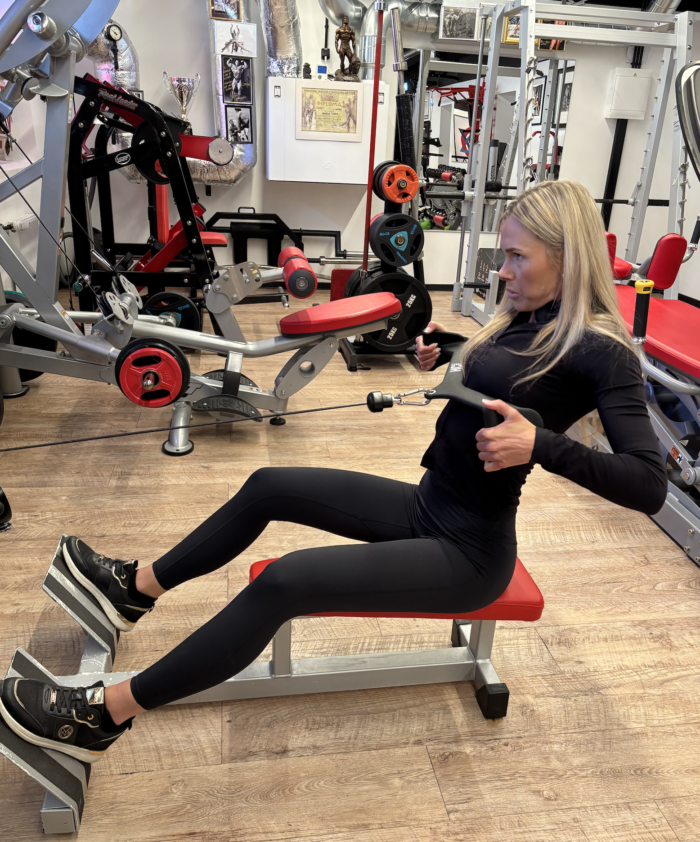
Progressive strength training (2–3 times a week): squats, lifts from the floor, deadlifts, presses. In their review, Layne and Nelson (1999) found that progressive strength training increases spinal and hip bone density by an average of 1–3% per year. The Cochrane review by Howe et al. (2011) likewise confirmed that regular strength training reduces the risk of spinal fractures in postmenopausal women.
Impact exercises (impact loading): running, jumping, step aerobics. Nikander et al. (2010) showed that targeted impact exercises are particularly effective for increasing bone density in the hips and femoral neck.
Balance and coordination exercises (yoga, Pilates, standing on one leg) reduce the risk of falls, which is the main mediating factor in osteoporotic fractures.
Women’s bodybuilding. Yes, women’s bodybuilding shows convincingly that lifting weights is the best protector of women’s bones — not a source of excess muscle mass. Many myths about women’s training keep women away from the gym, and it is their bones that pay the price.
Which nutrients does women’s bone health need?
Three key micronutrients form the nutritional foundation of bone health:
Calcium — adult women are recommended 1000–1200 mg per day. Good sources: dairy products, broccoli, sardines with bones, almonds, fortified plant-based drinks. Weaver et al. (2016) emphasize that adequate calcium intake at a young age is directly linked to reaching peak bone mass.
Vitamin D — essential for calcium absorption in the gut. Holick (2007) has documented that vitamin D deficiency is widespread worldwide and increases fracture risk, especially in older women. In Estonia, from October to April sunlight is too weak for the skin to synthesize vitamin D — which is why additional intake is recommended (800–2000 IU per day).
Protein — adequate protein intake (1.0–1.2 g/kg of body weight per day) supports the interplay between muscles and bones. Poor muscle tone is an independent risk factor for falls and the fractures that come with them.
Nutrition and training needs may differ somewhat between female body types — women with an ectomorphic build need to pay particularly conscious attention to their bone mass.
When should you start osteoporosis prevention?
The short answer: right now, at any age. In more detail:
- Ages 15–30: bone mass grows actively. Every extra percentage point of bone density in youth lowers the later risk of osteoporosis — it is an investment that cannot be fully made up for later.
- Ages 30–50: bone mass stabilizes. Regular strength training and adequate nutrition keep it stable.
- Age 50+: the fastest decline. Strength training, vitamin D, calcium and periodic medical supervision are critically important. Bone density measurement (DEXA scan) is recommended from age 65, or earlier if there are risk factors.
The Estonian Health Board recommends that adults do at least 150–300 minutes of moderate-intensity activity per week — this recommendation supports both cardiovascular health and the skeleton.
References
- Kohrt WM, Bloomfield SA, Little KD, Nelson ME, Yingling VR; American College of Sports Medicine. (2004). Physical activity and bone health. Med Sci Sports Exerc. 36(11):1985–96. PMID: 15514517
- Layne JE, Nelson ME. (1999). The effects of progressive resistance training on bone density: a review. Med Sci Sports Exerc. 31(1):25–30. PMID: 9927006
- Howe TE, Shea B, Dawson LJ, et al. (2011). Exercise for preventing and treating osteoporosis in postmenopausal women. Cochrane Database Syst Rev. (7):CD000333. PMID: 22161437
- Weaver CM, Gordon CM, Janz KF, et al. (2016). The National Osteoporosis Foundation’s position statement on peak bone mass development and lifestyle factors. Osteoporos Int. 27(4):1281–386. PMID: 26510847
- Nikander R, Sievänen H, Heinonen A, Daly RM, Uusi-Rasi K, Kannus P. (2010). Targeted exercise against osteoporosis: A systematic review and meta-analysis. Maturitas. 65(4):341–7. PMID: 20920785
- Holick MF. (2007). Vitamin D deficiency. N Engl J Med. 357(3):266–81. PMID: 17634462
Frequently asked questions
What is the best age to start osteoporosis prevention?
It makes sense to start prevention in adolescence, because bone mass keeps building until age 30. The higher your peak bone mass, the bigger the reserve you have for the decline later on. But strength training started at 50–60 has also been shown to slow bone mass loss.
Can yoga replace strength training for building stronger bones?
Yoga improves balance and flexibility, which lowers the risk of falling, but increasing bone density requires progressive strength training load, as the evidence shows. Ideally, you combine the two.
Is a vitamin D supplement necessary in Estonia?
Yes, especially from October to April. In the Nordic countries, winter UV radiation is too weak for the skin to synthesize enough vitamin D. The Health Board recommends a vitamin D supplement, particularly for children, older adults and people who spend little time outdoors.
How much calcium should a woman get per day?
Adult women are advised to get 1000 mg a day, and postmenopausal women 1200 mg. It is best to get calcium from food (dairy products, sardines, broccoli); supplements are used when your diet falls short.
Can a woman with osteoporosis train with weights?
In general, yes — strength training is recommended even if you have already been diagnosed with osteoporosis. Still, you should consult a doctor or physiotherapist to choose suitable exercises. Avoid exercises that put a heavy flexion load on the spine.
Come and work out! ArtGym