
Dinner: eat smart and unhurried in the evening
Dinner is where many plans for staying in shape turn either too strict or too loose. You don’t need to fear carbohydrates in the evening, but it’s worth choosing them based on when you train, when you go to bed and how big your daily energy expenditure really is.
What should you eat for dinner? This old question sounds simple, but the answer isn’t always just “chicken and salad”. Muscle&Fitness Hers tackled the same topic long ago: do starchy foods after 5 p.m. wreck your shape, or is that rule too rigid?
Why does dinner matter so much?
Many fitness professionals have recommended limiting starch in the evening. Beth Horn skipped pasta, rice, bread and potatoes at night and started limiting starchy foods as early as after two in the afternoon. Vegetables remained her later source of carbohydrates. The idea was simple: if the body doesn’t get a lot of quick energy in the evening, it’s easier to keep your daily calorie intake under control.
Jessica Siegel, MPH, RD, of the Southern California supermarket chain Gelson`s, agreed that the amount of carbohydrates in the evening should be moderate. At the same time, she stressed that there is no magic time. Not eating after 6 or 7 is more myth than law. If you go to bed after midnight, dinner at 9 can be perfectly reasonable.
A simple truth: the clock isn’t the only thing that matters. What counts is how much you eat over the course of the day, how active you are and whether your evening meal helps you get to bed calmly or leads to snacking instead.
How do you fit dinner around training?
If your main training session is in the evening, the picture changes right away. After the gym, your muscles need fuel for recovery. The body stores carbohydrates in the muscles as glycogen, and that’s where the energy for the next effort comes from. That’s why carbohydrates after a workout aren’t automatically the enemy.
Mike Davies of Columbus, Ohio, said it straight: after an evening training session you need to replenish glycogen stores. This applies to cardio training, strength training and roller skating alike. If you train hard but constantly deny yourself carbohydrates, recovery may suffer. You’ll have less energy, and the next day’s workout will feel harder.
A very intense training session of 60 minutes or more deserves at least one extra serving of starchy carbohydrates. That doesn’t mean a giant plate of pasta. Siegel suggested whole grains, for example, because they’re more filling than regular refined-flour pasta. One serving can be half a cup of cooked rice or pasta or one slice of whole-grain bread.
Practical dinner portions
A good middle ground lies between two extremes: you don’t have to give up all carbohydrates, but you don’t have to eat a mountain of pasta either. If you want something more nourishing in the evening, half a cup of corn, a baked sweet potato or peas work well. They give a feeling of fullness and make the meal more satisfying.
Portion is the key word here. One portion of rice or potato gives about 100 calories. If you stick to one portion, the effect on your daily calories is small, but the effect on satisfaction can be big. Be careful in restaurants, because the portions there quickly distort your sense of what a normal amount is.
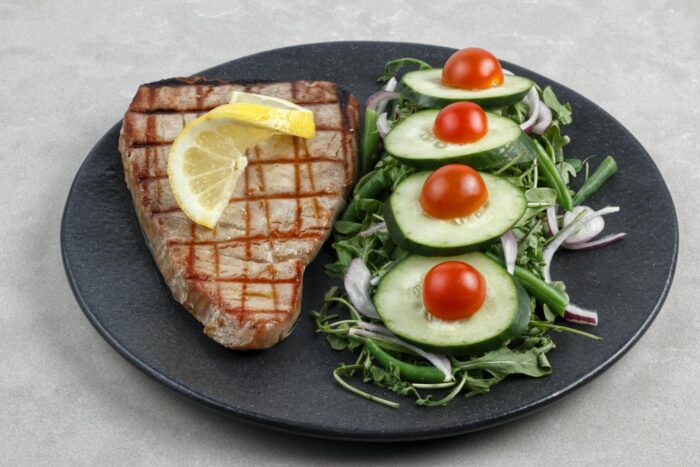
Davies recommended that the last meal contain 300-400 calories (for a 130-pound woman). For example, 4 ounces of chicken, a green salad with a low-fat dressing and half a cup of rice fit that limit quite nicely. If bedtime is only a few hours away, the target should definitely be less than 500 calories, unless you did a very exhausting workout beforehand.
Calories still count. Limiting carbohydrates in the evening often works because it cuts out popcorn, cookies, chips and other convenient snacking. The studies mentioned in the original article also showed that the change in body weight came mainly from lower energy intake in both diet groups. The low-carbohydrate group did reduce carbohydrates, but its calorie intake dropped along with them.
So what actually helps? Eat enough during the day. If breakfast and lunch are too light, hunger comes back with full force in the evening. Then even the best rule won’t save you. A moderate amount of potato, rice or sweet potato can be as important for the mind as for the body, because it prevents the feeling of being deprived of something. Davies sometimes offered regular clients carbohydrates in the evening for exactly this reason. If the choice is sweet potato or potato, it shouldn’t be more than 4-6 ounces.
FAQ: dinner and carbohydrates
Do you have to cut carbohydrates after 5 p.m.?
No. It may help some people control their calorie intake, but it’s not a rule that suits everyone. What matters more is how much you eat in total over the day and whether your evening meal fits your sleep and training.
Is it okay to eat 2-3 hours before sleep?
If you’re hungry, a light to moderate meal may be better than going to bed hungry. A very large, fatty meal right before sleep, however, can disrupt sleep.
Does an evening workout mean I need carbohydrates?
Usually yes, especially if the training session was long or hard. A small portion of rice, pasta, potato or whole-grain bread helps recovery and doesn’t have to ruin your shape.
Source: WHO – physical activity.
Come and train! ArtGym




