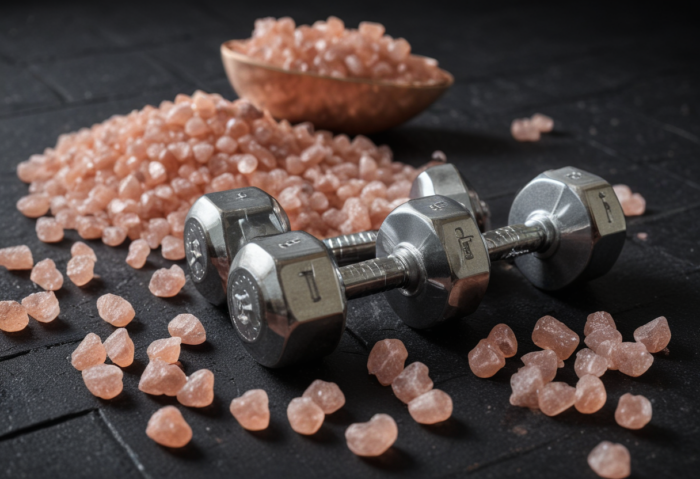
Bodybuilder and salt: what you should know
Bodybuilders run into the salt question most often when they need to look sharp on a specific day. Salt isn’t simply “good” or “bad”: what matters is the amount, the timing, and how abruptly you change your usual routine.
Why do bodybuilders think about salt at all?
In bodybuilding, what you see in the mirror can change fast. One day your muscles look dry and defined, the next day the same body looks softer and watery. Salt often gets blamed straight away. Sometimes rightly so, but not always.
Restricting salt is overrated in bodybuilding when it’s done too early, too abruptly, or simply out of fear. Especially before a competition, a photo shoot, or any other moment when you need to show peak condition for a couple of days, it’s tempting to strike everything salty from the menu. Honestly, on paper that sounds logical. Less salt, less water, a drier look. But the body doesn’t work in such a straight line.
If you’ve been on very low salt intake for a long time, your body can adapt to it. Your water balance starts to normalize in precisely that new situation. If you then cut back even further, your look may not improve. In some cases the result can be the opposite: you look flatter, softer, or more bloated.
The other extreme isn’t any better. If you constantly overdo salt, it can raise your blood pressure and make your water balance unstable. That in turn can also give the impression that your body is holding on to water. The simple truth: don’t play with salt like a light switch.
How does a bodybuilder keep salt intake under control?
A good starting point is to keep your daily eating as consistent as possible. If your menu changes dramatically every day, it’s hard to tell whether the swings in your look came from salt, carbohydrates, sleep, stress, or simply yesterday’s heavy leg workout.
The original recommendation was to try to keep your daily salt intake between 1000-3000 mg. Don’t treat that range as a competition-day magic trick, but as a sign that your intake shouldn’t jump from one extreme to the other. If you eat very salty food on a regular day and almost none the next, your body often reacts in a confusing way.
So what actually helps? Watch your food choices. A large share of salt doesn’t come from the salt shaker but from ready meals and semi-prepared foods. Canned soups, very salty sauces, smoked products, and some fast foods can push your intake up quickly. If you want better control over your look, choose simple foods more often: eggs, potatoes, meat, and vegetables. They’re easier to season and easier to keep the amount in check.
With low-salt foods, there’s no need to be afraid of the salt shaker. Bland food is a bad plan, because it’s hard to stick with for long. At the same time, there’s no need to shake salt over every plate. The goal isn’t to bring salt down to zero, but to keep it steady enough that you can see how your body really responds.
Practical rules for using salt
When the topic gets confusing, go back to the basics. They aren’t complicated, but they only work if you follow them consistently.
- Try to keep your daily salt intake between 1000-3000 mg.
- Avoid salt-rich meals, such as canned soups. Choose low-salt foods instead, with no more than 300 mg per meal.
- Feel free to use salt when eating low-salt foods, such as eggs, potatoes, meat, and vegetables, but don’t get carried away with the salt shaker.
- One meal should contain about 100-200 mg of salt on average.
These points don’t mean that everyone has to eat in exactly the same way. Sweating, training volume, body weight, and your overall nutrition all change the picture. They do, however, give you a simple framework that helps you avoid two common mistakes: constantly eating very salty food and suddenly cutting salt to zero.
Before a competition or photo shoot, it’s especially important not to panic at the last minute. If you don’t know how your body reacts to a change in salt, the final week is not the best time to experiment. It’s far more sensible to observe your body during the prep itself: when you look drier, when you look bloated, what you ate the day before, and how much water you drank.
If you have concerns about blood pressure, your kidneys, or other health issues, don’t run big salt experiments on your own. A bodybuilding physique isn’t worth putting your health at risk.
Bodybuilder and salt: FAQ
Does salt always make you look watery?
Not always. The problem more often arises when the amount swings sharply or when you constantly use too much salt. Consistent intake gives your body a clearer rhythm.
Should you cut out salt completely before a competition?
It can actually make your look worse, especially if your body is already used to low salt intake. A sharp restriction doesn’t always deliver the dry look you expect.
How can I tell if I’m eating too much salt?
Start by looking at ready-made and canned foods, and read the packaging. If a large part of your menu comes from heavily processed food, your salt intake may be higher than you think.
Author: joker,Flex
PS Find salts/electrolytes HERE
Source: WHO – physical activity.
PPS Come and train! ArtGym