
In short:
- Preserving muscle mass while losing weight requires adequate protein intake — the optimum is 1.6–2.4 g/kg of body weight per day.
- Strength training 2–3 times a week gives muscle cells a signal to hold on to muscle, even during calorie restriction.
- A moderate calorie deficit (400–600 kcal/day) protects muscle better than an extreme diet.
- Sleep and recovery are just as important for preserving muscle mass as nutrition and training.
Preserving muscle mass while losing weight is the main challenge for many athletes and health-conscious people. When calories are restricted, the body tends to use muscle tissue as an energy source too, which makes the right strategy critical. Science-based nutrition and training strategies make it possible to lose fat without sacrificing muscle tissue.
Why is preserving muscle mass so important when losing weight?
Muscle mass is not just an aesthetic goal — it is a cornerstone of metabolism. The more muscle the body has, the higher the resting metabolic rate, meaning the body burns more calories even at rest. Losing muscle mass on a diet lowers the metabolic rate, making it harder to maintain your body weight afterwards.
In addition, muscle mass plays a role in maintaining vitality, mobility and bone density. The factors that develop muscle mass play a long-term role in maintaining health and functional capacity throughout life.
Studies show that the muscle loss that accompanies calorie restriction can account for up to 25% of total body weight loss if protein intake and training are not optimized (Stiegler & Cunliffe, 2006). This means that up to 250 grams of every kilogram lost may be muscle tissue — an outcome that is very difficult to reverse later.
How much protein do you need to preserve muscle mass?
Protein is the most important nutrient for preserving muscle mass. According to EFSA recommendations, an adult’s minimum protein requirement is 0.83 g/kg of body weight per day, but for active people and athletes on calorie restriction the requirement is considerably higher.
According to the systematic review by Helms et al. (2014), the optimal protein intake for strength-training athletes during calorie restriction is in the range of 1.8–2.7 g/kg of body weight per day. Similarly, a randomized trial by Longland et al. (2016) showed that when intensive training was combined with calorie restriction, a higher protein intake (2.4 g/kg/day) led to greater muscle mass gain and fat loss than a lower one (1.2 g/kg/day).
Spreading protein evenly through the day is also important. Based on research by Churchward-Venne et al. (2012), the optimal single serving of protein (20–40 g) stimulates muscle protein synthesis maximally — so it makes sense to eat protein across 3–5 meals a day rather than concentrating it in one.
Essential information for muscle building gives a detailed overview of how protein works as a building block in muscle tissue, for both growth and preservation.
What kind of training supports muscle mass during calorie restriction?
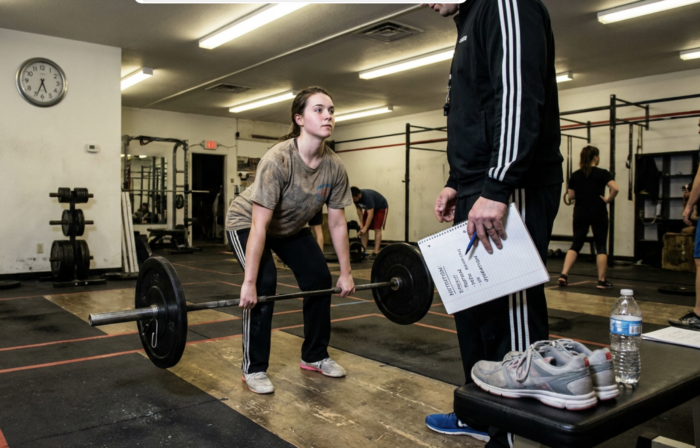
Strength training is the most effective tool for preserving muscle mass during weight loss. Training sends an anabolic signal to muscle cells, telling the body that muscle mass is functionally needed and should not be used for energy.
A meta-analysis by Morton et al. (2018), which included over 1800 participants, confirmed that strength training combined with adequate protein intake increases muscle mass and strength even under calorie restriction. The recommended frequency is at least 2–3 training sessions per week, using progressively increasing training loads.
The role of cardio training is supplementary — it helps create a calorie deficit but does not protect muscle on its own. Excessive low-intensity aerobic training without strength training may instead promote muscle loss.
Weight loss without losing muscle mass covers practical strategies for combining different forms of training for optimal body composition.
Do sleep and recovery affect muscle mass preservation?
Recovery is an often underestimated factor in preserving muscle mass. Most muscle protein synthesis takes place during sleep, when growth hormone levels are at their highest. Trommelen and van Loon (2016) showed that consuming casein protein before bed increases overnight muscle protein synthesis and supports the preservation of muscle mass during calorie restriction.
Sleep deprivation raises levels of cortisol (the stress hormone), which in turn accelerates the breakdown of muscle protein. According to WHO recommendations, adults need 7–9 hours of sleep per day for optimal health. Chronic stress affects the preservation of muscle mass in a similar way — cortisol is a catabolic hormone that works against muscle protection.
This aspect is especially important for older people, whose recovery capacity is naturally slower. How to start training for muscle mass at an older age explains how to adapt training and nutrition so that recovery stays effective even when the body needs more time.
How quickly should you lose weight to preserve muscle mass?
The rate of weight loss is a critical variable for preserving muscle mass. Losing weight too fast — more than 1% of body mass per week — significantly increases the risk of muscle loss. According to the review by Stiegler and Cunliffe (2006), the optimal rate is 0.5–1% of body mass per week, which corresponds to a daily calorie deficit of about 400–600 kcal.
Such a moderate deficit gives the body enough nutrients to hold on to muscle mass while maintaining the rate of fat loss. Extreme calorie restriction (below 1200 kcal/day) triggers catabolism, in which the body starts breaking down muscle tissue to get energy.
As a practical guide: calculate your daily calorie requirement, subtract 400–600 kcal and make sure your protein intake stays within 1.6–2.4 g/kg of body weight per day, in line with EFSA’s dietary reference values.
References
- Helms ER, Zinn C, Rowlands DS, Brown SR. (2014). A systematic review of dietary protein during caloric restriction in resistance trained lean athletes: a case for higher intakes. International Journal of Sport Nutrition and Exercise Metabolism. PMID: 24092765
- Stiegler P, Cunliffe A. (2006). The role of diet and exercise for the maintenance of fat-free mass and resting metabolic rate during weight loss. Sports Medicine. PMID: 16526835
- Churchward-Venne TA, Burd NA, Phillips SM. (2012). Nutritional regulation of muscle protein synthesis with resistance exercise: strategies to enhance anabolism. Nutrition & Metabolism. PMID: 22540986
- Morton RW, Murphy KT, McKellar SR, et al. (2018). A systematic review, meta-analysis and meta-regression of the effect of protein supplementation on resistance training-induced gains in muscle mass and strength in healthy adults. British Journal of Sports Medicine. PMID: 28698222
- Longland TM, Oikawa SY, Mitchell CJ, et al. (2016). Higher compared with lower dietary protein during an energy deficit combined with intense exercise promotes greater lean mass gain and fat mass loss: a randomized trial. American Journal of Clinical Nutrition. PMID: 26817506
- Trommelen J, van Loon LJC. (2016). Pre-Sleep Protein Ingestion to Improve the Skeletal Muscle Adaptive Response to Exercise Training. Nutrients. PMID: 27916799
Frequently asked questions
How much protein should you eat per day to preserve muscle mass?
For active people in a calorie deficit, the recommendation is 1.6–2.4 g of protein per kilogram of body weight per day. For example, someone weighing 70 kg needs 112–168 g of protein a day, spread across 3–5 meals.
Does cardio harm muscle mass?
Moderate cardio won’t harm muscle mass as long as your protein intake and strength training are in place. Too much aerobic training without strength training, however, can promote muscle loss, especially during a calorie deficit.
What is the best rate of weight loss for preserving muscle mass?
The optimal rate is 0.5–1% of body weight per week, which corresponds to a daily calorie deficit of roughly 400–600 kcal. Losing weight faster significantly increases the risk of muscle loss.
Does sleep affect muscle preservation?
Yes — most muscle protein synthesis takes place during sleep, and growth hormone levels are at their highest. Sleeping fewer than 7 hours raises cortisol levels and speeds up muscle loss, which is why 7–9 hours of sleep a day is an important goal.
Is it possible to build muscle during a calorie deficit?
For untrained and overweight people, it is possible even in a calorie deficit thanks to the so-called beginner effect. For those who are already trained, the realistic goal during a calorie deficit is to preserve muscle mass rather than build it.
Come and train! ArtGym




