In short:
- The first strength gains come within 2–4 weeks thanks to neuromuscular adaptations, not muscle growth.
- Visible muscle size gains start for most beginners after 6–12 weeks of structured training.
- The optimal training frequency for a beginner is 2–3 times a week, combined with enough sleep and protein intake.
- Consistency and progressive overload determine how fast you see results more than any other factor.
Gym results are something every beginner wonders about: when will your body change, when will your lifts go up, and when will the person in the mirror start to look different? Research gives clear and encouraging answers. In this guide, we explain which changes to expect and when, and what you can do to speed up your progress.
When do the first gym results appear?
Your first gym results arrive sooner than most beginners think — but they don’t look the way many expect. During the first 2–4 weeks, the changes are mainly neuromuscular adaptations: your brain learns to communicate with your muscles better, recruits more motor units and coordinates movement more efficiently (Kraemer & Ratamess, 2004). The resulting strength gain can be substantial — as much as 10–20% in the first month — even though muscle mass has not increased.
The benefits of the gym have been covered in depth: regular strength exercise has a positive effect on body composition, metabolism and mental health. These benefits don’t require an elite-athlete level — starting out in a structured way is enough.
How does muscle mass grow, and how long does it take?
Visible muscle size gains begin for most beginners 6–12 weeks after starting training, provided that training is regular and nutrition is supportive (Westcott, 2012). Studies show that beginners achieve an average increase of 25–35% in strength after the first three months of structured training (Garber et al., 2011).
Schoenfeld (2010) explains muscle size growth — so-called hypertrophy — through three mechanisms:
- Mechanical tension — lifting weights places a controlled training load on the muscle fibers
- Metabolic stress — the buildup of metabolic byproducts during training
- Muscle damage — micro-tears that heal back thicker
All three mechanisms are activated in strength training with sufficient training load and regular practice.
Great results were achieved at the Sparta gym competition — achievements like these are the fruit of year-long consistent work. The same is confirmed by Results from the World Championships: reaching the top level takes years, but the first noticeable changes come within months.
How many times a week should you train to get results?
The ACSM (American College of Sports Medicine) recommends strength training for beginners 2–3 times a week, with each training session lasting 45–60 minutes (Garber et al., 2011). The World Health Organization (WHO) recommends that adults, in addition to aerobic activity, do muscle training at least 2 times a week.
What matters is progressive overload — gradually increasing the training load. If you do the same exercises with the same weight for weeks on end, your body adapts and stops progressing. Each week, add either weight, repetitions or sets.
The gym during puberty explains that teenagers also respond well to strength training — mainly through neuromuscular adaptations, because the full hormonal environment for muscle growth only develops later. Learning good technique young is an investment for life.
What speeds up or slows down gym results?
Training alone is not enough — results depend on several factors at once:
Sleep. 7–9 hours of sleep a night is essential for muscle growth. It is during sleep that growth hormone is released and muscle repair takes place (Kraemer & Ratamess, 2004). Sleep deprivation slows muscle protein synthesis and increases the risk of injury.
Protein intake. The ISSN recommends 1.6–2.2 g of protein per kilogram of body weight per day for people doing strength training (Garber et al., 2011). Less protein means slower recovery and weaker adaptation.
Consistency. The most important factor. Studies show that even 2 training sessions a week produce significant results over the long term, as long as the training happens regularly (Westcott, 2012). A few intense periods separated by long breaks do not produce the same effect.
Stress level. Chronic stress raises cortisol levels, which slows muscle protein synthesis. Find a balance between training load and recovery — more is not always better.
References
- Kraemer WJ, Ratamess NA (2004). Fundamentals of resistance training: progressions and exercise prescription. Medicine & Science in Sports & Exercise, 36(4):674–688. PMID: 15064596
- Garber CE, Blissmer B, Deschenes MR, et al. (2011). Quantity and quality of exercise for developing and maintaining cardiorespiratory, musculoskeletal, and neuromotor fitness in apparently healthy adults: guidance for prescribing exercise. Medicine & Science in Sports & Exercise, 43(7):1334–1359. PMID: 21694556
- Westcott WL (2012). Resistance training is medicine: effects of strength training on health. Current Sports Medicine Reports, 11(4):209–216. PMID: 22777332
- Schoenfeld BJ (2010). The mechanisms of muscle hypertrophy and their application to resistance training. Journal of Strength and Conditioning Research, 24(10):2857–2872. PMID: 20847704
Frequently asked questions
How long do you need to go to the gym before you see results?
The first strength gains are noticeable after just 2–4 weeks. A visible change in body composition usually appears after 6–12 weeks, provided that training is regular and nutrition is supportive.
Can you still get results training 2 times a week?
Yes. The ACSM recommends 2–3 training sessions a week for beginners. With two sessions a week, you can achieve significant gains in strength and muscle mass, as long as you train consistently and increase the training load progressively.
Why does strength increase quickly while muscles don’t grow?
The first strength gains come from neuromuscular adaptation — the brain learns to control the muscles better. Visible growth in muscle mass (hypertrophy) takes more time and usually only appears after 6–12 weeks.
What happens to your results if you skip training?
A short break (1–2 weeks) has a minimal effect on results. A longer break (over 3–4 weeks) leads to so-called detraining — strength declines faster than muscle mass. The neuromuscular component, however, comes back faster than it was first acquired.
Does age affect how quickly you see gym results?
Young adults see muscle mass gains slightly faster thanks to higher testosterone levels. However, all age groups — including older adults — benefit from strength and muscle-building exercises, although the rate of progress may differ.
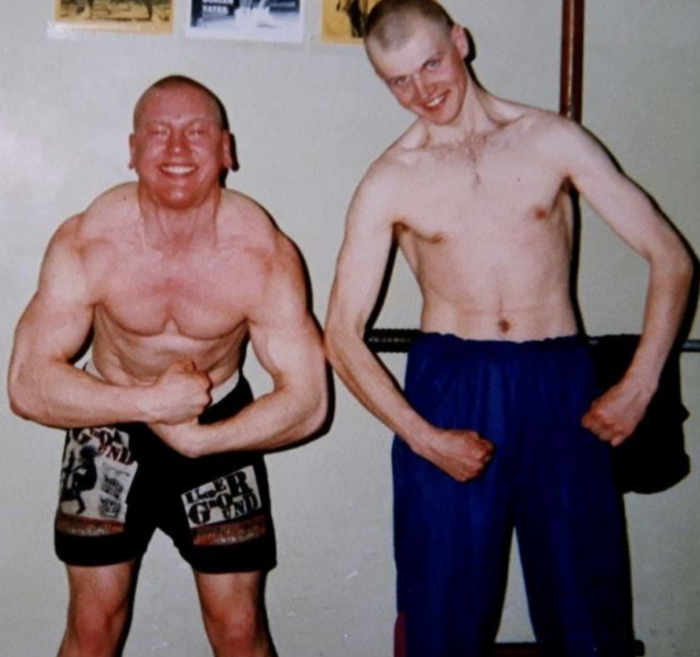
Illustrative image from the Fitntess.ee forum HERE
Come and train! ArtGym