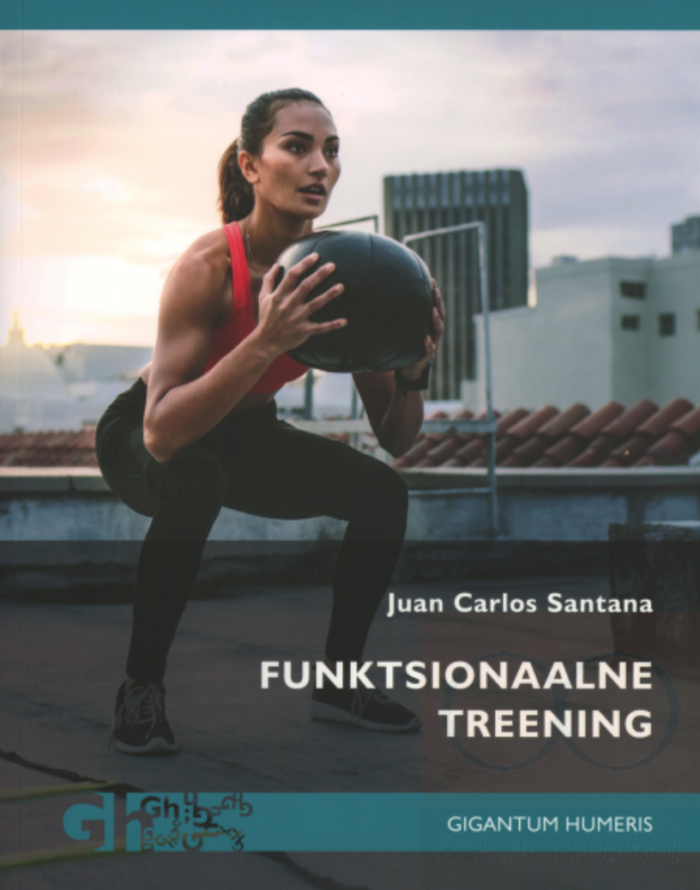
Functional training is a topic people talk about a lot, but often quite vaguely. Juan Carlos Santana’s book helps unpack the idea: how to build strength so that it’s genuinely useful in your workouts, in sport and in everyday movement.
It isn’t just a list of exercises. It’s more of a book recommendation for those who want to understand why a given movement is in a training program at all.
Why does functional training matter?
In the gym it’s easy to think only about the weight. If the bar is moving, it seems like everything is working. But real life doesn’t always ask how much you press on a machine. Real life asks whether you can lift, rotate, carry, brake, accelerate and keep your balance.
This is where the idea of functional training begins. The goal isn’t to do exercises just because they look trendy. The goal is to develop the body so that strength carries over into specific activities. For an athlete, that might mean better change of direction. For a parent, it might mean that carrying a child in their arms doesn’t wreck the lower back. For a coach, it means a clearer link between an exercise and a need.
According to the original description, functional strength has become one of the most popular training philosophies to emerge over the past 25 years. That makes sense. People no longer want just bigger muscles or a prettier training log. They want to move better, avoid injury and understand what training does to the body.
How does functional training unfold in the book?
The book doesn’t stop at a single line like “do exercises for the whole body.” Its value lies in bringing terms, concepts and practical exercises into one framework. The reader gets a picture of what functional strength means and how to build it into training.
Juan Carlos Santana covers definitions of functional training, groundbreaking concepts, specific exercises and sport-specific training programs. That’s an important difference. Doing squats, lunges or core work is one thing. Understanding which movement skill or sport requirement they serve is another.
Honestly, this is where many training books become either too dry or too simple. This book promises something different: modern knowledge presented in a way that a coach, physiotherapist, athlete or parent can understand. That makes the book useful even if you don’t write training programs yourself and simply want to train smarter.
What to keep in mind while reading
First, make sure the functional approach doesn’t turn into a random mix of exercises. If an exercise looks complicated, that doesn’t mean it’s better. A good exercise serves a goal. It suits the person’s level, moves in the right direction and leaves the body with enough control.
Second, safety matters. The original description emphasizes that the training concepts and methods in the book are safe, effective and scientifically grounded. While reading, treat this as a practical filter: does the exercise suit my body, my goal and my previous experience?
Third, look at how the book links general strength with sport-specific work. For example, a ball-game player, a runner and a gym-goer all need strength, but they don’t use it in exactly the same way. This is where the functional approach gets interesting.
The book’s details are concrete: the author is Juan Carlos Santana, the publisher is Tallinn University Press, the format is 270x215mm and the length is 270 pages. This points to a substantial handbook, not a quick brochure. More information and ordering: Read more and order.
FAQ: functional training
Who is this book for?
It suits coaches, physiotherapists, athletes and also parents who want to understand movement better. It’s especially useful for anyone who doesn’t want to train out of habit alone, but wants to know why an exercise is in the program.
Does functional training mean only bodyweight exercises?
No. Functional training can use body weight, dumbbells, barbells, resistance bands or other equipment. What matters is the link between the movement, the goal and the person’s needs.
Can a beginner understand this book?
The original description says the knowledge is presented in a simple form. So the reader doesn’t need to be a top coach. It does help, though, to be interested in learning rather than just copying a ready-made program.
Come and train! ArtGym