Alfa rowing race and Olympic hopes
The Alfa rowing race is a special moment in Tallinn’s winter sports calendar: for once, you can see where Estonia’s rowers stand before the new season. In the run-up to 2020, Olympic hopes were in the air too, because serious work was going into winning a place in the four.
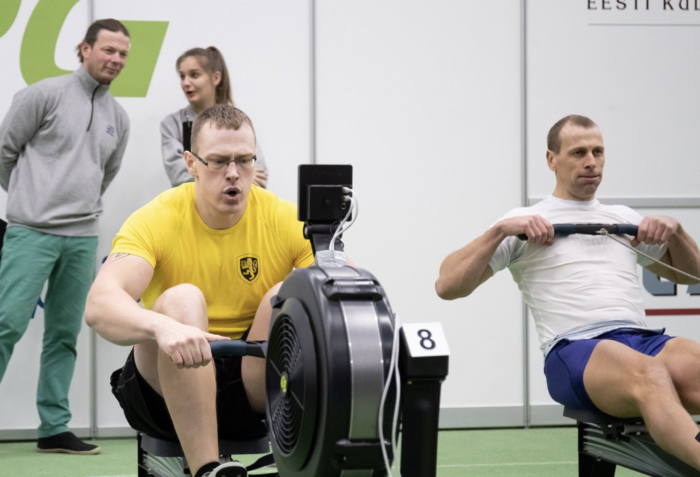
This was not just another ergometer competition. On one side were well-known names from on the water; on the other, indoor rowing specialists who can hold a painfully high pace on the machine. That is exactly what made the Alfa start so interesting.
Why does the Alfa rowing race matter?
At the end of January, an Estonian rower’s season is still taking shape. The water is cold, the weather is changeable, and much of the work is done in the gym or at a camp. The group of candidates for the four was at a ski camp in Finland at the time, building volume rather than sharpening their form specifically for Alfa.
Chief organizer Mihkel Klementsov said plainly at the time that athletes were arriving in Tallinn on the back of volume training. That is important background. When an athlete has not been sharpened for the race, the result shows general work capacity and mental readiness more than anything. The ergometer is unforgiving. When your strength runs out, everyone sees it.
Alfa’s strength is simple: the same distance, the same machine, the same hall. An amateur can sit next to a famous elite rower and see how big the gap really is. Still, it is not only a show for the elite. Over the years, Alfa has grown into a large indoor sports event with many participants, drawing rowers from Estonia and neighboring countries alike.
The Alfa rowing race and the favorites
Among the men, one of the most intriguing names was Rainar Piik. A year earlier he had surprised many, because Piik, who represented the prison service, had never rowed on the water. Even so, he led the men’s final at Alfa, and Tõnu Endrekson only got past him over the last hundred meters.
So what actually happened? On a rowing ergometer, technique matters, but rhythm, the ability to endure pain and the skill of pacing your strength matter even more. If someone has done a lot of training on the machine, they can seriously surprise a rower from the water. Piik was exactly that kind of name: not a classic rower, but a very strong indoor rower.
Piik also planned to compete at the indoor rowing world championships in Paris. In Klementsov’s view, that made him a completely realistic favorite alongside Tõnu Endrekson and Allar Raja. That statement put real tension into the competition. If a man with an amateur background can race for the win alongside the elite, then the audience has a reason to come to the hall.
How is a win made on a rowing ergometer?
The Alfa distance is 1000 meters. That sounds short, but on an ergometer it is a brutal effort. You can’t start too sluggishly, yet emptying the tank in the first 250 meters is just as bad an idea. A good racer finds a pace the body can still tolerate and then holds it to the end.
Belarusian rowing legend Pavel Shurmei was an especially dangerous man in that sense. He had previously won in Tallinn as many as seven times and was also preparing for the indoor rowing world championships in Paris. At 43, he did not show up just for the name. He wanted to win.
Shurmei admitted that in October and November he could not practice as much as he would have liked, but the last few weeks had been strong. His main focus was the 2000-meter distance, yet every week he also did shorter pieces that helped him stay sharp for the 1000-meter race. By his own estimate, the winning time could land somewhere between 2:40-2:45.
Frankly, that pace is almost uncomfortable for the average exerciser to watch. After that, the elite rowers’ numbers make a lot more sense.
The Alfa rowing race for amateurs
Alfa is not only a place where Olympic hopes and big names get the attention. Hundreds of amateurs come to test their level. For some the goal is to reach the final, for others a personal record, and for others simply an honest effort in the middle of winter.
If you are preparing for a race like this yourself, it is worth starting calmly. First learn a proper row: the legs work first, then the torso and finally the arms. Keep the return controlled, not nervous. Only then does it make sense to start chasing pace.
Another simple truth: don’t test your maximum in every workout. The ergometer tempts you into chasing numbers, but progress comes from repeated, quality training sessions. A few easy, longer pieces, a few shorter interval sessions and enough recovery give you more than constantly driving yourself into the red.
Registration information for the race was published at alfarace.ee. You could watch last year’s men’s final here: https://www.youtube.com/watch?v=-qRHO_4DApU.
FAQ: Alfa rowing race
Is Alfa only for elite rowers?
No. The elite give the competition its face, but for years Alfa has brought many amateurs to the start as well. It is a good place to put your form to an honest test.
Why can an ergometer rower surprise someone who rows on the water?
On the machine, the conditions are simpler and more straightforward: there are no waves, no boat and no crew rhythm. If an athlete is very strong on the ergometer, they can produce an exceptionally fast race over a short distance.
What should a beginner know before a 1000-meter test?
Don’t start too fast. The first 200-300 meters should be strong but under control. At the end, you can raise the pace if you still have strength left.
Author: Turg.Fitness.ee
Come and train! ArtGym