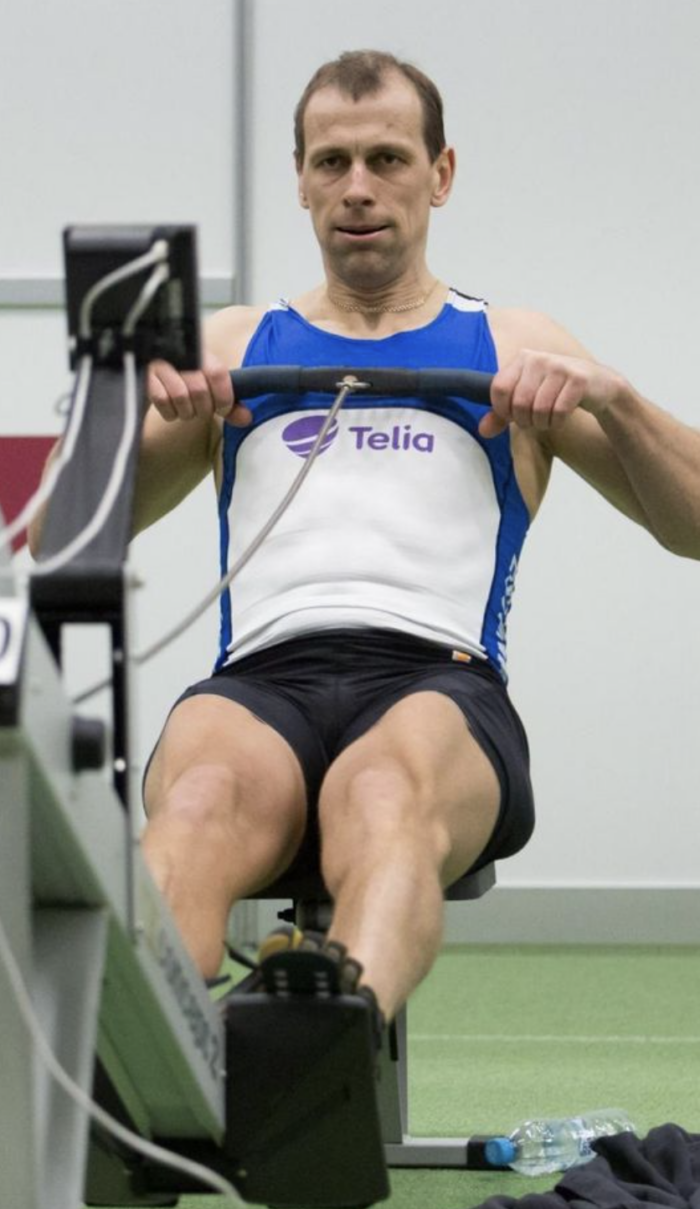
Alfa rowing competition 2019: Endrekson wins
The Alfa rowing competition in January 2019 delivered exactly what a good indoor rowing day needs: a strong pace, an unexpected leader and a finish where experience paid off. Tõnu Endrekson won the men’s 1000 meters at the Tallinn Sports Hall, but Rainar Piik was the other name of the day.
Why does Alfa matter in Estonia?
A winter race on the ergometer is an honest test for rowers. There is no water, no wind, no boat to blame. All that is left is the athlete, the machine and a screen that mercilessly shows the price of every stroke.
In that sense, Alfa is a special competition in Estonia. In 2019 it was held for the 26th time, and for years it has routinely drawn hundreds of starters. Elite rowers, recreational athletes and people who simply want to find out how much they have in the tank over one kilometer all turn up.
1000 meters sounds short. On a rowing ergometer, though, it is a very long string of minutes. Start too boldly and the finish hits you like a wall. Start too cautiously and you can’t make up the lost ground later. That is exactly what made the 2019 men’s race so exciting.
How did the Alfa men’s final unfold?
Tõnu Endrekson took the lead from the start. That was no surprise. Endrekson was a previous Alfa winner, a rower with Olympic experience and a name you expect to finish strong.
Then came Rainar Piik.
Piik, who represented the Prison Service, soon took over the lead and stayed ahead of all the elite rowers for a long stretch. What made the story special was that Piik had never rowed on the water. Someone like that walks into the hall, sits down on an ergometer and sends Estonia’s best rowers chasing for a while. Honestly, that is exactly why indoor competitions like this are worth watching.
Still, Endrekson remained Endrekson. A finishing sprint delivered the ninth Alfa win of Endrekson’s career, in a time of 2.45.9. After the race Endrekson admitted to never having heard of Piik before. Endrekson had hoped that such a crazy pace wouldn’t last to the end, and this time that calculation held up.
Piik finished second in 2.47.9. That was a strong result even without the backstory. Even more telling, though, was that Piik finished 0.2 seconds ahead of Allar Raja. One stroke, one moment, one small gap on the screen.
The Alfa women’s race and other results
In the women’s category, Liisu Mitt won in 3.19.6. Grete Alttoa and Kärolyn Mäesaar followed. Latvian elite rower Elza Gulbe, who became a mother in the autumn, was not yet back in previous racing form and finished fifth.
In indoor rowing, a return to form is harshly visible. Outdoors, running pace can depend on the weather, the course or slippery conditions, but on an ergometer every 500-meter split immediately signals where the body currently is. That keeps the discipline honest, but sometimes uncomfortably blunt.
The final protocols of the competition were listed separately in the original news story, but the old protocol link no longer works. For that reason the link has been removed and the results are written out here in the text.
What does Alfa teach the recreational athlete?
Many people use the rowing ergometer for a couple of minutes as a warm-up and move on. Alfa is a reminder that the same machine can also be a very precise competition tool.
The first lesson is pacing. A 1000-meter race is not a sprint from the first stroke to the last. A strong start is necessary, but you have to keep control. If your breathing falls apart in the first 300 meters, the finish turns into survival.
The second lesson is technique. On a rowing ergometer you don’t win by just yanking with your arms. The legs start the work, the trunk transfers the force and the arms finish the stroke. The recovery has to be calm, otherwise you waste energy before the next strong stroke.
The third lesson is the courage to give it a try. Rainar Piik’s race showed that good general fitness can take you very far on an ergometer. That doesn’t mean technique doesn’t matter. It means that you don’t have to be a lifelong rower to test yourself in this discipline.
What happened after Alfa?
After Alfa, the next target awaited the rowers: the Estonian indoor rowing championships, held on March 2 at the Jüri Sports Hall. There the distance was already 2000 meters, which is a different kind of challenge. One kilometer bites fast, while two kilometers demand patience on top of that.
Ahead of the 2019 Alfa there was also a lot of talk about the Finn Joel Naukkarinen, who had set a 100-kilometer world record on a rowing machine with a time of 6:06:06.1. Chief organizer Mihkel Klementsov called it a crazy result and, for comparison, pointed out that the average 500-meter pace over more than six hours was 1:49.8.
In Tallinn the distance was a hundred times shorter. That changed the game. A shorter race gave Estonia’s top rowers a better chance to hit back and gave the audience more tension. As the result showed, there was no need to look far for drama.
FAQ
What is the Alfa rowing competition?
Alfa is a well-known indoor rowing competition in Estonia, raced on rowing ergometers. The men’s distance in the 2019 main race was 1000 meters.
Who won the men’s race at Alfa 2019?
The men’s race was won by Tõnu Endrekson in 2.45.9. Rainar Piik came second and Allar Raja third.
Can a recreational athlete take part in a competition like this?
Yes. For years Alfa has been a competition where recreational athletes are welcome alongside elite rowers. There are usually several competition classes, so you don’t have to line up only next to the elite.
Author: Mihkel Klemetsov
Come and train! ArtGym