Alex-Edward Raus and the powerlifting world championship gold
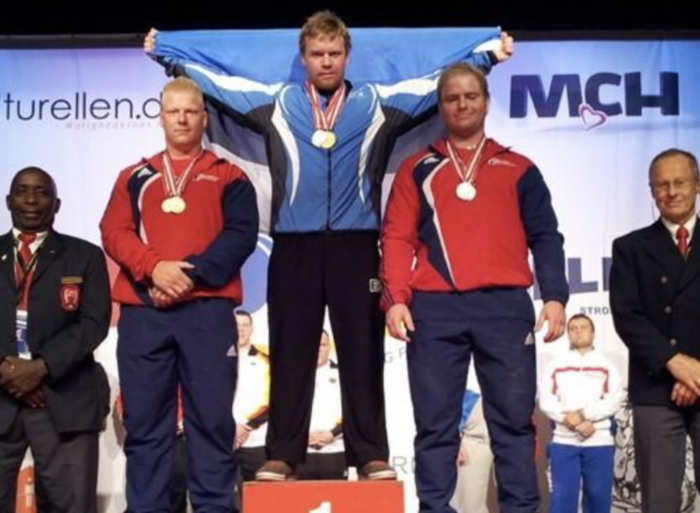
Alex-Edward Raus showed in Salo just how strong Estonian classic powerlifting can be on the world stage. At the World Championships held in Finland on June 5-14, he became junior world champion in the -105kg body weight class with a total of 780 kg.
It was no narrow win and no flash in the pan. Alex was also the strongest in the squat and the bench press, with results of 300 kg and 190 kg respectively.
Alex-Edward Raus and why the win matters
Classic powerlifting comes down to one simple thing: how much you can lift across three lifts combined. The squat, bench press and deadlift leave little room to hide. If your technique falls apart, the kilos don’t make it onto the scoreboard. If your nerves fail you, the scoreboard shows it immediately.
Alex-Edward Raus’s total of 780 kg put him in a very strong position in the junior rankings. Even more telling, his lead over the closest competitors was enormous. A gap like that usually shows not only strength but also good competition management: the right opening attempts, solid technique and the ability not to overthink at a tense moment.
For Alex this was already a third world championship title. What makes the achievement special is that he has become world champion in three different age classes: youth, junior and open. Honestly, that kind of consistency is rare. Plenty of lifters can have one good competition. Three different age classes take years of work.
Classic powerlifting from the Estonian lifters’ perspective
Harri Olak was the other Estonian in the junior age class. He competed in the -74 kg class and totaled 577.5 kg, which earned him sixth place. This result is also worth noting, because making the top six at an international championship is no easy feat.
In the open class the picture was tighter and the competition fierce. Siim Rast took third place in the deadlift in the super heavyweight class (120+) with 342.5 kg. Across the three lifts he totaled 895 kg, which gave him 9th place. In the super heavyweight class a single attempt can reshuffle the entire standings, so a placing like this in strong company is a solid achievement.
In the -105 kg weight class, Rait Sagor placed fifth with a total of 802.5 kg. A heavier body weight separated him from the bronze medalist. His individual lifts were 285 kg in the squat, 187.5 kg in the bench press and 330 kg in the deadlift.
Also competing were Tiit Saarma, Aimar Kuusnõmm, Siim Sammalkivi, Marianna Bogdanova and Rait Veski. They placed 8th, 10th, 11th, 13th and 14th respectively. Besides valuable competition experience, Marianna Bogdanova, Siim Sammalkivi and Rait Veski set Estonian records in their weight classes. This is where a medal doesn’t tell the whole story. Sometimes a record is just as big a step forward for a lifter.
What can we learn from this competition?
So what actually happens when an Estonian lifter wins this convincingly? First, it raises the visibility of the whole sport. Powerlifting isn’t just about heaving heavy weights up. It’s planning, technique, recovery and a cool head.
Second, it sends younger athletes a very clear signal: you can reach world level from Estonia too. You don’t have to train in a fancy facility or wait for the perfect moment. What you need is consistent work, a strong coaching eye and the ability to do the same thing well even when competition day is long.
Third, it’s worth looking at how broadly the Estonian national team brought in results. Youth, open and masters lifters were all in the picture. That says more about the health of the sport than a single gold medal. When athletes of different ages can compete at an international level, something in the system is working.
Alex-Edward Raus and the masters medals
Among the masters, Elmar Põldsalu and Mihkel Laurits took care of the medals. Among lifters over 60, Elmar Põldsalu won silver in the -59 kg class at his first international championships with a total of 337.5 kg. He was also first in the deadlift with 162.5 kg and second in the squat with 120 kg.
Our oldest active powerlifter, Mihkel Laurits, born in 1944, won bronze in the -105 kg class with a total of 457.5. He also took second place in the squat with 160 kg and third place in the deadlift with 195 kilograms.
Among the youngest masters, those over 40, Peep Päll placed 7th in the -66 kg class and Siret Sügis 10th in the -63 kg class. It’s a good reminder: powerlifting isn’t only for young athletes. With the right training load and a long-term plan, you can stay in competition form for a very long time.
Next year, world-class classic powerlifting can be seen in Tartu, when the European Classic Powerlifting Championships take place on March 7-12.
FAQ
Which lifts are part of classic powerlifting?
Classic powerlifting is contested in three lifts: the squat, bench press and deadlift. The total is built from the results of these three.
Why was Alex-Edward Raus’s win special?
He became junior world champion by a wide margin and won his third world championship title across different age classes. This shows rare consistency.
Did other Estonian athletes win medals too?
Yes. In the masters division, Elmar Põldsalu and Mihkel Laurits brought home medals, and Estonian records were also set in several weight classes.
Author: EJTL
Source:Turg.Fitness.ee
Come and train! ArtGym