What to eat after a workout: a quick snack
The workout is done, your stomach is growling and you know you should eat something. But what exactly, and how soon? We’ve put together a practical list of snacks for when you can’t get to a proper meal — and we’ll look at one specific example that works well in a gym bag.
Why eat after a workout at all
After a heavy set, your muscles are like a sponge — ready to take in protein and carbohydrates. In the first hour after training the body absorbs nutrients especially well, but that doesn’t mean the five-minute rule is set in stone. What matters more is that your daily totals — protein, carbohydrates, fluids — add up.
Still, there is a practical reason not to wait. After a proper workout your blood sugar drops and fatigue sets in, and if home is an hour’s drive away, you won’t get to a real meal until late in the evening. A small snack straight after training keeps your energy up and kicks recovery into gear, without dinner having to be double-sized.
A rule worth remembering: combine protein and carbohydrates in a ratio of roughly 1:1 or 1:2. Protein provides the amino acids your muscles rebuild themselves from. Carbohydrates replenish glycogen stores, so your next workout doesn’t feel harder than it should.
What to eat after a workout in practice
If you have the time and the strength left to cook, the classic options are simple:
- chicken or fish with rice and vegetables
- curd cheese with banana and honey
- an omelet on whole-grain bread
- Greek yogurt with berries and oat flakes
In real life, there isn’t always time. In the morning, you pack whatever won’t crumble, melt in a hot car or need a fridge. A banana is a good source of carbohydrates, but it gives you no protein. A peanut butter sandwich works, as long as the bread isn’t too thin. Chocolate milk is a classic that athletes have used for decades — the 1:1 protein-to-carbohydrate ratio in it is actually quite close to what your muscles need.
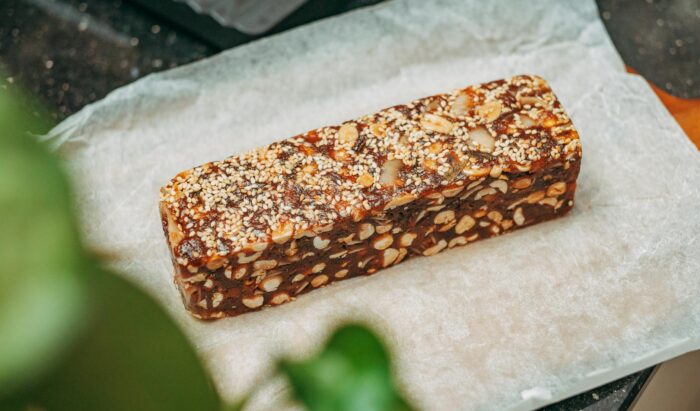
The most practical option for your bag, though, is a protein bar. One bar delivers both protein and carbohydrates at once, fits in a side pocket and survives being dragged around all day.
A protein bar as a post-workout snack
A good protein bar isn’t a candy bar with a “20 g protein” sticker slapped on it. Check the back of the package: if carbohydrates and protein are in a 1:1 or 1:2 ratio, you’re dealing with a genuine recovery bar. If there’s more sugar than protein and glucose syrup dominates the ingredients, it’s just candy under a new name.
Using it is simple. 1–2 bars as needed — either as a light snack before a workout or straight after training, when there’s no time for a proper meal. Thanks to its increased protein content, a bar also suits eating after training, when the body demands amino acids faster than boiled chicken can supply them.
FAQ: eating after a workout
Do you have to eat right after a workout?
No. The talk of an “anabolic window” that closes within 30 minutes is exaggerated. If you eat a proper meal within a couple of hours, you’re fine. Eating right away is simply more convenient and keeps your energy up until the next meal.
How much protein do you need in one snack?
For the average person, 20–30 g of protein from one meal is enough. For an athlete with a higher body weight, the number may be slightly higher. Beyond that, the body doesn’t use protein for building muscle in one go anyway — it simply burns the surplus for energy.
Does a protein bar replace a meal?
Not on its own. 190–195 kcal is too little for lunch or dinner. But it works well as a snack and is a good way to top up a meal when the main food portion turned out small.
Author: Turg.Fitenss.ee
Source: WHO – physical activity.
Come and train! ArtGym