Estonian championships: Otsus’s commentary
According to Indrek Otsus, the 2009 Estonian championships showed determination and preparation on stage, but the pool of competitors remained small. This commentary looks at the competitors rather than the organization: who improved, whose conditioning fell short, and what that says about the state of bodybuilding and bodyfitness in Estonia.
Why that year’s Estonian championships were so revealing
The 43rd Estonian championships took place at a time when gyms were full of people training seriously, yet few of them made it to the stage. Of the thirty competitors, only four went home without a medal. Excluding the three overall categories, 11 Estonian championship titles were awarded.
That sounds good at first, but it also conceals a concern. Fitness had no representation at all this time. That alone shows how fragile the sport’s foundations in Estonia can be: people are training, but making the leap into competition takes a different level of nerve, discipline and lengthy preparation.
Frankly, those who actually commit to that work deserve the most recognition. You do not get into stage condition in a couple of weeks. It takes months of weighing, posing, monitoring your food and putting in the effort, with the results ultimately on display for just a few minutes.
The Estonian championships and the growth of bodyfitness
Bodyfitness was one of the competition’s brighter spots. The sport is growing worldwide, both at the grassroots and at the top, and the same trend was evident in Estonia. The top three overall at the Estonian championships went on to the World Championships: Christina Alev, Katrin Kimber and Laura Reisalu. All already had experience at major competitions.
Christina Alev was among the five or six competitors who had made visible progress. Katrin Kimber was clearly behind her, but was still only halfway to peak condition. If Katrin can regain her best competition condition, she will be much harder to beat.
Laura Reisalu deservedly won her category. There was still room to improve her conditioning, but she had added muscle over the year. She will need to add more, however, to fulfill her considerable potential at world level.
Vitaliya Dmitrieva, Annika Summel and Tiina Porgand were also well prepared. What stood out was the overall impression they made: they had come to the stage to show the work they had put in, not simply to take part.
Bodybuilding: youth, juniors and classic bodybuilding
In youth bodybuilding, Sander Kuusk, Dmitri Kostitsõn and Illimar Gaidalenko meant business. The margins were narrow and the contest hard-fought. Illimar’s free posing routine was good, but could not make up for the points he lost on his physique.
The standard in the lighter junior category (-75 kg) was quite good. Maiko won thanks to the best conditioning, but it is now time to see him add some kilos. Kristjan-Johannes showed improvement across the board, with a lack of definition costing him first place. Siimon was a worthy rival to both.
In the +75 kg category, Mikk was in a class of his own. His progress was noticeable, and his leg size was already of international caliber. You cannot yet expect a young man to have the definition of older athletes, but his proportions justify setting very high goals. His age allowed him to compete as a junior for another two years.
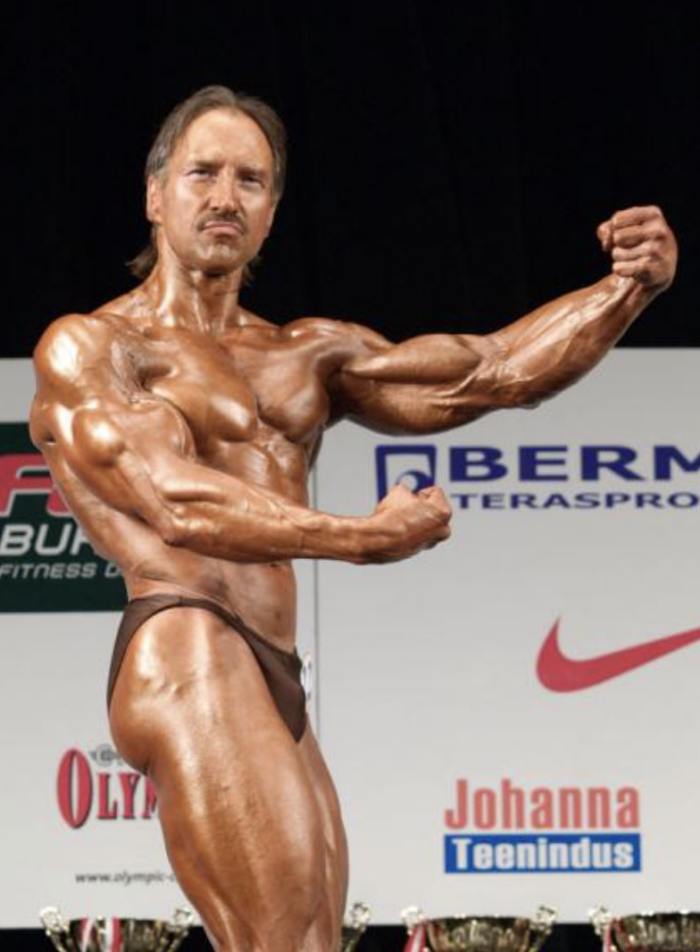
In classic bodybuilding, the order in the shorter men’s category was clear: Imre Vähi, Harri Indus, Kalle Kippar. Imre was the most sharply conditioned man in the competition, although he was not quite at his sharpest ever. In the overall category, his battle with Argo Ader for second place was very close.
The taller category brought a pleasant surprise: Jüri Leinvald. He had gained muscle mass and showed good conditioning. Argo Vaible provided strong competition, but in sport, standing still often means falling behind. Tanel Anton and Marko Tooming finished level on points, with the posing round breaking the tie in Tanel’s favor.
What the Estonian championships revealed in the men’s division
Men’s bodybuilding had a total of seven competitors across three categories. Four were essentially classic bodybuilders. That was the state of the sport in Estonia at the time, but there was no reason to speak badly of anyone.
Marek showed his usual less-than-finished conditioning, but put a great deal of effort into his free posing routine. Valju was at his best in recent years and won comfortably in the final standings. Ahti’s progress deserved particular mention: good proportions and solid improvement made him a serious future contender in this weight category.
With Andrei, it was a familiar picture. Better conditioning and more leg mass could immediately make him a contender for the win, but neither materialized this time. Argo V. returned after a long break, and it was his conditioning that kept him from a higher placing, rather than a lack of potential.
Ott’s and Argo A.’s performances were the big story of the day. Argo had not wasted his time away. Nobody had expected such a jump in muscle mass from a man soon to enter the masters age group. He still had 5 kilos to lose to reach peak condition, and the Classic Bodybuilding World Championships in December would reveal what came next.
Ott was once again at his usual high standard. For the past 11 years, that has meant a level the others have struggled to match. He still had a kilo to lose to sharpen his conditioning for the World Championships. His free posing routine did draw a comment that the violin playing was getting tiresome. A simple truth: when your physique is that strong, your routine may need freshening up too.
FAQ
Does this commentary assess how the competition was organized?
No. Indrek Otsus’s commentary focuses primarily on the competitors, their conditioning, their progress and the standard on stage. Assessing the organization is for others to do.
Why did bodyfitness stand out?
Because the sport was growing worldwide, and the same trend was visible in Estonia. Christina Alev, Katrin Kimber and Laura Reisalu were the top three overall at the Estonian championships, and all had experience at major competitions.
When were the results final?
Strictly speaking, the Estonian championships results became official only after the doping control samples had been analyzed. The top two competitors provided samples.
Author: Indrek Otsus
Source: Results
Come work out! ArtGym