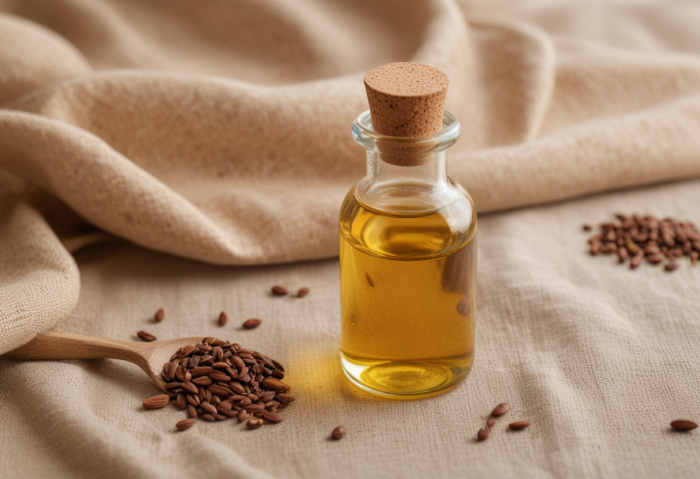
Flaxseed oil: benefits and how to use it
Flaxseed oil is one of the simplest ways to give your body the essential fatty acids it needs — especially if a hectic lifestyle means you don’t get around to eating fish every day.
Why is flaxseed oil beneficial?
Life gets busy. In the morning you grab a sandwich, at lunch something quick and warm, and by evening you’re already tired. At that pace there is a real risk that your body won’t get all the fatty acids it needs.
This is where flaxseed oil comes in. It is a cold-pressed vegetable oil rich in Omega-3 and Omega-6 fatty acids — substances the body can’t produce on its own, yet which are essential both for normal cell function and for general well-being.
So what actually happens when these fatty acids are in short supply? Muscles recover more slowly, hormonal balance can fluctuate, and inflammatory processes in the body don’t subside as quickly as you’d like.
Omega-3 and Omega-6: what do they do for your body?
Omega-3 fatty acids are best known for their anti-inflammatory effect. Regular intake supports cardiovascular health, improves brain function and helps the body cope better with stress. If you train, it’s worth knowing that Omega-3 also supports muscle recovery after exercise.
Omega-6 fatty acids play a somewhat different role — they are linked to hormone production and cell growth. Put simply: the body uses Omega-6 as a building block to make various hormones that regulate metabolism and growth.
The combination of both fatty acids in flaxseed oil makes it suitable for everyday use — whether you’re into sport or simply health-conscious.
Flaxseed oil and training: what to keep in mind?
Honestly, flaxseed oil is no miracle cure that replaces training or good nutrition. But once the foundation is in place, it can help improve your results.
Stimulating hormone production is one of the properties most often mentioned for flaxseed oil. The body needs healthy fats to produce testosterone and other anabolic hormones. If fats are lacking, hormones suffer — and muscle growth along with them.
Second, flaxseed oil affects fat metabolism. Omega fatty acids help the body use fat as an energy source more efficiently. That doesn’t mean you eat the oil and the fat melts away — but a body with a chronic fatty acid deficiency doesn’t burn fat as well as it should.
How do you use it? It couldn’t be simpler: add a tablespoon of flaxseed oil to your morning porridge, a smoothie or a salad dressing. Don’t heat it — cold-pressed oil goes rancid at high temperatures.
FAQ
Can flaxseed oil replace fish oil?
Partly, yes. Flaxseed oil contains ALA (alpha-linolenic acid), which the body can convert into EPA and DHA — the same ones found in fish. However, this conversion is inefficient, so fish oil can’t be fully replaced. For vegetarians, flaxseed oil is still a good option.
How should flaxseed oil be stored?
In the fridge, in the dark and tightly closed. Oil goes rancid quickly when exposed to light and heat. Cold-pressed oil is especially sensitive — buy smaller quantities and use them up quickly.
When is the best time to take flaxseed oil?
In the morning on an empty stomach or with a meal — both options work. The main thing is consistency: one tablespoon a day gives better results than a large amount once a week.
Author: Robocop
Come and train! ArtGym