Heavy or light weights in strength training
To get a toned, well-trained body, you should do long sets with light weights…wrong! Thanks to all kinds of fitness programs and home workout videos, most people unfortunately think this way today. I often get the feeling that if anyone still dares to call training with light weights strength training at all, something terrible will happen.
How would you respond if I claimed that, if men and women want to build real muscle at all, they have to train heavy and lift big weights? This applies even more for women. You probably think I’m just another clueless meathead who doesn’t know what they’re talking about. Think what you like. We’re both right on this question, but the difference is that with my style you’ll get a lot further.
There are two types of hypertrophy. Myofibrillar, where your muscles grow, but through their myofibrils. More of these tiny structural functional units are added, and they become thicker. The second type is sarcoplasmic hypertrophy. This hypertrophy comes precisely from long sets, but the muscle you build is lifeless and the result of accumulated water.
Sarcoplasmic hypertrophy comes precisely from the burning sensation and the pump that bodybuilders chase. You know the kind of thing: a coach tells you that you always have to go to failure, and if you aren’t drained at the end of the workout or the next day, the workout is useless and the muscle won’t grow. That’s nonsense, of course. Sarcoplasmic, long-set training builds apparent muscle. This kind of training (long sets) stimulates an increase in the volume of fluid inside the muscle fibers and in the amount of nutrients they contain. That is exactly what creates the full feeling and the sense that we’ve built powerful muscles in a short time. This is deceptive hypertrophy.
If you stop this kind of pumping with long sets, the accumulated water leaves your muscles quickly and all you’re left with is a “burning memory” of your workouts.
If you train for myofibrillar hypertrophy, you build real muscle, actual muscle. To build quality muscle, it’s important to recruit as many muscle fibers as possible. The more muscle fibers a muscle has, the stronger and bigger it grows. For muscle fibers to grow and for new ones to form, you have to give them a reason to grow and multiply. Light weights are certainly not that stimulus. The weight we lift must be a challenge for the muscles. I’m not saying you should always train with such heavy weights that you do it at the cost of injury risk, but train with programs that force your muscles to get stronger. Heavy weights and myofibrillar hypertrophy are considerably more lasting than the sarcoplasmic hypertrophy achieved through wild pumping with long sets.
What’s the solution for building muscle that lasts longer than muscle mass built with long sets? It can be achieved with a very simple program:
5 x 5 x 5
Five exercises. Five sets of each exercise. Five repetitions in each set.
The exercises must undoubtedly be heavy compound exercises that work many muscles at once, such as rows, squats and presses. Rest between sets: 1.5 – 2 minutes. Those five repetitions should be demanding, but definitely not taken to failure. The right approach is to stop two repetitions short of true failure.
Sample program:
Monday
Barbell back squat
Reverse lunges
Bench press
Bent-over dumbbell row
Parallel bar press
Tuesday – rest
Wednesday
Leg press
Deadlift
Standing barbell press
Incline dumbbell press
Wide overhand-grip pull-ups
Thursday – rest
Friday
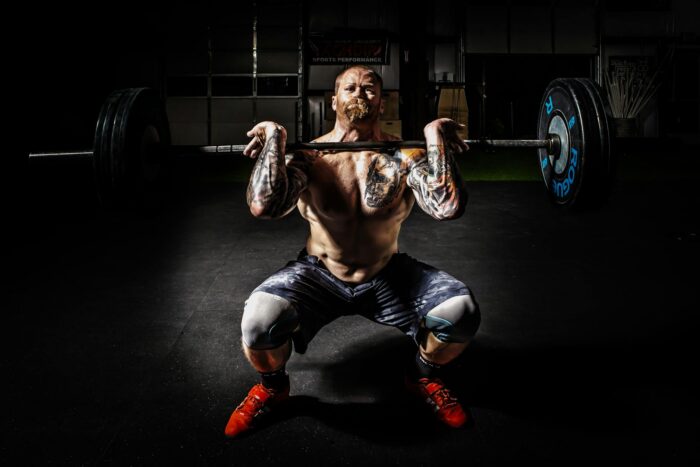
Front squat
Good mornings
Machine chest press
Barbell upright row
Seated row with palms facing each other
Saturday and Sunday – rest
If you’re doing things right, three full-body workouts a week is more than enough for building strength. Adequate rest and proper nutrition are important. With this plan you can easily do aerobic training three times a week. For example, one longer session at a steady heart rate and two shorter interval sessions. You may adapt to this approach after just a few weeks; that doesn’t mean you have to drop the plan right away. Change exercises or swap days; you can do that, and you definitely should. What should stay is consistency and the will to become stronger and better.
Author: Janar Rückenberg (translation)
Source: WHO – physical activity.
Come and train! ArtGym