
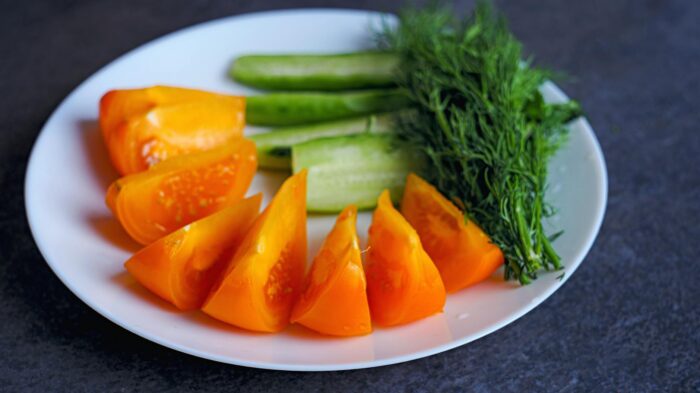
Vegetables on a bodybuilder’s plate: Badell’s advice
Vegetables are the one thing Gustavo Badell would recommend to every young bodybuilder. On his own plate, vegetables appear at every major meal — next to the omelet at breakfast, and again at lunch and dinner. Below is the core of his approach in a simple, practical form.
Why vegetables belong with every meal
Many bodybuilders leave vegetables off the menu or eat them only rarely. Badell says this is a mistake he has never made himself. His grandparents are Italian, he grew up in Spain and he lives in Puerto Rico — in all three kitchens, fresh vegetables are an everyday staple, not a garnish on the side.
“I love Italian food, except for pasta dishes — that’s why I don’t eat them that often,” says Badell. “Thanks to my family, I learned from a young age to eat vegetables with every meal.”
The reason is simple: vegetables add volume without piling on calories. When you’re on a diet and calories are pushed down, vegetables keep you full. You can eat, you’re not hungry, you’re not suffering. This, Badell says, is what sets him apart from many fellow competitors.
How Badell chooses vegetables through the year
“In the off-season I eat everything,” says Badell. That includes starchy options such as corn, peas and carrots. These bring more carbohydrates, which is no problem during the off-season mass phase — if anything, it’s a benefit.
When competitions approach, the picture changes. He generally cuts carbohydrates, and starchy vegetables drop off the menu. In their place come low-calorie, fiber-rich options.
An important detail: the amount of vegetables never drops to zero before a contest. Keeping the volume on the plate is what helps get through the last weeks of the diet.
Vegetables before a contest: the low-calorie choice
In the pre-contest phase, Badell’s preferences are specific:
- Broccoli — dietary fiber, few calories, keeps you full.
- Spinach — light, voluminous, with a good micronutrient profile.
- Zucchini — neutral flavor, goes with almost any meat or fish dish.
These three don’t cause an insulin spike or use up your carbohydrate quota. The amount of dietary fiber means slower digestion, and hunger doesn’t return after two hours.
Another thought from Badell: vegetables do provide a little carbohydrate, but thanks to the dietary fiber they don’t behave in the body the same way as bread or rice. Blood sugar doesn’t rise sharply, and energy comes more steadily.
What vegetables do for protein and skin
Badell believes that a large amount of vegetables helps the body make better use of protein. In his words: if you eat vegetables, you don’t have to consume as much protein, because every gram is put to work more efficiently. It’s not a miracle cure — but the dietary fiber that supports digestion and the amount of micronutrients play a role in muscle growth and maintenance.
Another thing Badell points out is skin. “Compared with many bodybuilders, my skin looks young — I’m 31 — and I credit that to my nutrition, which includes plenty of healthy fats and vegetables.” Vegetables supply the nutrients the body needs for its processes, and a shortage of them shows most clearly under stage lights.
Practical takeaway: vegetables with every major meal
When you put together your nutrition plan, adopt Badell’s recommendation as one simple rule: vegetables belong with every major meal. Morning, noon, evening. Not as a garnish, but as one main part of the plate.
In the off-season everything goes — including starchy options. When preparing for a contest, move to fiber-rich, low-calorie choices. The volume stays large, the calories drop. This is the framework Badell has worked within for years, and the one that got him to the top.
FAQ about vegetables
Do vegetables provide enough carbohydrates for workouts?
Not on their own. Vegetables are light on carbohydrates — solid workout fuel comes from rice, oats, potatoes or fruit. Vegetables complement, they don’t replace.
Should you avoid starchy vegetables on a diet?
In the pre-contest period, Badell cuts back on corn, peas and carrots. In the off-season he eats them freely. It’s simply calorie counting, not a blanket ban.
Are raw or cooked vegetables better?
Both work. Raw ones retain more water-soluble vitamins, while cooked ones are easier to digest for some people. The amount on the plate matters more than the method of preparation.
Author: joker
Source: WHO – physical activity.
Come work out! ArtGym




