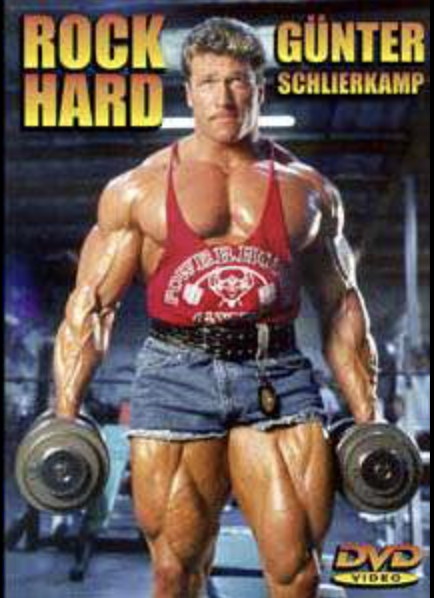
Schlierkamp and chest: 12 training hours
Schlierkamp is a good example of why chest training doesn’t stay the same for years. The takeaway from the Flex story is simple: if your chest won’t grow, change the exercises, reps, volume and recovery instead of just piling more weight on the barbell.
Why talk about Schlierkamp’s chest training
Schlierkamp started bodybuilding at 16. That means more than half a life spent under the iron. Time like that teaches one uncomfortable truth: a plan from a book may work at first, but the body adapts quickly.
Chest was always a hard muscle group to train. That is exactly why Schlierkamp kept looking for a fresh challenge for it. Not a new miracle trick every week, but small changes that put the muscle back to work.
Schlierkamp and changing the training load
The beginner base was strict: three exercises, four sets and eight reps. No fewer, no more. Bench press, incline press, and one more bench or incline press. Schlierkamp didn’t take the sets to failure, just finished the eight reps and moved on.
It worked because a beginner’s body responds to almost anything. But after two years a new stimulus was needed. Dumbbells joined the barbell. Same bench press, but a different feel, a longer range of motion and more work for the stabilizing muscles.
Then came flyes. Flat flyes stretched the outer chest muscles and made it easier to feel the middle of the chest. Later even more fly variations were added: cable crossovers for maximum stretch and incline flyes to build mass in the upper chest.
Once the exercises were in place, the rep count changed. Not every set was exactly eight reps any more. A pyramid brought a wider range into the plan: 15 reps in the first set and 4 reps in the last. A failure method was added as well. The intensity rose noticeably.
Chest training: volume, frequency and recovery
The next step was volume. Both exercises and sets were added. Five exercises and 20 sets for chest brought growth again. There’s a catch, though: more volume demands better recovery.
When the workout became too big, Schlierkamp didn’t cut the volume right away. The frequency went down instead. Chest used to be trained 2x a week, later 1x a week. The same principle stayed: one muscle 1x a week. In Schlierkamp’s words, a longer recovery time gave a better result.
For the last two years Schlierkamp used an even harsher technique: reps dropped as low as three and the workout ended with drop sets. Schlierkamp named 300 pounds as the competition weight and tried to hold it. This kind of work isn’t comfortable. One good drop set can wring you out more than several mediocre exercises.
Schlierkamp recommends putting the weak spot first
When the upper chest fell behind, the exercise order changed. The good old bench press moved out of the opening slot and incline press came first. The reason is simple: at the start of the workout you have the most strength and focus.
If the weak spot is left for the end, you can still give it 100% of your attention, but your strength is already partly spent. If you want to bring up your upper chest, start there. If the problem is stretch or feel, put cable crossovers in the plan. If you need overall mass, keep presses in, both incline and flat.
Certain exercises often stayed in the plan: incline presses, flat presses and cable crossovers. If not every workout, then every other one. That doesn’t mean other exercises are useless, just that the basic movements give the most reliably measurable work.
45 minutes: less time, more sharpness
Intensity doesn’t only mean a heavier barbell. Time counts too. It used to take an hour and a half to do three exercises and 12 sets. Later five exercises and 20 sets fit into 45 minutes.
Short rests keep the pump up better. Breathing gets deeper, the pace stays high and the workout picks up a cardiovascular element as well. Honestly, it’s a hard way to train, but it forces you to take every set more seriously.
The weekly plan was specific: MONDAY – BACK, TUESDAY CHEST, CALVES, WEDNESDAY LEGS, ABS, THURSDAY SHOULDERS, FRIDAY REST, SATURDAY ARMS and SUNDAY – REST. Chest wasn’t a random add-on but a priority with its own dedicated day.
FAQ
Should a beginner do 20 sets for chest right away?
No. At the start a simple base is often enough: three exercises, four sets and eight reps. More volume comes when technique, recovery and nutrition can support it.
When should you choose dumbbells instead of a barbell?
Dumbbells work well when barbell pressing has stalled or you can’t feel your chest working. They give a different angle and force you to control the movement better.
Why train chest only 1x a week?
When weights, sets and intensity go up, 2x a week can be too much. 1x a week gives you more recovery time, especially when the workout is really hard.
Author: joker
Come and train! ArtGym