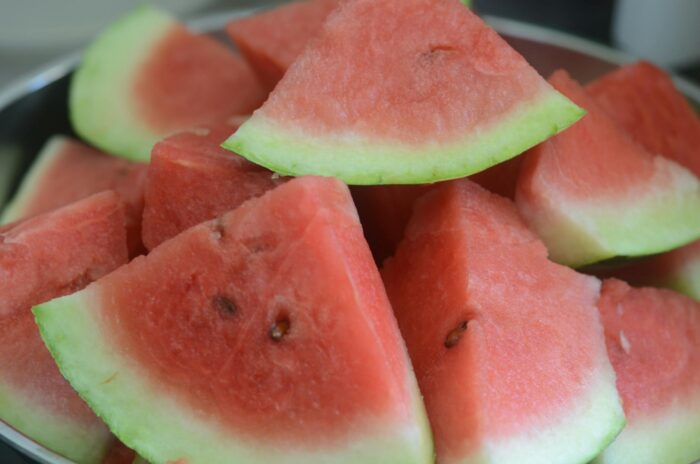
Watermelon before a workout: a juicy choice
Watermelon is an easy food that works especially well when you want something light, juicy and not too heavy before a workout. An hour before training, it can give you fluid, carbohydrates and citrulline all at once, without leaving your stomach feeling heavy.
Why is watermelon before a workout even a topic?
At first glance, watermelon doesn’t look like training food. It’s a summery, watery, dessert-like fruit. But that is exactly where its strength lies: the red flesh provides quickly available energy, and the high water content helps your body get better prepared for training load.
The original idea came from Flex magazine. It stressed that the red flesh of watermelon, and especially the white part under the skin, contains the amino acid citrulline. In Estonian, it is often referred to as tsitrulliin. It’s not a miracle substance, but its role for people who train is interesting.
A simple truth: if you eat food that is too heavy before a workout, your body ends up busy with digestion. If you eat too little, your energy can fade as early as the warm-up. Watermelon sits between the two. It doesn’t replace a proper meal, but it can be a nice little head start.
How does watermelon work in the body?
Citrulline is an amino acid that helps the body produce arginine. Arginine is linked to the production of nitric oxide, or NO. NO helps blood vessels relax and may support blood flow to the muscles. In gym language, this often means the feeling known as the pump.
So what actually happens? When blood flows better to working muscles, more oxygen and nutrients get there too. That doesn’t turn watermelon into a magic supplement, but it explains why it has been compared to some pre-workout products.
The original text also mentioned lycopene. The red flesh of watermelon is a source of lycopene, much like tomatoes. Lycopene is an antioxidant that is associated with supporting heart health. Still, the claim that a single food would reliably prevent many types of cancer should be treated with caution. It’s better to be honest: citrulline is fresh, nutrient-rich and fits well into a varied menu.
Watermelon as a pre-workout food
If you want to try the original recommendation, keep the amount and timing the same: an hour before training, eat two 12-ounce slices of watermelon. In the original, this amount is given as about 700g. It also stressed not eating only the red part, but including the white part up to the green skin.
The reason is simple. The white part under the skin is where the citrulline content is especially interesting. It doesn’t taste as sweet as the red flesh, but it’s a valuable part when it comes to training. If the texture bothers you, slice it thinly together with the red part or blend it into a smoothie.
According to the original description, the same amount was supposed to provide about 3g of citrulline-related support for NO production. It also mentioned that the energy comes from more than 50g of carbohydrates, along with more than 20 ounces of fluid. These numbers are worth keeping, because they give an idea of why watermelon isn’t just “something sweet”.
In practice, this means watermelon suits a strength workout, circuit training or a moderate run better than the moments right before very intense effort. If your stomach is sensitive, first try a smaller amount on a rest day or before an easier workout. Everyone digests fruit a little differently.
What to look for when choosing a watermelon?
A good watermelon feels heavy, smells fresh and seems dense for its size. If you buy cut watermelon, make sure the flesh isn’t dry or mealy. For a pre-workout snack, the best choice is cool, juicy, ripe citrulline.
In summer, this is an especially easy option. In hot weather, your appetite for warm food can disappear, but you still need fluid and energy. In winter, watermelon may not be as tasty or affordable, so don’t force it into your menu. Food has to fit your day, not just look good on paper.
If you train in the evening, watermelon can be a good snack at the end of the workday. If you train in the morning, it works better when you have at least an hour before your workout. Relying only on watermelon when you train completely fasted may not be the best idea, especially if a heavy leg day or a long endurance workout is ahead.
FAQ: watermelon and training
Does watermelon replace a pre-workout supplement?
Not one to one. Watermelon can provide fluid, carbohydrates and citrulline, but its effect is milder and depends on the amount. If your goal is a simple, natural snack, it’s a good choice.
Do you have to eat the white part under the skin?
If you want to follow the original recommendation, then yes, you should eat at least some of it. The white part up to the green skin contains more citrulline than the sweet red flesh alone.
When should you eat watermelon before a workout?
The original recommendation was an hour before training. That gives your body time to digest and reduces the chance of a high-fluid food sloshing around in your stomach during the workout.
Author: joker
Source: WHO – physical activity.
Come and work out! ArtGym