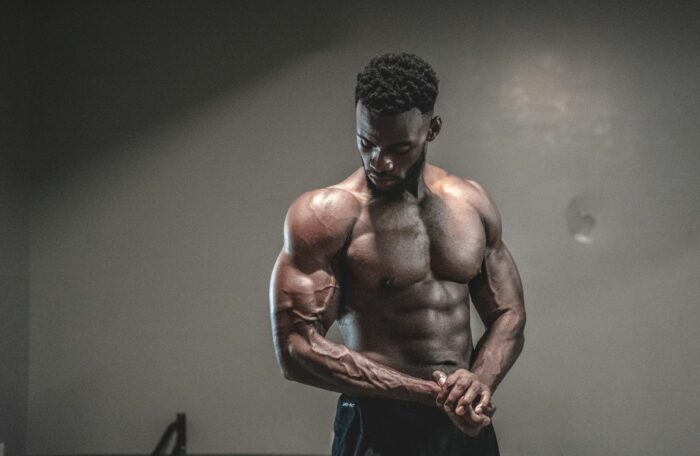
Bodybuilders and aesthetics: why size isn’t everything
Bodybuilders have been debating one core question for years: does the future belong to massive giants or to those whose physique is harmonious and aesthetic? The answer is not hard to find – and concrete examples dating back to 2003 prove it.
Why do bodybuilders choose mass over aesthetics?
Among young people, the belief that bigger is better is widespread. It’s understandable – magazines and contest results have rewarded mass for decades. But that logic often leads to a place where the body no longer looks athletic, just… big.
Excess mass often comes with what the audience isn’t shown: water softens the muscles, symmetry suffers, the waist gets wider – and onto the stage steps someone who resembles a waterlogged sack more than an athlete. Many talented young people burn out before they ever turn pro, because they are chasing the wrong goal.
Victor Martinez and Richard Jones: pro examples from 2003
In 2003, something remarkable happened. Two men proved that a top-level bodybuilder doesn’t have to be a monster.
Victor Martinez won the Night of Champions title, weighing 238 pounds (107 kg) at the contest. Richard Jones was crowned overall champion at the NPC USA competition, weighing under 200 pounds (under 90 kg). Neither looked like a hulking mass monster. What set them apart was something else: conditioned, dry muscles, a proper V-shaped back, a narrow waist and sharp detail that was a pleasure for the audience to look at.
Honestly – it was refreshing. After years in which the stage was dominated by physiques that raised more questions than admiration, two men came along who were simply beautiful to look at.
Golden era bodybuilders and Schwarzenegger’s legacy
Why is the 1970s called the golden era of bodybuilding? Not only because of the names. It’s also because the physiques of the champions of that time were aesthetic: broad shoulders, a narrow waist, well-defined muscles.
Arnold Schwarzenegger weighed around 235 pounds (105 kg) at his peak. Nobody has ever said Arnold wasn’t big enough. His physique was classic, and that example lasts to this day.
Even Ronnie Coleman has admitted that he was in his best condition at the 2001 Arnold Schwarzenegger Classic, where he weighed 244 pounds (110 kg) – less than at any of his Mr. Olympia contests. Quality beat quantity.
What lesson does this offer bodybuilders?
The direction is clear: if bodybuilders like Martinez and Jones keep going down their path, we may soon be talking about a new golden era. Physiques like these deserve to win awards – and that sends young people a clear message: quality matters more than size.
What does this mean in practice? Build a proportionally balanced physique. Don’t skip symmetry and waist training in the hope of simply making up for it with mass. The audience – and the judges – can see the difference.
- Size without symmetry won’t make you stand out
- Water and soft mass aren’t muscle – judges know the difference
- A narrow waist is visually just as powerful as a big chest
- Your best condition isn’t always your heaviest weight
FAQ: frequently asked questions about bodybuilders
Do bodybuilders have to be very big to stand out at a contest?
No. Victor Martinez and Richard Jones proved in 2003 that you can win weighing 90–107 kg, as long as the physique is symmetrical, lean and full of detail. Mass alone doesn’t win the title.
Why is 1970s bodybuilding called the golden era?
Because the physiques of the champions of that time were aesthetically pleasing: broad shoulders, a V-shaped back, a narrow waist. That proportion is a timeless standard that is still valued today.
When was Ronnie Coleman’s best condition?
Coleman himself has said that he looked his best at the 2001 Arnold Schwarzenegger Classic, where he weighed 244 pounds (110 kg) – lighter than during any of his Mr. Olympia seasons.
Author: joker, Flex
PS Come and train! ArtGym