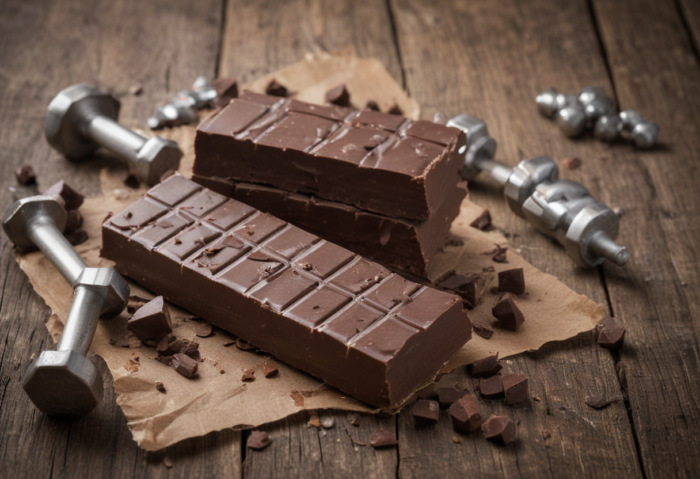
Healthy chocolate bars for training at the gym
Healthy chocolate bars can be confusing at the gym counter: the wrapper promises energy, protein, vitamins and sometimes even fat burning. The simple truth is that one bar isn’t just another sweet treat; what it’s good for depends on its ingredients and timing.
Why healthy chocolate bars matter alongside training
Anyone who has ever gone looking for something sweet right after training knows the feeling well. Your stomach is empty, your hand reaches toward the counter and the choice is a mixed bag. One bar looks like ordinary chocolate, another promises more protein, a third focuses on energy.
The point of this old fitness.ee article still holds: before you buy, it’s worth working out whether you need quick energy, recovery or just a better snack. Today we often call them protein bars or energy bars, but the original word “chocolates” described the same shelf well.
A bar doesn’t make your nutrition healthy automatically. Still, it can be a convenient choice when the workday drags on, your workout starts right away or there’s no proper meal at hand. The difference lies in what you expect from it.
How chocolate bars break down by ingredients
By ingredients, bars made for people who train can be loosely divided into three groups. The split isn’t complicated, but it quickly shows you what to look for on the wrapper.
- Energy bars. These mainly use simple carbohydrates, such as glucose syrup, dried fruit, honey and sugar. Some also contain vitamins and minerals. The point of such an energy bar is to provide energy before a training load or to help during prolonged effort, for example when skiing, running a marathon or cycling. It isn’t the best choice for muscle recovery, because the protein content is usually low.
- Energy and protein bars. In addition to simple carbohydrates, these use maltodextrin, which is absorbed more slowly and provides energy over a longer period. The protein source may be a whey, milk or soy protein isolate. Such a bar suits both before and after training, as it helps refill energy stores and supports your muscles. Vitamins such as A, B6, B12, B1, C and E are often added, along with minerals such as calcium, magnesium, chromium, iron and selenium.
- Protein bars. These are mostly based on whey, milk or soy protein. The amount of protein in one bar can be up to 30 – 35 g. That is roughly the amount many people who train try to get from one meal. After a hard workout, a protein-only bar may not be the most effective choice if carbohydrates are low. It does, however, work well as a snack between main meals.
The fat content of health bars is often lower than in ordinary chocolate bars, ranging from 2 – 8 g per bar. That doesn’t mean you should be afraid of fat. What matters is the amount and the source of the fats. Some bars also contain lecithin.
Healthy chocolate bars: which one to eat when?
Before training, a bar with more carbohydrates is a better fit. If your stomach is empty and a long training load lies ahead, quick energy is practical. It doesn’t have to be a big meal, just a small boost so that your workout doesn’t start on an empty tank.
After training, it’s worth checking whether the bar contains carbohydrates in addition to protein. A bar that focuses only on protein can be a good snack, but it may not replenish your energy stores well enough. If the workout was long or very intense, your body needs both.
There are also bars containing L – Carnitine. According to the original explanation, L – Carnitine encourages the body to use its own fat stores during physical work, sparing carbohydrates and proteins, and may support recovery. Using such bars is justified mainly before training, about an hour earlier.
Honestly, no bar should replace regular food every day. But if the choice is between a bar and some random pastry, a health bar with a better ingredient list may be the more sensible decision.
What to check on the wrapper before buying
The first thing is your goal. If you need energy, look for carbohydrates. If you need something filling and support for your muscles, look at the protein. If you simply want to get your sweet tooth under control, choose a bar whose ingredients are easy to understand and that doesn’t make you even hungrier.
The second thing is the portion. Some bars seem small but provide quite a lot of energy. That isn’t a problem if you have a long workout or an active day ahead. But it may be too much if you eat it just sitting at a table.
The third thing is taste. It sounds simple, but it works. If a bar is so dry or cloying that you only eat it for the sake of “healthiness”, the habit won’t stick. A good choice is one that fits your daily schedule and doesn’t leave you with heartburn.
FAQ: healthy chocolate bars
Is a protein bar suitable after training?
Yes, if you need protein and a quick snack. If your workout was long or very hard, it’s better to choose a bar that contains carbohydrates in addition to protein.
Is an energy bar the same as a healthy treat?
Not always. An energy bar can contain a lot of simple carbohydrates, and its place is more before a training load or during prolonged effort, not as a dessert every evening.
Does a bar with L – Carnitine burn fat by itself?
Don’t expect a miracle. Such a bar may suit the time before training, but a change in your body fat percentage still comes from the combined effect of nutrition, exercise and consistency.
Author: Ott Kiivikas
Come and train! ArtGym