Soy vs casein: which protein is right for you?
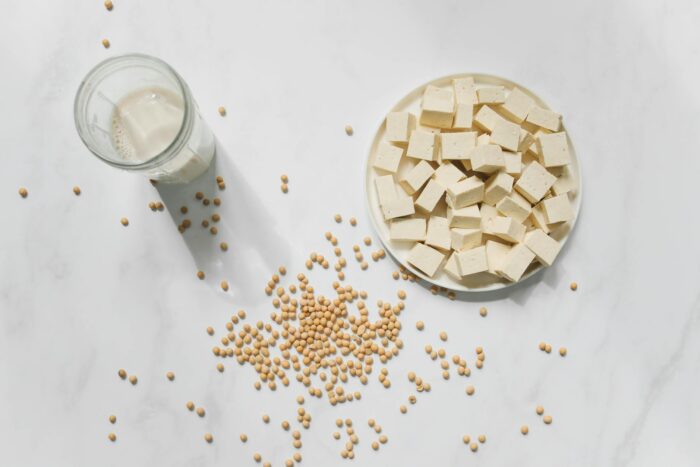
Soy protein has long been a hot topic in the fitness world. Some swear by its heart-healthy effects, while others claim it can’t compete with casein when it comes to muscle growth. Both sides are right — the question is simply what exactly we’re measuring.
Why soy is good for your heart
The US Department of Health has recognized the role of soy protein in heart health for a long time. According to its recommendation, every meal should contain at least 6.25 grams of soy protein to get a measurable benefit from it. It sounds small, but it adds up when repeated regularly.
Studies show that soy protein lowers total cholesterol, triglycerides and LDL cholesterol, the so-called bad cholesterol. It also raises HDL — the good cholesterol. It sounds almost too good to be true, but that’s how it is.
One thing worth knowing separately: Lp(a), or lipoprotein(a), is an independent risk factor for heart disease and is not the same as ordinary LDL. If Lp(a) exceeds 300 milligrams per liter, it deserves attention. Soy, however, may not help here — more on that below.
An interesting side note on fats: fish oil lowers Lp(a) by 15% in the average person, and by as much as 37% in people with high cholesterol. And margarines — especially those containing trans fats — can raise Lp(a) by 20–70%, even when the fat from margarine makes up only 5–10% of total daily energy intake. So which fat ends up on your plate matters more than people think.
What the studies say
A study carried out at the University of Copenhagen looked at nine healthy men aged 21–64. The aim was to compare soy protein with casein specifically in terms of their effect on Lp(a). [K. Nilausen and H. Meinertz: Lipoprotein(a) and proteins: casein lowers Lp(a) levels much more than soy.] The results were surprising.
Both soy protein and casein lowered cholesterol, triglycerides and LDL. There was no real difference here. For HDL, soy protein was clearly better — raising it by 11%.
But for Lp(a), the paths diverged. Casein lowered Lp(a) by 65% compared with the participants’ usual levels. Soy, on the other hand, raised Lp(a) by 20%.
This is an important finding. If someone recommends soy protein purely for heart health, it’s worth asking: what’s your Lp(a) level? Because there is no universal friend of the heart here.
How to combine soy and casein
Neither protein is perfect. Soy protein is the better HDL booster, while casein is the better Lp(a) lowerer. Each has its role.
Researchers have not yet worked out an optimal soy–casein blend that would deliver the best results on both fronts at once. So the most sensible approach is to eat different types of protein — rather than getting attached to a single source.
If your goal is muscle mass, casein and whey protein are probably the higher priorities. Soy works well as a way to add variety, especially for those who want to reduce the share of animal proteins. Just keep in mind that when it comes to heart protection, soy protein may not be the one and only solution — especially if your Lp(a) level is high.
So what actually happens if you eat only soy protein? Cholesterol improves and HDL rises — but Lp(a) may creep up at the same time. A combination usually gives a more balanced picture.
FAQ
Is soy protein as good as whey protein for muscle building?
Studies suggest that casein and whey protein are better choices for muscle growth. Soy protein is a complete protein, but its amino acid profile is weaker in lysine and methionine.
Does soy always raise Lp(a)?
The University of Copenhagen study showed that in nine healthy men, soy protein raised Lp(a) by 20% — while casein lowered it by 65%. That doesn’t automatically mean the same for everyone, but the risk is real and worth paying attention to.
Can soy protein and casein be used together?
Yes, and it may even make sense. Both protein sources bring different benefits, and combining them gives a broader spectrum — an HDL increase from soy and Lp(a) lowering from casein.
You can find the best proteins here: https://turg.fitness.ee/et
Author: FLEX transl. M-A Olle
Source: WHO – healthy eating.
Come and train! ArtGym