Children’s fitness: Anastassija’s road to the Europeans
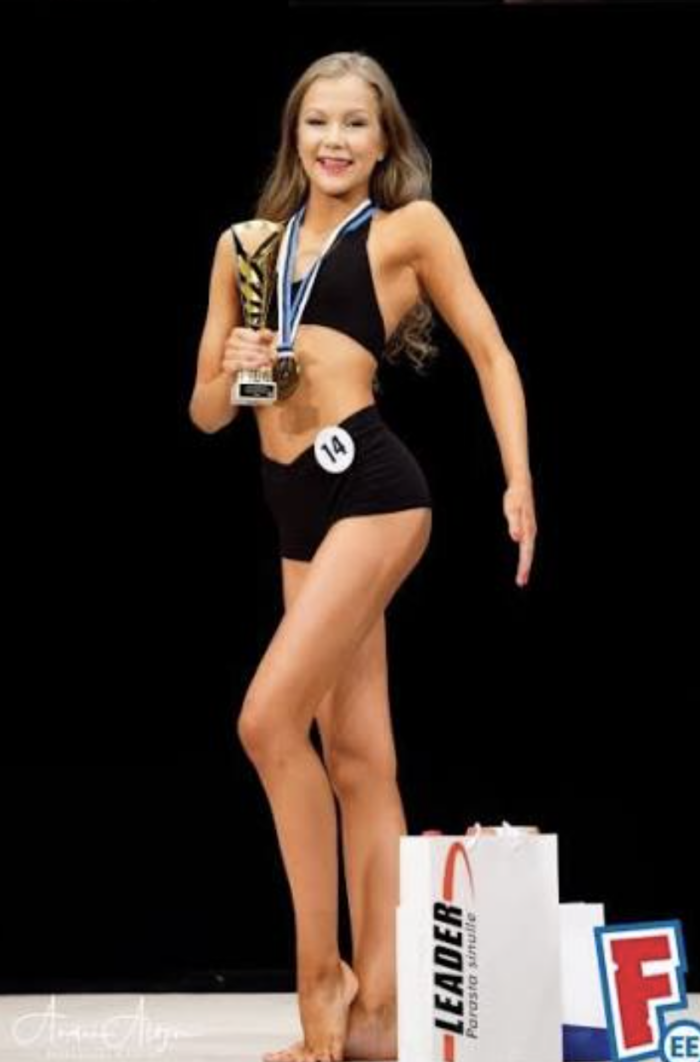
Children’s fitness has grown rapidly in Estonia in recent years. One talented girl from this generation is Anastassija Ussova — the 2016 Estonian champion in her age group. Her story shows what it means to take up competitive fitness as a child, and how a coach, family and community can work together to help a young athlete reach the international stage.
What makes children’s fitness a distinctive sport
Competitive fitness is no ordinary workout. It combines strength, flexibility, dance and stage performance. Children have to be both athletes and performers. That is precisely why the sport appeals to so many girls — it challenges them both physically and creatively.
The competition consists of two parts: a physique round and a fitness routine. The physique round assesses athletic condition, posture and overall impression. In the fitness routine, competitors have 1.30 minutes to show everything they have learned in training — strength moves, stretches, jumps and dance movements. The more impressive the tricks, the higher the score.
That variety is what makes the sport exciting. Every season brings a new routine and new challenges. There is no time to get bored.
Anastassija’s journey in children’s fitness
Anastassija is a 9-year-old girl who trains at Kristina Koroljak Sports Club. In her very first year of training, she took first place in her age group at the 2016 Estonian Children’s Fitness Championships. That is unusual for a beginner, but Anastassija has three things working in her favor: dedication, talent and a supportive family.
Her coach, Kristina Koroljak, is a world fitness champion herself. A coach with that experience knows exactly what it takes to develop a young athlete — and, even more importantly, how to keep training enjoyable for a child. Because children’s sport does not work without enjoyment.
Anastassija looks up to her active parents, who also work out regularly. A home where physical activity is a natural part of life gives a child the strongest possible foundation.
On the road to the European Championships
The European Children’s Fitness Championships will take place in Serbia in June 2017. Anastassija hopes to travel there with her coach to compete against the world’s best girls from different countries. This will be her first major international challenge.
A new fitness routine is being prepared for the spring season — a flamenco-style dance. That Spanish passion is perfectly suited to the stage: a sharp rhythm, precise movements and plenty of emotion. These are exactly the kinds of routines that judges remember.
Anastassija and her coach believe she is ready for international competition. She always gives her best in training and hopes to perform on the European Championships stage this year.
What children’s fitness offers a young athlete
Let’s be honest — children’s fitness is about more than medals. It improves posture and builds discipline and confidence. Children learn to perform, lose, win and take to the stage alongside others. These are skills no school textbook can teach.
The truth is simple: children’s sport works when children themselves want to take part. When motivation comes from within — as it does for Anastassija — it can take them far. When it comes only from their parents, that spark fades sooner or later.
FAQ
At what age can your child start children’s fitness training?
Most clubs accept children from ages 5–6. More serious competition training usually begins at age 7, when children can concentrate on memorizing a routine.
How often do children’s fitness training sessions take place?
For beginners, 2–3 workouts a week are enough. At competitive level, athletes train 4–5 times a week, with individual sessions added closer to competitions to polish their routines.
What do judges assess in the fitness routine?
Technical ability (strength moves, flexibility and jumps), the structure of the routine, musicality and overall impression. Points are distributed more or less equally — acrobatics alone will not win a competition if the presentation of the routine is weak.
Author: EKFL
Come and train! ArtGym