In short:
- Ashwagandha is an adaptogen that helps the body adapt to stress more flexibly, rather than suppressing emotions.
- In clinical studies, a standardized extract lowered cortisol levels in people with chronic stress compared with placebo.
- The usual dose is 300–600 mg of standardized extract per day; the effect builds up over 2–4 weeks.
- It is not suitable for pregnant or breastfeeding women or for people taking thyroid medication without consulting a doctor.
Ashwagandha is one of the most studied adaptogens in the world — a plant that Ayurvedic medicine has used for thousands of years and that is today associated with stress resilience and cortisol balance. In this article, we look at what science actually says about ashwagandha and the stress hormone, and how to use this supplement safely.
How does ashwagandha affect stress and cortisol?
Ashwagandha is an adaptogen — a substance that helps the body adapt to stress. It doesn’t suppress emotions or “switch off” feelings, but helps the body respond more flexibly and recover faster. Cortisol is at the center of the stress response: this hormone should be high in the morning so that you wake up, and low in the evening so that you can fall asleep. With chronic stress, this natural rhythm breaks down — you barely get out of bed in the morning and can’t fall asleep in the evening.
So how does an adaptogen work? Imagine your nervous system as a guitar string that stress has tightened to the limit. An adaptogen doesn’t cut the string or make you “not feel”, but helps ease the tension back to a working level. It is not a quick miracle cure but a support whose effect shows over time and alongside a good routine.
Ashwagandha is one of the few herbs with a reasonably solid evidence base. In clinical studies, a standardized extract lowered cortisol levels in people with chronic stress compared with placebo (Salve et al., 2019); sleep quality and results on anxiety scales have also improved. It’s important to understand that study results don’t guarantee the same effect for everyone — individual response can vary. If you want a broader picture of how to interpret scientific evidence in the first place, also see the article What science says about building muscle.
Which form and dose of ashwagandha should you choose?
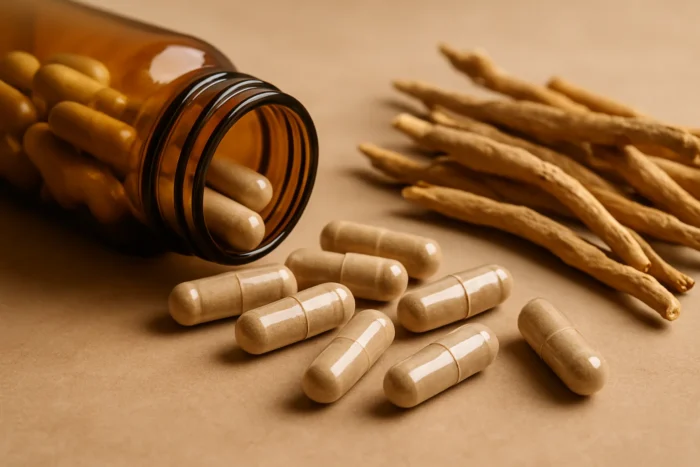
Not every product is the same. The two most studied are standardized extracts. KSM-66 is a root extract — the most studied form and a good choice for daily use. Sensoril is a leaf and root extract with a more pronounced calming effect, which makes it well suited to the evening. Look on the label for a reference to one of these standards and for the percentage of withanolides — the active compounds.
The usual dose is 300–600 mg of standardized extract per day. Start with a smaller dose and monitor how you feel. The effect of ashwagandha builds up over time: you may only see the full result after 2–4 weeks of regular use, so don’t quit the course after just three days. You can take it in the morning to support stress resilience or in the evening for sleep.
In terms of quality, it’s worth choosing products whose label shows a clear standard and the withanolide percentage, rather than just “ashwagandha powder” with no information on active compounds. Because the effect is gradual, it makes sense to plan a course of at least one month and track changes in sleep, irritability and energy — that way you get an honest picture of whether it works for you.
Who should not take ashwagandha?
An adaptogen is not for everyone. Ashwagandha is not recommended for pregnant and breastfeeding women. If you have an autoimmune condition, be cautious, because it may stimulate the immune system. A possible interaction exists with thyroid medication, and with sedative (calming) medications the herb may amplify their effect — in both cases, discuss use with your doctor first. The National Center for Complementary and Integrative Health at the US National Institutes of Health (NIH NCCIH) notes that in rare cases ashwagandha has been linked to liver damage, so if any symptoms appear, stop taking it and consult a doctor. If you take dietary supplements alongside any prescription medication, always consult a specialist.
How do you fit ashwagandha into an evening routine?
Ashwagandha pairs well with magnesium. Many people notice a better result when they first take this extract in the evening and then magnesium glycinate — it creates a gentle “switching off” ritual before sleep. Magnesium also plays a role in relieving muscle tension and cramps — the article Effective help for cramps covers this in more detail.
Keep in mind that a supplement is only one part of the whole. No ashwagandha course makes up for consistently broken sleep, late coffee or constant overload. The effect shows best when the herb supports an already adjusted lifestyle: a regular bedtime, a screen-free hour before sleep, moderate movement and conscious stress management. Judge how you feel over weeks, not days, and if you plan to use it for longer, check in with a specialist along the way — that way you get the most benefit from the support, safely.
References
- Energy and Calm: A Natural Plan Against Stress, Insomnia and Fatigue (Fitness.ee e-guide, chapter 3).
- NIH NCCIH (2023). Ashwagandha. https://www.nccih.nih.gov/health/ashwagandha
- Salve et al. (2019). A clinical study of ashwagandha and cortisol.
- Health Board. Safe use of dietary supplements.
Frequently asked questions
How long does ashwagandha take to work?
The effect builds up gradually. You may notice the first changes in how you feel within a few weeks, but the full result is usually expected after 2–4 weeks of regular use. Don’t expect an immediate effect from a single dose.
Should you take ashwagandha in the morning or in the evening?
Both work. Taken in the morning, it supports stress resilience through the day; taken in the evening, it helps the body wind down before sleep. Because of its calming effect, many people prefer taking it in the evening, often together with magnesium glycinate.
Which form of ashwagandha is best?
The most studied are the standardized extracts KSM-66 (root extract) and Sensoril (leaf and root extract). Look on the label for a reference to one of them and for the withanolide percentage — it shows the content of active compounds.
Is ashwagandha safe?
In healthy adults, short-term use at recommended doses is generally considered well tolerated. However, it is not suitable for pregnant or breastfeeding women, or for people taking thyroid medication or sedatives, without a doctor’s advice. If symptoms persist, always see a doctor.
Come and train! ArtGym