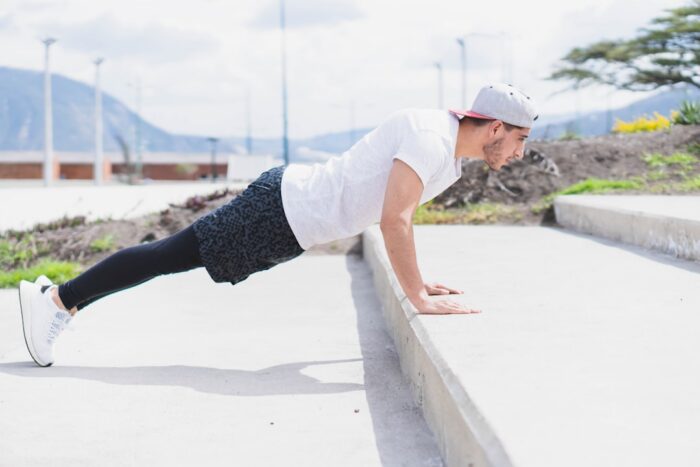
The average person: just how weak are we, really?
The average person usually can’t do a single pull-up, hold a plank for a minute, or hang for very long supporting their own body weight. That’s not a verdict — it’s a starting point. The good news is simple: you don’t have to put in much effort at all to stand out from the average.
What can the average person actually do?
Let’s be honest. An ordinary adult whose life passes behind a desk and a steering wheel struggles with some pretty simple tests. Walk three kilometers at a brisk pace in 25 minutes — many can’t. Do one proper pull-up — most can’t. Hold a plank for 90 seconds, hold your breath for a minute, do 50 deep squats in a row. Try it and see for yourself.
I’m not talking about comparing yourself with elite athletes. I’m talking about the baseline capacity the human body has built up over millions of years. These aren’t athletic feats. They’re default settings we’ve gradually given up.
Why the average person has grown weaker
The welfare society is a wonderful thing, but it comes at a price. We move less than any previous generation. We lift less. We sit longer. We solve every problem with a click, not with our bodies.
Muscle tissue and bones adapt to what we demand of them. If we demand little, they adapt downward. There’s nothing mysterious about it — it’s simple biology. At the beginning of the last century, the average farmer had to lift sacks, chop wood and walk kilometers. Today’s office worker rarely does any of these. No wonder the body shrinks to wherever everyday life squeezes it.
But that’s only one side of the story. The other side is far more hopeful.
How the average person can get back in shape
The body adapts both ways. As quickly as it weakens, it also starts to get stronger — if we give it a reason. You don’t need a gym membership or a coach for that. Three things worth starting with:
1. Start walking
Not running, not a workout — just half an hour a day at a brisk pace. Three kilometers in 25 minutes becomes doable within a month. The foundation is consistency, not intensity.
2. Find one place to hang
A kids’ climbing frame at the park, a sturdy branch, a doorframe bar. Just hang for as long as you can. Maybe 15 seconds on the first day. After two weeks, a minute. After a month, two. It’s free, takes a couple of minutes, and builds your grip, shoulder girdle and the whole upper body.
3. Do one plank every day
In the morning, before coffee. Start with 30 seconds. Add ten seconds every week. In a few months you’ll be somewhere most adults never get to. The whole routine takes less time than your morning social media scroll.
The hardest part is starting. After that it takes care of itself — the body begins to demand the movement it has lost over the years.
FAQ
Can the average person get in shape in six months?
Yes, definitely. If you’re doing nothing at all right now, then with six months of consistent training — even just 20 minutes three times a week — your body will get to a place where most of the tests above are doable. The first two to three weeks feel hard; after that it gets noticeably easier.
How old is too old to start?
There’s no such age. Muscle tissue responds to training even in your seventies. Older people progress more slowly and need longer recovery, but progress comes just as surely. What matters more is to start carefully and listen to your body.
Do I have to go to the gym?
Not to get better than average. Your own body weight, one place to hang and a couple of square meters of floor cover all the basic exercises. A gym adds variety and lets you progress faster, but you don’t need one to get started.
Author: Janar Rückenberg
Come and train! ArtGym