
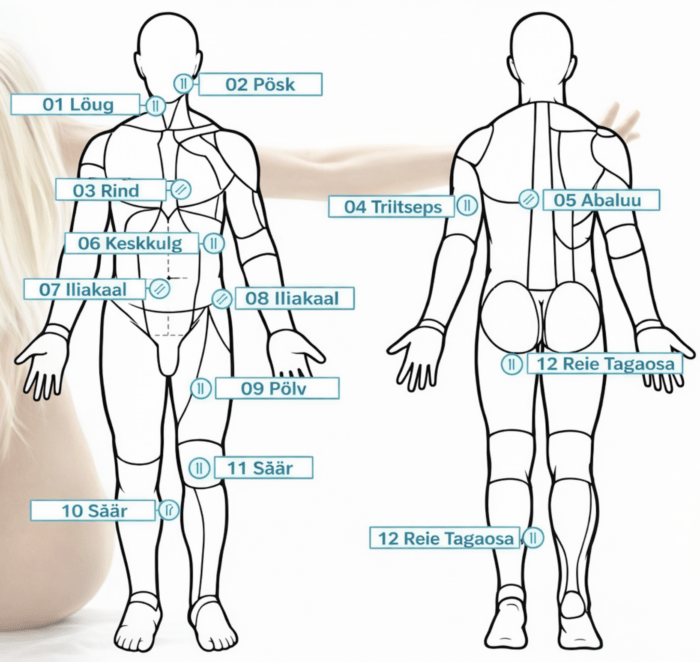
Biosignature measurement is a method that assesses body fat percentage and hormonal balance through a range of measurement points
It helps tailor both training and nutrition to the individual
In the world of strength training and body composition analysis, one of the best-known personalized assessment systems is biosignature measurement, developed by the legendary coach Charles Poliquin. It is a practical method used to fine-tune training and nutrition recommendations based on patterns of body fat distribution.
For Fitness.ee readers, biosignature is interesting above all because it helps you better understand the individual differences that influence how you respond to training, how you recover and how your body composition changes.
What is biosignature measurement?
Biosignature measurement is based on measuring subcutaneous fat folds (skinfolds) at specific areas of the body. The aim of the method is not just to estimate body fat percentage, but to track changes in body composition and support training decisions.
Poliquin’s method typically uses 12 standard measurement points, including, for example:
- several different areas of the abdomen
- the front and back of the thigh
- the triceps
- the chest
- the area around the knee
- the area below the shoulder blade
⚠️ An important clarification:
Biosignature measurement does not include measuring the lower-back (lumbar) fold. The method differs from classic body fat percentage estimation and uses a fixed list of measurement points standardized by Poliquin.
What does biosignature give a coach?
The strength of biosignature is that it:
- helps track changes in body composition over time
- makes it possible to compare how different areas of the body respond to training
- supports individual training and nutrition planning
Changes in fat tissue in certain areas of the body can give a coach clues about whether:
- the training volume is suitable for the client
- recovery may need more attention
- the overall proportions in the client’s nutrition need adjusting
❗ Biosignature is not a hormone test or a health diagnosis – it is a practical assessment tool that is used together with the client’s training history, lifestyle and goals.
How is biosignature used in training practice?
Biosignature measurement is applied mainly in three areas:
1. Training planning
- adjusting training frequency and volume
- fine-tuning intensity and training load distribution
- placing more emphasis on recovery where needed
2. Tracking body composition
- assessing change area by area, not just by body weight
- objective feedback across training periods
3. Collaboration and motivation
- the measurement results help clients better understand how their body responds
- it creates a structured framework for consistent work
Why is biosignature useful?
Many people who train find themselves in a situation where:
- training is regular, but progress is slow
- body weight doesn’t reflect the actual physical change
- fatigue or poor recovery is limiting progress
In such cases, biosignature measurement helps you assess the process more objectively rather than relying solely on how you feel or on the number on the scale.
Summary
Biosignature measurement, developed by Charles Poliquin, is:
- a coach’s tool, not a medical method
- a systematic way to track changes in body composition
- an aid for planning more personalized training
Used correctly, biosignature measurement helps make training more informed, more structured and more sustainable in the long term.
If you’re interested in being measured, get in touch with us at ArtGym.
📚 Scientific references
Note: biosignature itself is an applied system that comes from coaching practice; the sources below cover skinfold measurement, body composition assessment and the links between regional fat distribution and health.
- Jackson, A. S., & Pollock, M. L. (1978). Generalized equations for predicting body density of men. British Journal of Nutrition, 40(3), 497–504.
- Jackson, A. S., Pollock, M. L., & Ward, A. (1980). Generalized equations for predicting body density of women. Medicine & Science in Sports & Exercise, 12(3), 175–182.
- Heyward, V. H., & Wagner, D. R. (2004). Applied Body Composition Assessment. Human Kinetics.
- Norton, K., & Olds, T. (1996). Anthropometrica: A Textbook of Body Measurement for Sports and Health Courses. UNSW Press.
- Ross, R., Janssen, I., & Tremblay, A. (2000). Obesity reduction through lifestyle modification: mechanisms and clinical implications. Obesity Research, 8(7), 521–528.
- Müller, M. J., et al. (2012). Body fat distribution, energy expenditure, and cardiometabolic risk. Obesity Reviews, 13(S2), 63–72.
Come and train with us! ArtGym




