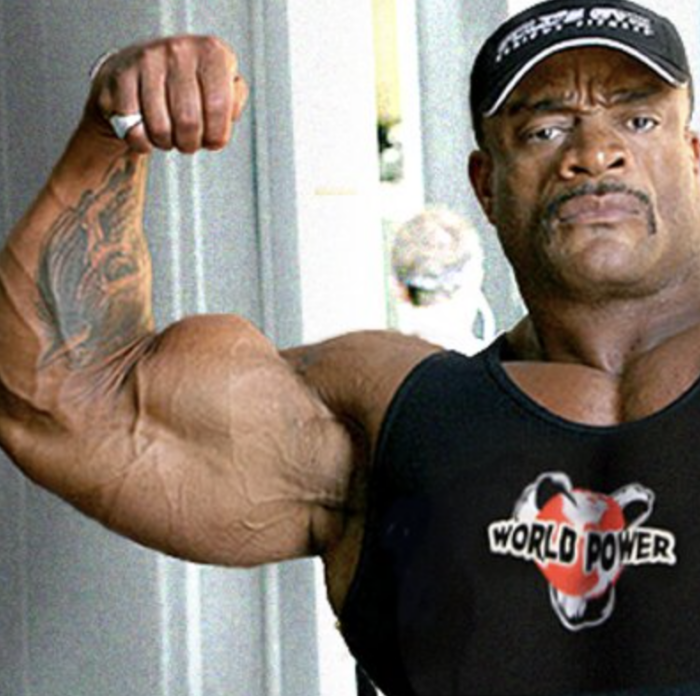
Big arms: Will Harris and the biceps
Big arms don’t come from lifting heavy weights alone. Will Harris stresses an old bodybuilding truth: the biceps grows when your reps are clean, controlled and heavy enough that the final sets really count.
Why do big arms need a simple plan?
In professional bodybuilding you see very different training styles. Some athletes use lots of exercises, others do a short, very intense piece of work. That doesn’t mean one way is right for everyone. It simply shows that muscle grows when the plan suits the person and is followed consistently enough.
Will Harris takes a direct approach to the biceps. His idea is clear: pick one solid core exercise, do it well, and don’t hide sloppy execution behind a long list of exercises. Honestly, for many people that is better advice than yet another complicated superset.
If your goal is big arms, it isn’t enough for the barbell to move up and down somehow. Your elbows, body position, tempo and mind-muscle connection decide whether the biceps does the work or the whole upper body does it together. This is exactly where ego tends to ruin training.
Big arms and Will Harris: the logic of 10 x 10
Harris uses one weight for all 10 sets. The weight should be heavy enough to count for at least the last seven sets. It’s simple, but not easy. If the first sets feel too comfortable, the weight catches up with you later. If you start too heavy, your technique falls apart before the real work even begins.
The exercise is the barbell curl. Harris calls it the classic and the best movement. In his view, there’s no need to add five different angles, a machine and a cable just to “shock” the muscle. One strong exercise can send a very clear signal if you do it honestly.
- Choose a weight you can use for all 10 sets with control.
- Don’t change the weight after every set if the aim is to carry the same workload through.
- Keep the exercise simple: barbell curls, 10 x 10.
- Remember that the last sets show whether you chose the right weight.
How do you make the biceps work with this plan?
Execution matters most. Harris essentially says what a good coach would repeat in any gym: cleanliness first, then weight. If the barbell swings up with your hips, your back leans backward and the rep stops halfway, the biceps gets less work than you think.
Start from a full extension. Feel the weight on the way down, not only on the way up. When the barbell reaches the top, squeeze the muscle. Harris describes the lift as bringing the barbell close to your chin: if the barbell were sharp, I could shave my beard with it. The image sticks, but the point is no joke. The point is control.
Every rep should be controlled. The tempo should be equally slow in both the negative and the positive phase. You should be able to count slowly to three as you lower or lift the weight. That takes the momentum out and forces the muscle to do the work.
Don’t let your body steal the rep
So what actually happens when the weight is too heavy? Your shoulders drift forward, your lower back chips in and your elbows start to wander. The rep seems to get done, but the target muscle receives less training load. In arm training, that’s an expensive mistake.
It’s better to take a weight you can handle. That doesn’t mean a soft workout. Quite the opposite. Slow lowering, a strong squeeze at the top and the same tempo on every rep can make a moderate weight very demanding.
Big arms: practical signs in the gym
A good set doesn’t have to look dramatic. The barbell moves calmly, your body stays still and the biceps gets the job done. If you feel you have to swing the weight at the start of every rep, the weight is probably too heavy or you’re too tired.
Also watch whether both arms are working evenly. With barbell curls, it’s easy to pull more with your stronger side. If one side lags behind, slow the tempo down and keep the end of each rep clear. That helps you get your technique back.
The last set should be hard, but not chaotic. Harris describes the finish quite colorfully: once the last set is done, the muscle is so cramped and sore that he walks away cursing to himself &!#@%!!! That’s the language of bodybuilding, but the message is simple: the work has to be real.
A simple truth: big arms take patience. One plan won’t work a miracle in a week. But if you take the barbell curl seriously, keep your tempo under control and don’t cheat your reps, you have a very strong foundation for growing your biceps.
FAQ
Is 10 x 10 suitable for beginners?
Beginners can use the same idea, but they need to be careful when choosing the weight. Once your technique breaks down, 10 x 10 is no longer biceps training, just a tiring exercise in moving a barbell around.
Is the barbell curl enough?
Will Harris uses it as his main exercise because it allows for hard, measurable work. Advanced lifters can add other exercises, but the point of this plan is simplicity and clean execution.
Why does the tempo need to be slow?
A slow tempo reduces momentum and makes the biceps work for longer. If you can count to three on both the lowering and the lifting phase, the repetition is a lot more honest.
Author: joker
Source: WHO – physical activity.
Come and train! ArtGym