
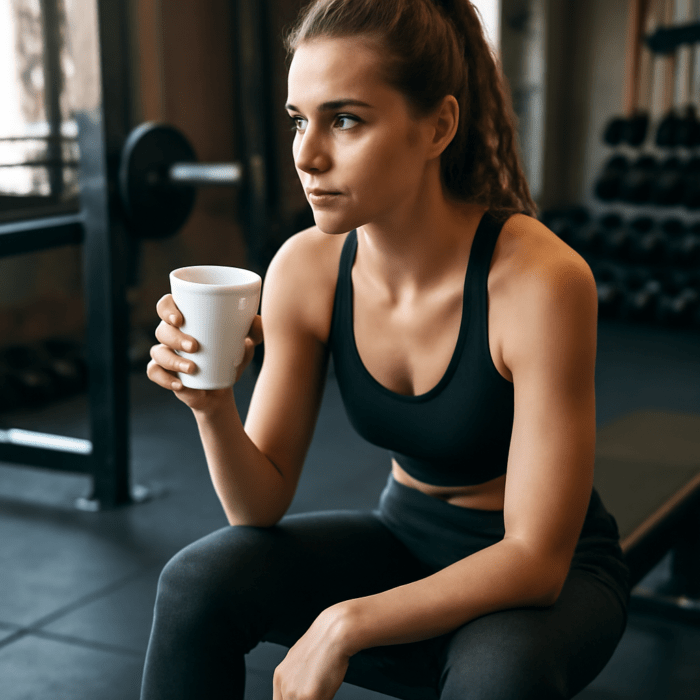
You probably know caffeine from your morning coffee, but before a workout, it can do much more than simply wake you up. If you want better focus, more energy and the ability to push harder during a workout or competition, it is worth knowing when to use caffeine and how much to take.
Why does caffeine matter in sport?
Caffeine is the world’s most widely consumed naturally occurring psychoactive substance. It is found in coffee beans, tea leaves and cocoa beans, which are also used to make chocolate. For many people, it is a normal part of the day: a cup of coffee in the morning, a second before lunch and sometimes one more before a workout.
At certain doses, caffeine can improve concentration, your level of alertness and your overall sense of energy. That does not mean every cup of coffee automatically makes your workout better. Its effects depend on the individual, their usual caffeine intake, timing and whether they are sleeping well.
In sport, caffeine is considered a performance-enhancing supplement. According to the 2018 recommendations from ISSN (International Society of Sports Nutrition), caffeine is an effective, safe supplement that has been extensively studied. This is an important distinction: it is not a miracle solution, but one of the better-known stimulants with a practical rationale for its use.
How does caffeine affect performance?
Various studies show that caffeine improves aerobic and anaerobic performance, sprint speed and power. In simple terms, it may help when you need to push hard, maintain your pace or perform better during a short, intense burst of effort.
According to one theory, caffeine raises β-endorphin levels in the body. These are sometimes called “happiness hormones.” This may increase motivation and make exertion more mentally tolerable. In fact, many people who train feel caffeine’s effects primarily in their heads: their thinking is clearer, maintaining the pace feels easier and they seem to get into their workout faster.
However, the picture is not entirely clear-cut. Studies have not consistently shown a positive effect on performance in maximal and basic strength tasks, such as lifting weights or performing presses for repetitions. Yet caffeine is a popular supplement among powerlifters. The reason may be simple: even if the bar does not feel any lighter, better focus helps you maintain your technique and effort.
When should you take caffeine?
Caffeine could be taken 30-90 minutes before a workout at a dose of 3-9 mg per one kg of body weight. This range is broad because tolerance varies considerably between individuals. For some, one coffee is enough. Others feel no effect from the same amount.
Caffeine is absorbed from the digestive tract into the bloodstream about 15 minutes after consumption. Its concentration in the blood reaches its peak value at 60 minutes and then begins to fall. However, elevated blood levels may persist for two to four hours. This depends on the amount of caffeine consumed and its source, such as caffeine tablets, coffee or chocolate.
For example, a man weighing 80 kg could consume 240-720 mg of caffeine per day. To reach the minimum amount, he would need to drink 3-5 cups of coffee a day, preferably before a workout (Table 1). There is therefore no automatic need to limit coffee intake. If the goal is to improve performance, the amount of caffeine-containing foods consumed may even increase in some cases.
Caffeine: what should you consider about amounts?
Caffeine amounts
So what really matters? First, the amount and the timing. If you take caffeine too late, your workout may go well, but your sleep will suffer. And when sleep suffers, so does recovery. Your next workout may then be worse, even if you felt energetic during the previous one.
Caffeine can have a positive effect on the body, no effect at all or an unpleasant effect. Some people experience anxiety, trembling or heart palpitations. Others find that their focus improves without side effects. Genotype, age, the timing of caffeine intake and fitness level can all make a difference.
Evening consumption calls for particular care. Most people prefer not to consume caffeine in the evening because it is a stimulant and can therefore impair sleep quality. Lack of sleep disrupts recovery from training and ultimately reduces the quality of subsequent workouts.
Caffeine and training: practical tips
- Before a workout, consume 3-4 mg of caffeine per 1 kg of body weight.
- For a hard workout or in the days before a competition, consider reducing your caffeine intake, then reintroducing it on the day of the competition or workout.
- There is no need to fear drinking coffee or deliberately cut back if it is a normal part of your daily routine.
- Avoid consuming caffeine in the evening if it impairs your sleep quality.
A good rule of thumb is to start small. If you’re used to drinking coffee, don’t suddenly try something completely new on competition day. The same applies to tablets or other sources of caffeine. Try them during a regular workout first to see how your body responds.
The simple truth is that caffeine is no substitute for sleep, food or a sensible training plan. It may help sharpen your performance, but only if the rest of the foundation is more or less in place. If you’re tired, haven’t eaten and feel nervous, more caffeine may not make things better.
Enjoy your coffee!
FAQ: caffeine and training
Is caffeine suitable for every workout?
Not necessarily. Caffeine may be better suited to workouts that require focus, pace or power. If you train late in the evening or your body reacts poorly to caffeine, it’s worth being cautious.
Should you avoid coffee before a workout?
There’s no need to if your body tolerates coffee well and it doesn’t disrupt your sleep. The original recommendation is clear: there’s no need to be afraid of drinking coffee or deliberately cut back if it’s a normal part of your daily life.
Does more caffeine always mean better results?
No. A larger amount may actually make you feel worse, disrupt your sleep and impair recovery. A sensible amount at the right time matters more than simply consuming more caffeine.
Author: Indrek Reilson
Come and work out! ArtGym




