Estonian Powerlifting Federation: origins and development
The Estonian Powerlifting Federation was officially born in the spring of 1993, but the story’s roots reach back 14 years earlier. It is a story of the first competitions, international contacts, difficult times and the people who kept the sport alive even when there was no official federation yet.
Why did the Estonian Powerlifting Federation come about in the first place?
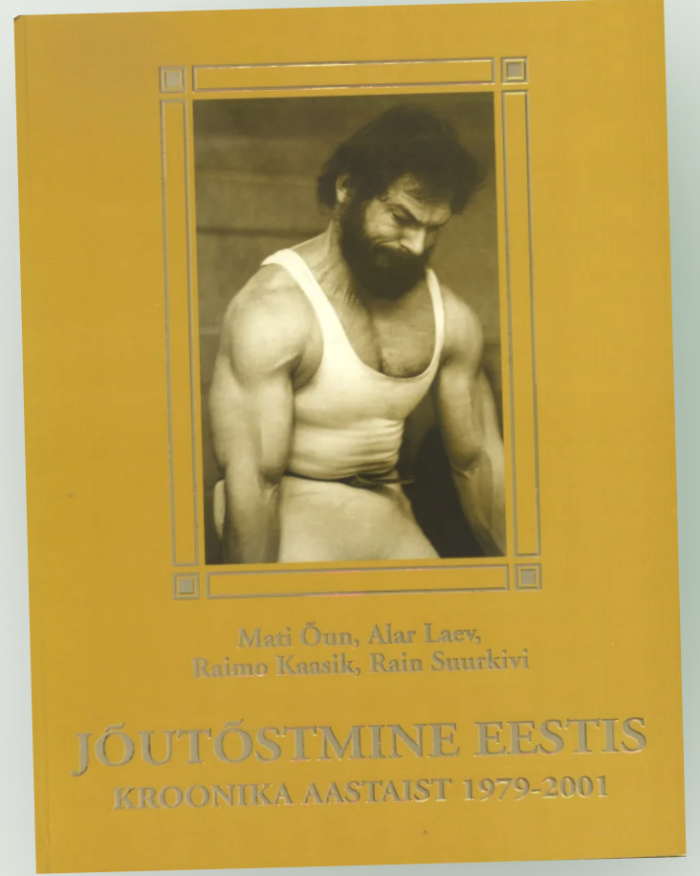
Powerlifting did not begin in Estonia with a big banner or a ready-made organization. The first powerlifting competitions in Estonia were held on 26 May 1979 in Tallinn, in the Harjuoru gym. The organizers were Alar Laev, Ants Rosenbaum and Mati Õun. They were the first such competitions in the Soviet Union and the second in the entire so-called socialist camp, after Czechoslovakia at the time.
Things became more official the very next year. The first Estonian Championships in powerlifting were held on 24–25 May 1980. The first foreign competitor was there too: Seppo Seppänen from Jyväskylä, a man with a body weight of 110 kg. At the same competition, Mati Õun was elected the first head of Estonian powerlifting.
The international dimension arrived quickly. On 4 October of the same year, the first international competition was held in Tallinn, with powerlifters from the Finnish club Humppila Yri as guests. It was a clear sign that Estonian lifters did not want to stay confined to their own gym.
The Estonian Powerlifting Federation before its official founding
In the winter of 1982, Estonia was admitted to the European Powerlifting Federation (EPF) as a member with special status. The International Powerlifting Federation (IPF) recognized Estonia de facto, because Estonia was not a state at the time. From that same year, the results of our best men began to be added to international rankings.
In early 1983, Estonian powerlifters were invited to the European Championships for the first time. The authorities, however, did not let them leave. In the same year, Rain Suurkivi nevertheless became the first Estonian powerlifter to compete outside the Soviet Union. At the Czechoslovak Open Championships he finished fifth.
In the second half of the 1980s, Soviet Union records in powerlifting began to be registered. Estonian men quickly made their mark. As of 1 October 1987, our men held 17 of the 44 Soviet Union records. That number speaks fairly plainly about how strong the school that had formed here already was.
But sport at the time was not only about the bar and the judges. At the first Soviet Union Cup, held in Tyumen, Eastern Siberia, on 19–20 February 1988, the Estonian competitors felt they were being deliberately taunted by the judges. It ruined the men’s performance and painfully showed that, in the “land of the friendship of peoples”, they did not really belong.
How did powerlifting grow in Estonia?
On 3–4 December 1989, the first big international competitions were organized in Estonia. They were the prize competitions of the “Estonian Oil Shale” production association in Kohtla-Järve. There were 59 participants: 10 from Finland, 7 from Poland, 9 from Latvia, 2 from Ukraine and 4 from Russia.
At this competition, a female powerlifter competed in Estonia for the first time: the Finnish lifter Anna-Liisa Prinkala. In the same year, the first heavy athletics clubs were also founded in Estonia: “Jaan” in Tallinn, “Power” in Viljandi and “Jõud” in Tartu County.
On 8–9 September 1990, Estonian powerlifters took part in the Nordic Championships in Vaasa for the first time. By then, foreign competitions and guest competition trips to Estonia were already quite common. A simple truth: the sport grew faster than the paperwork around it.
The “Alutaguse Karu” CUP, held in Jõhvi on 15–16 December of the same year, was the biggest competition in the history of Estonian powerlifting. It drew 79 athletes, including 5 women, from Estonia, Latvia, Lithuania, Finland, Sweden, Georgia, Ukraine and Russia. The first Estonian female powerlifter, Tatjana Tatmjanina from Kohtla-Järve, also competed there.
The Estonian Powerlifting Federation and its official start
The restoration of the Republic in 1991 changed the situation. In the Estonian SSR era, powerlifting was run by a republican commission that officially belonged under the Estonian Weightlifting Federation. In practice, it operated quite independently, as far as that was possible under Soviet Union conditions.
On 9 January 1993, an initiative group met in Tallinn. There the powerlifting commission’s activity was declared ended, and a provisional board of the independent Estonian Powerlifting Federation was formed. Jaan Kärner was elected chairman.
An expanded meeting of the federation’s board, held in Tallinn on 13 March, formed a permanent board. J. Kärner continued as president. Alar Laev was elected general secretary, and the board members were Riina Aasa, Ants Torri, Raimo Kaasik, Ahto Paavo, Rein Rahuoja, Joosep Pupart, Viktor Korobov and Rein Jõgila. Ants Rosenbaum became chairman of the judges’ panel, with Tõnu Kaasik and E. Põld as members.
On 13 April 1993, the Sports Agency registered the Estonian Powerlifting Federation as a legal entity. The federation decided that only citizens of the Republic of Estonia could win medals at the Estonian Championships, and only citizens of the Republic of Estonia could set Estonian records. The count of new Estonian records began on 15 May 1993. On the same day, the federation’s president J. Kärner approved the rank standards, from young lifter up to international master.
On October 30 of the same year, the 1st Estonian Powerlifting Federation Championships were held in Tallinn. As an exception, they took place in autumn. The Estonian Championships were usually held in early spring.
What is worth remembering from this story?
In January 1999, Arnold Tokko was elected the federation’s new president. In January 2001, he was elected head of Estonian powerlifting for a second term, and he continues in the role today. The honorary president of the Estonian Powerlifting Federation is Mati Õun, the enthusiast who got the sport started and led it for many years.
The original version of this article stated that powerlifting is practiced today in 25 sports clubs in Estonia, that there are about 250 lifters, and that about 30 competitions are held each year. These figures show at least one thing: the sport was in the hands of a small community, but a tenacious one.
FAQ
When was the Estonian Powerlifting Federation officially founded?
The Estonian Powerlifting Federation was registered as a legal entity on April 13, 1993. Organizational work had already begun on January 9, 1993, when an interim board was formed.
When were the first powerlifting competitions held in Estonia?
The first powerlifting competitions in Estonia were held on May 26, 1979, in the Harjuoru sports hall in Tallinn. The organizers were Alar Laev, Ants Rosenbaum and Mati Õun.
Who was the first head of Estonian powerlifting?
Mati Õun was elected the first head at the Estonian Championships held in 1980. He was later also named honorary president of the Estonian Powerlifting Federation.
Author: https://powerlifting.ee/
Source: WHO – physical activity.
Come and work out! ArtGym