
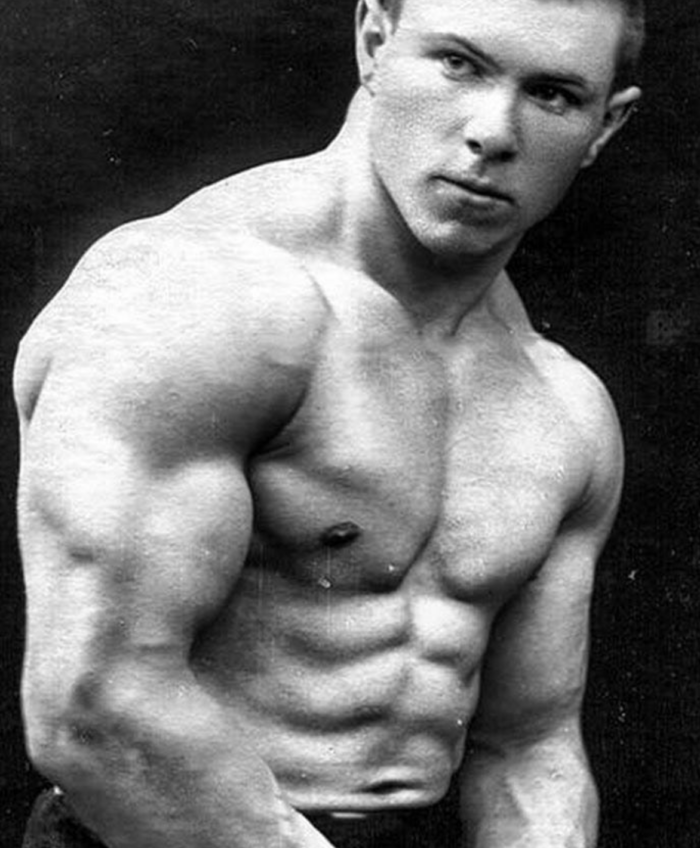
Hackenschmidt: the big story of Estonia’s strongman
Hackenschmidt was not just an old-time strongman. Georg Karl Julius Hackenschmidt, also known as Hack and the Russian Lion, was born on August 2, 1878 in Dorpat, today’s Tartu, and his name went down in the history of both wrestling and strength training.
This story sums up how a draftsman and lifter became a world-famous wrestler, why his name lives on in the hack squat, and which numbers made him extraordinary in his day.
Why Hackenschmidt matters to fitness.ee readers
Translated from Flex by: Raivo Piiber aka gannibal
Seizing his opportunities
Hackenschmidt’s story begins very close to Estonia. He grew up in Tartu, at a time when the Governorate of Estonia belonged to Tsarist Russia. Later he was often introduced as an athlete from Russia, but he was born in Dorpat.
At first he was drawn to weightlifting. It was a sport where raw strength, body control and courage met head-on. Yet he later chose professional wrestling, because it offered better earnings and a bigger stage. Honestly, the choice is understandable: on a stage, in front of a crowd, strength and character became a profession all at once.
The preparation period
Hack’s early training wasn’t just yanking at a barbell. It developed speed, balance and the ability to control his own body. That physical foundation is what later allowed him to achieve great things in both weightlifting and wrestling. Already at 18, Hack could lift more than 200 pounds (approx. 91 kg) overhead with one hand.
* – here and henceforth, the translator has converted pounds into kilograms for simplicity, 1kg = 2.2 pounds
Hackenschmidt the wrestler: the road to Europe
The draftsman’s story
After studying as a draftsman and designer, Hackenschmidt went into the army and was assigned to the Guards regiment of Russian Tsar Nicholas II. Even there he didn’t set his training aside. His little free time went into weightlifting and wrestling.
A chance to grow
In 1898 he went to the Russian weightlifting championships to win a pair of trousers. The outcome was far more than a prize. He improved his previous jerk record of 116 kg and raised it to 123 kg. That same year, Hack traveled to St. Petersburg at the invitation of Dr. Von Krajewski. Dr. Von Krajewski was the founder of the St. Petersburg Athletic and Cycling Club and encouraged him to continue with both strength training and wrestling.
On April 1, 1901, Hack won the European Championships in Greco-Roman wrestling in Vienna, defeating the Turkish wrestler Ahmed Madrali in the final. His win at the French World Championships in Paris the same year confirmed that he was no accidental upstart.
The lion is out of the cage
In 1901 in Paris, he won the French World Championships. The following year he crossed the English Channel and arrived in London. On March 2, 1902, he challenged Jack Carkeek. Carkeek was an English strongman who invited people from the audience to wrestle him for ten minutes each. But when the Russian Lion himself stepped forward, Carkeek withdrew from the match.
Media frenzy
Wrestling promoter Charles Cochran saw more in Hack than an athlete. He wanted to make him a showman as well, because that would grow the popularity of both Hack and the sport. Perhaps that explains why Hack wore lemon-colored tights in his earlier feats of strength. On September 4, 1902, he beat the Briton Tom Cannon at the European Championships in Greco-Roman wrestling.
Hackenschmidt and the hack squat
So what actually happened with the hack squat? In German, the word hacke means heel. In the original Hack squat, the hands were clasped behind the back, the lifter squatted up on his toes and brought the bar as close to his heels as possible. Hack was referring to the heel in this sense, not just to the man’s name.
In 1902, Hackenschmidt managed to do a set of fifty repetitions with 50kg in this original style. Around 1958, Hackenschmidt was astonished to learn that English-speaking people associated the modern version, in which the hands are held parallel, with his name.
Facts about Hack
- In 1898 he won the Russian weightlifting championships
- Started as a professional wrestler in June 1900
- In 1912 he traveled through Spain, Portugal, France, Sweden, Russia, Germany, Italy, England and Algeria
- In 1948 he was a judge at the Mr. Universe contest, won by John Grimek
- Gave philosophy lectures at universities, in Russian, English and German
- Donated many of his gold medals to dentists to be made into fillings
- Has eaten roast lion
- At 85, he could still press 160 pounds (approx. 73kg) lying down a few times
Hackenschmidt: titles, records and legacy
The breakthrough
On January 30, 1904, Hack wrestled the Turk Madrali again in London. The match was over in 44 seconds, because Madrali’s right arm was dislocated in two places. Six months later, at Albert Hall, Hack beat the American heavyweight wrestler Tom Jenkins, cementing his fame as the world’s best Greco-Roman wrestler.
After two and a half years of wrestling in England, Hack traveled to Australia in 1904. Over four months there, Hack earned a huge sum for the time: 600 dollars a week. In 1905, the rematch between Hack and Jenkins was held at Madison Square Garden. Hack won again. His earlier European victories and this success gave him the right to call himself the world’s best in the sport, even though the international federation was only founded in 1912.
In 1907, Herbert Turner wrote that over the previous five years interest in the art of wrestling had revived. One reason given was Hackenschmidt’s outstanding personality. A simple truth: athletes like this don’t just lift weight, they raise the profile of an entire sport.
Hackenschmidt’s lifting achievements
- Holding a 55 kg barbell with arms outstretched in front
- One-arm press 122.5 kg, which is only half a kilo more than Eugen Sandow lifted. Later, unofficially, also 132 kg
- Right-arm jerk (with a body swing, with belly toss) 116 kg
- Right-arm snatch 90 kg, which was the official amateur world record
- Right-arm jerk (taken to the shoulder with two hands) 105 kg, left-arm 93 kg
- Two-arm snatch 114 kg, which was 1 kg less than Pierre Bonne’s world record
- Two-arm jerk 140 kg
- Two-arm slow curl, or lifting the barbell to the biceps, 80 kg
- Two-arm press 115 kg
- Lying on back pullover and press 166 kg, which stood as a world record for 18 years.
Books
- Complete Science of Wrestling (1909)
- Main and Cosmic Antagonism to Mind and Spirit (1936)
- Attitudes and Their Relation to Human Manifestations (1937)
- Fitness and Your Self (1937)
- The Three Memories and Forgetfulness: What They are and What Their True Significance Is in Human Life (1937)
- The Way to Live Health and Physical Fitness (1941)
- Consciousness and Character:True Definitions of Entity, Individuality, Personality, and Non-entity (1957)
The twilight years
Hackenschmidt died on February 19, 1968, at St. Francis Hospital in East Dulwich, England. The city had been home for 15 years to Hackenschmidt and Hackenschmidt’s wife Rachel.
FAQ: Hackenschmidt
Was Hackenschmidt Estonian?
Hackenschmidt was born in Dorpat, today’s Tartu. Because of the political background of the time, Hackenschmidt was often introduced as an athlete from Russia.
Why was Hackenschmidt called the Russian Lion?
It was Hackenschmidt’s wrestling name and public image. The name suited a powerful, fast and internationally known athlete well.
Is the hack squat named after Hackenschmidt?
There is a connection, but the original explanation also comes from the German word hacke, which means heel. Hackenschmidt later expressed surprise that in English the lift was associated with Hackenschmidt’s name.
Source: Estonian Heavy Athletics Museum
Come and work out! ArtGym




