Group fitness trends: what’s changing
Group fitness trends don’t come out of nowhere. They reflect how people live, how much they move and what kind of support they want from their training. Here’s a clear overview of the styles that have stood the test of time in group fitness and what’s worth trying.
Why do group fitness trends matter?
You’ve probably woken up wondering how another day, week or whole month has flown by. Time moves quickly. The same happens in the fitness world: what seemed new and exciting a year ago may already be a regular fixture on the class schedule.
As the fitness season often follows the school year, many new group fitness classes began appearing in clubs from autumn 2008 onward. Trends from around the world and the Nordic countries gradually reached Estonia, too. Some were passing fads, while others became so familiar that you no longer think of them as having once been new.
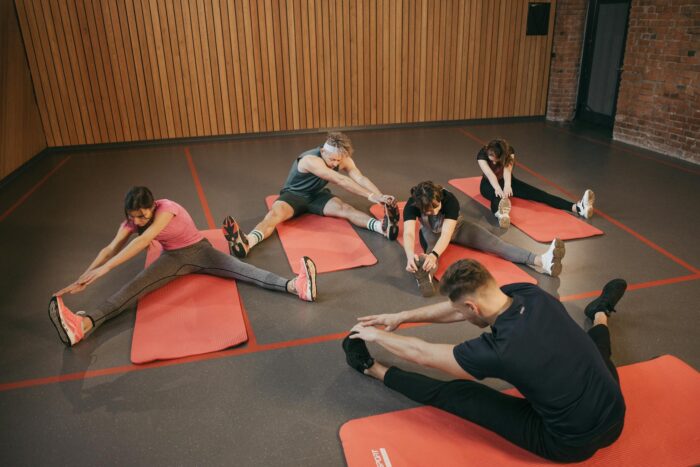
Broadly speaking, group fitness classes fall into three main categories: strength training, dance-based workouts and specialist styles. The last category includes martial arts, classes rooted in Eastern traditions and workouts that blend different styles. These can, in turn, be divided into two types: classes that follow a set format and classes designed by the instructors themselves.
The simple truth is that a good group fitness class doesn’t have to be the latest thing. It needs to be manageable, easy to follow and interesting enough to make you want to come back.
Trends in strength training and equipment
Functional training has been a major focus in strength classes for quite some time. This means exercises aren’t just about looking good in the mirror. They should also help you in everyday life: lifting a shopping bag, climbing stairs, keeping your back strong and using your whole body together.
Is this a completely new idea? Yes and no. People have trained with free weights for decades, but the purpose has become clearer. Many people don’t move much, spend a lot of time sitting and feel the effects in their bodies. That’s why more exercises that mimic everyday movements have made their way into group fitness classes.
The familiar equipment isn’t going anywhere. Dumbbells, barbells, step platforms, resistance bands and stability balls still have their place. What’s different is that instructors are finding new ways to give familiar exercises a fresh feel. Sometimes a change of tempo is enough. Sometimes they add balance challenges, rotations or work on one side of the body at a time.
Powerplate, Bosu, Core boards and chi balls are also used in Estonia. They help bring balance work, core training and a little playfulness to a class. Elsewhere in the world, oval-shaped iO balls, biodynamic XCO dumbbells, small slide mats and various balance boards and mats have also made an appearance. Not everything needs to reach every club straight away, but the direction is clear: classes need variety.
Dance trends and self-expression
Dance will probably always have a place in group fitness. Throughout history, people have moved to music and found joy in it. At the gym, too, many people find a dance class an easier way to get moving than traditional strength training.
Traditional dance aerobics remains popular, but it has been joined by classes with a more distinct dance style. Inspiration comes from ballet, folk dance, modern dance, hip-hop, street dance and anything that gives a class its own identity. Some classes focus on precise steps; others are more about feeling the music and having the confidence to move.
Batuka has attracted plenty of attention in Europe and around the world. It originated in Spain and brings the country’s rhythms and emotion into the studio. Afropass draws on African rhythms and self-expression. Classes like these are about more than burning calories. They help you feel freer.
Pole dance, chair dance and strip dance, which has gained a following in Estonia, are also linked to self-confidence. They won’t suit everyone, and they don’t have to. But if you’re looking for a blend of dance, strength and stage presence, they can be a powerful experience.
How do you choose the right group fitness class?
The choice can feel overwhelming at first. One class uses barbells, another features dance and a third involves boxing combinations. A good place to start is with one simple question: right now, do I want more strength, better endurance, greater mobility or a mood boost?
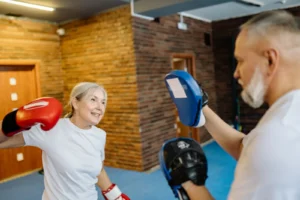
If your goal is a stronger body, try a strength training or functional fitness class. If you want to release tension, boxing, Thai boxing, kickboxing or aerobic boxing could suit you. If you’re interested in calmer but focused movement, look for classes influenced by Tai Chi, Aikido or yoga.
Martial arts have found their place in group fitness. Capoeira, Sanjuro, Aikido and other styles bring a mental dimension to the physical work. More recently, these disciplines have also been combined. Inner Warrior is a class concept created by Nadia Zaki that blends yoga and martial arts. The class works on shaping body, mind and soul, with music that helps bring the movement together.
Another example is Forza, a workout using wooden swords that mimics sword fighting and Aikido. It has been growing in popularity around the world for a couple of years and has also reached Finland. In these classes, you practice strikes and put them together into combinations of movements and exercises.
Honestly, no description can replace trying it for yourself. Turn up, choose an easier class to start with and give your body time to adjust. Your first attempt may feel awkward. By the third time, you’ll have a sense of whether this style appeals to you.
FAQ: group fitness trends
Is a new training style always better?
No. Something new can be exciting, but what makes a class better is a clear structure, a good instructor and whether the workout suits your goal.
Where should I start if I’m new to group fitness?
Start with a class that has a straightforward description and a training load that doesn’t seem intimidating. Ask the instructor for advice before the class starts, especially if you have any injuries or have had a long break from training.
Can I take a dance-based class even if I can’t dance?
Yes, if you choose a class suitable for beginners. No one has to perform on stage in a group fitness class. What matters is moving, taking your time to learn the steps and enjoying the music.
Author: Silja Siller
Source: Turg.Fitness.ee
Come work out! ArtGym