
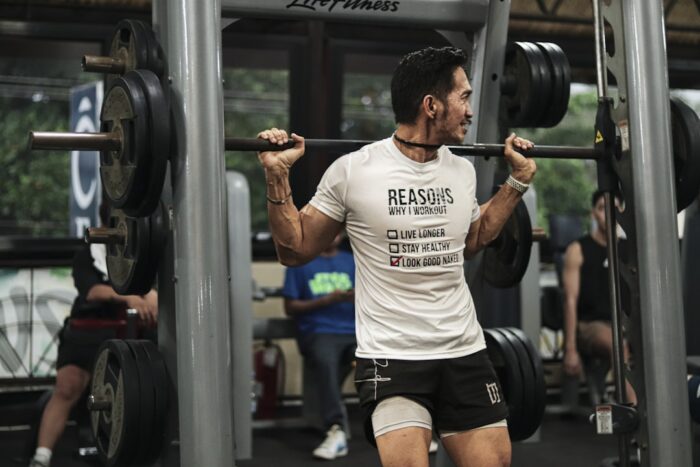
I look around the gym and see the same picture as six years ago. The same faces, the same weights, the same plan. Let’s be honest: if we only work out because it’s fashionable, results won’t come. This article is for those who genuinely want to move forward — not just maintain their weight.
Why do we train the same way year after year?
I recently went back to my first gym. The men who were doing aimless circuit training there six years ago are doing it now too. The same weight on the bar, the same topics of conversation: the scale won’t budge, there’s no time to eat during the day, and by evening you’re starving. The only thing that has changed is their age.
If you’ve spent years at the same intensity and with the same weights, you’re essentially not training. You’re maintaining what you already have — and even that only if there’s anything to maintain. That’s a comfort zone, not progress. The difference between the two is whether a year from now you’ll have something to be proud of or just the same image in the mirror.
Some people are afraid of breaking through a plateau. Others simply don’t know how to push hard. We show up, chat, take a selfie, add #hardcore and head to the sauna. That’s not a workout, that’s a habit. And a habit won’t make you stronger.
What does it mean to train seriously?
Progress is measured by three things: whether the weight goes up, whether the rep count rises, or whether your rest periods get shorter. If none of them moves from week to week, you’re wasting your time. It’s a simple truth, but most people don’t want to hear it, because it means you have to actually measure yourself.
Sometimes it’s worth breaking the rules. Drop sets. Slow-tempo reps. Deep squats until your vision goes dark. These aren’t light calisthenics tips from Instagram — they’re the things that actually make muscle grow. Most people have never even tried them.
As soon as it starts to hurt, the set is stopped. If a front squat is uncomfortable, the exercise gets swapped: “I feel so bad, I’d better just do some stretching instead.” Arnold Schwarzenegger has said that it’s precisely those last reps that make muscle grow. That’s true. What doesn’t kill you makes you stronger — but for that, you have to go where it’s uncomfortable.
What real effort looks like
I remember a time when my legs started visibly developing. I began every leg workout with a heavy squat. There were more times when I got stuck under the bar than times when I finished the planned set. I trained like that for two months. The results showed.
One day I squatted a pyramid of 12; 10; 8; 6 and the goal was 150×6. The last, sixth rep didn’t come. In a fury I stripped the bar down to 100kg and squatted 35x. It was hard. After that I still had 4 exercises left to do. I did them.
The point isn’t that everyone should be flailing around in a rage. The point is that carefully thought-out “crazy stuff” over a set period is what moves you forward. Not every week — but often enough that your body feels something new.
Recovery and balance
Everything has its limit. A big grind has to be followed by proper food and sleep. You have to listen to your body and learn when to push and when to rest. Without that, you’ll burn out faster than you can progress. One hard workout a week, with lighter days built around it, is many times better than mediocre slogging five times a week.
But the fact is simple: if you do the same movements and lift the same weights year after year, you can only dream of progress. If you want results, you need to find the right balance of training and rest and stop whining.
Think for a moment: when was your last truly hard workout? The kind where you lay down afterward and felt that good kind of exhaustion? If you can’t remember, you know where to start. Look around the gym and watch the serious athletes. They’re focused and visibly hard at work. It’s easy to recognize.
FAQ: how to train for results
How do I know I’m not pushing hard enough?
If your weights, rep count and rest periods haven’t moved in the last six months, you’re not pushing hard enough. Progress requires a change you can measure in numbers — the feeling in the gym isn’t proof.
Does every workout have to be hard?
No. But every week should include at least one workout where you really went to your limit. Otherwise results won’t come. The rest of your workouts are there for recovery and polishing your technique.
What’s the first step toward change?
Write down your weights and reps from last week. Next week, add one rep somewhere or 2.5 kg more. It’s a simple rule, but most people don’t even do that.
Author: Peep Reinart
Come and train! ArtGym




