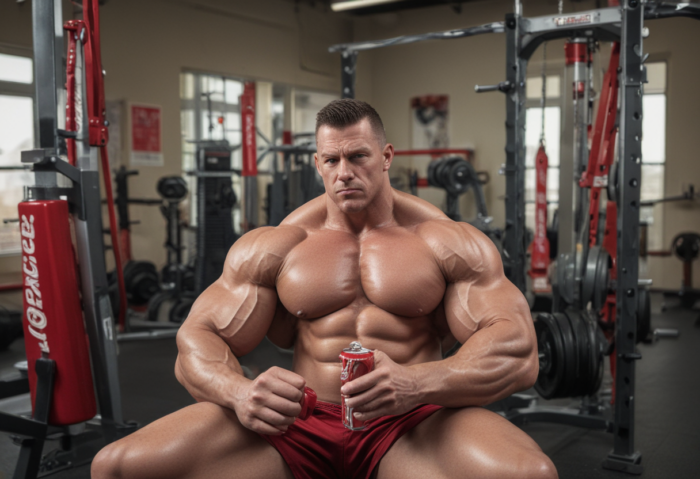
Jay Cutler drinks Coca-Cola after training
Jay Cutler is a four-time Mr. Olympia and one of the best-known bodybuilders to openly admit that he drinks a glass of Coca-Cola right after a hard workout. At first glance, this seems to contradict everything we hear about bodybuilding — a carbonated sugary drink surely isn’t on any clean-diet list. But looking at Cutler’s physique in his peak years, it’s hard to say he was doing anything wrong.
Honestly, there’s simple physiology behind it, not some secret trick. Let’s look at why an elite athlete makes this choice and whether it makes sense for the average bodybuilder to do the same.
Why Jay Cutler drinks Coca-Cola after training
After a hard strength training session, muscle glycogen stores are depleted. The body is literally starved for sugar. Insulin is low, and the muscle cells are “open” and hungry for simple carbohydrates to restore glycogen quickly. At that moment it doesn’t matter whether the sugar comes from rice, a banana or a bottle of Coca-Cola. What matters is that it reaches the bloodstream fast.
Cutler doesn’t drink Coke with his morning coffee or at lunch. His choice targets that one specific time window — 30–60 minutes after training, when the body uses simple sugars for recovery rather than storing them as fat. That’s an important difference.
What Jay Cutler actually does after training
The standard bodybuilder’s recovery drink usually consists of protein powder and a fast carbohydrate — often dextrose or maltodextrin. Cutler replaces the carbohydrate part with ordinary soda from the store. The logic is simple: the result is practically the same, the price is considerably lower, and it’s easier to find on your way out of the gym.
There’s one thing worth knowing, though. Most soft drinks in the US today no longer contain pure sugar but high-fructose corn syrup (HFCS). It’s not quite the same as glucose. Fructose goes to the liver rather than straight to the muscles, and the liver processes it before it moves on. This means Coca-Cola made with HFCS isn’t as effective a recovery drink as pure dextrose.
Coca-Cola sold in Estonia usually contains real sugar (sucrose), which is half glucose, half fructose. That’s a better option than the HFCS version, but still not an ideal solution compared with a dedicated recovery drink.
Glucose vs fructose: which is the better choice
If you want to restore glycogen as quickly as possible after training, the best choice is pure glucose or dextrose. These are absorbed directly from the gut into the blood and reach the muscles within minutes. Maltodextrin does the same job, because it’s quickly broken down into glucose in the digestive system.
Fructose, on the other hand, mainly replenishes the liver’s glycogen stores. That’s not bad — liver glycogen is needed too — but for muscle recovery, glucose is more effective. A small amount of fructose after training does no harm, but you should avoid a situation where your entire daily sugar intake comes from soft drinks.
Practical advice: if you have dextrose powder or a banana at home, use those. If you’re at the gym and in a hurry, a bottle of Coke is better than nothing. What definitely doesn’t work, though, is sipping Coca-Cola all day in the hope that it will build muscle mass.
Jay Cutler and practical advice for the average bodybuilder
An elite athlete trains at a volume and intensity that makes the body burn through glycogen by the ton. The average gym-goer never depletes their stores that thoroughly in a single workout. This means an ordinary person’s need for fast sugar after training is much smaller than Cutler’s.
If you train three to four times a week for an hour at a time, you’ll restore your glycogen comfortably with your next meal. Rice, oat flakes, potatoes — they all do the same job, just more slowly. Using Coca-Cola as a “recovery drink” is more of an excuse. So what actually happens? You’re simply drinking a calorie-heavy carbonated drink.
The simple truth: unless you’re a Mr. Olympia-level athlete whose body burns over 5000 kcal a day, Coca-Cola has no place in your training program. At any time other than the half hour after training, avoid it as much as you can. This isn’t demonizing it — it’s just arithmetic.
FAQ
Does Jay Cutler’s Coca-Cola trick work for me too?
In principle, yes, but only right after a very hard workout. If you train moderately, your body doesn’t need that kind of fast-sugar hit.
Is Coca-Cola Zero suitable after training?
No. The sugar-free version lacks exactly the thing Cutler drinks it for — fast glucose. After training you need carbohydrate, not sweetener.
What’s a better alternative to Coca-Cola after training?
A banana and a glass of milk, a rice cake with honey, or a dedicated recovery drink with glucose and protein. All of these are more nutritious options.
Author: joker
Source: WHO – physical activity.
Come and train! ArtGym