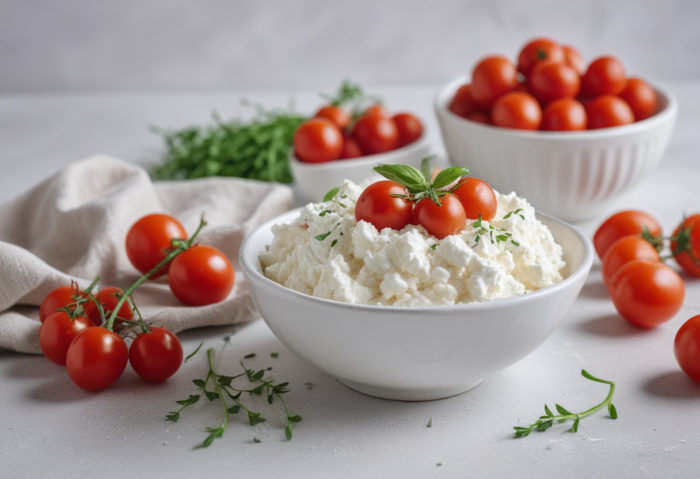
Low-fat cheese and a lighter menu
Low-fat cheese is one of the easiest swaps if you want to eat lighter without giving up familiar flavors. The same idea applies to milk, mayonnaise, sour cream and sauces: choose wisely, taste for yourself and don’t let the label decide for you.
Why does low-fat cheese matter?
When you start a diet, hunger usually isn’t the hardest part. The biggest letdown comes when there’s a new “healthy” food in the fridge and it tastes like punishment. Low-fat food can be good, but only if you know how to choose it and use it in the right place.
One typical trap is that when fat is reduced, more sweetness is added to the product. You can see this especially well in store-bought salad dressings. The creamy texture disappears, the flavor seems thinner and the manufacturer tries to bring it back with sugar. That’s why the word “low-fat” isn’t enough. You need to actually read the package.
Cheese is a good example. Low-fat cheese can work very well on a sandwich, in pasta, in a baked casserole or in an omelet. But not all varieties are equal. Some melt nicely, some stay rubbery. Some are good for baking, some only for eating cold. The simple truth: try a small amount before you buy a whole pack.
How to make low-fat cheese work in your diet
Start with where the fat in a dish actually carries the flavor. If cheese is the star of the dish, such as in a hot sandwich or a baked casserole, choose a low-fat cheese that melts well. If cheese is just a small addition in a salad or an egg dish, you can use a stronger-flavored variety and a smaller amount.
Lower-fat cheese usually works better for baking than a completely fat-free product. It gives the dish a familiar feel but keeps the amount of fat lower. If the flavor turns out too thin, don’t immediately double the amount. Add herbs, mustard, garlic, pepper or a little acidity instead. These boost the flavor without making the dish heavy.
The same logic applies to dairy products more broadly. Fat-free milk can seem watery and strange at first. If you’re used to regular milk, give yourself a couple of weeks. Usually your palate adjusts, and later fattier milk may even start to taste too heavy.
Hellmann’s low-fat mayonnaise contains 1 gram of fat per tablespoon. It works on a sandwich and in stronger-flavored dishes, for example mixed with tuna. A good trick is to mix equal amounts of low-fat mayonnaise and fat-free or low-fat yogurt. This gives you a milder dressing that works in potato salad and other mayonnaise-based salads.
Salad dressings, sour cream and yogurt
You can make a creamy salad dressing with lower-fat mayonnaise and fat-free sour cream. There’s one downside: dressings like this don’t keep very well. Make just the right amount for one salad. Then you won’t have to wonder later whether yesterday’s dressing is still good.
Oil and vinegar dressings are simple. If a recipe calls for a lot of oil, use half the amount and add the same amount of water in place of the part you left out. The flavor may need balancing, so add a small amount of sugar and keep tasting. Don’t let the vinegar take over.
With sour cream, the choice depends on the dish. If the flavor of the sour cream matters, for example in a black bean dish or in baking, choose a lower-fat sour cream. If sour cream is only a small addition in a cold dressing, fat-free sour cream will also do. In baking, fat-free sour cream can split and end up turning watery, so use it carefully.
Yogurt is a very practical helper in low-fat cooking. Fat-free yogurt works on potatoes, as a sour cream substitute and as the base of dressings. If the flavor turns out too sharp, mix the yogurt with a small amount of mayonnaise or sour cream. That way the food stays lighter, but not dry.
Low-fat cheese and other simple swaps
When you cut back on fat, you quickly start missing butter on bread. One old but effective solution is sautéed or roasted garlic. It gives bread a strong flavor and makes each bite more interesting. If you still want to add a little fat, use goat cheese or an ultra-thin, almost nonexistent layer of butter.
Eggs are another easy way to cut fat. One egg contains 5 grams of fat. In many recipes that call for a whole egg, you can use just two egg whites. The difference in flavor is often almost unnoticeable, especially in pancakes, casseroles and baked goods.
Eat more vegetarian dishes, but don’t drown them in oil, cheese or cream sauce. Vegetables, beans, lentils and potatoes offer plenty of possibilities. If you add herbs, garlic, vinegar, mustard or lemon juice for flavor, a dish doesn’t have to be boring.
Honestly, a low-fat diet doesn’t have to be a zero-fat project. Fat gives flavor and helps food fill you up better. The goal is to make smarter swaps: low-fat cheese where it works, yogurt where sour cream isn’t essential, and less oil where half the amount gives the same result.
FAQ: low-fat cheese and everyday food
Is low-fat cheese suitable for baking?
Yes, many varieties are. The safest approach is to choose a cheese that melts well and try it first in a smaller dish. If the texture turns out dry, add yogurt or a little lower-fat sour cream to the sauce.
Is fat-free sour cream always the better choice?
No. It can work well in a cold dressing, but in baking fat-free sour cream can split. If sour cream is important to the flavor of the dish, choose the lower-fat version instead.
How can you tell if a low-fat product is any good?
Check the ingredients and taste it yourself. If a lot of sweetness has been added in place of the reduced fat, the product may not be a better choice. Good low-fat food is the kind you actually want to eat.
Author: michelle
Source: WHO – healthy eating.
Come and train! ArtGym