Marcus Ruhl: The story of Germany’s bodybuilding giant
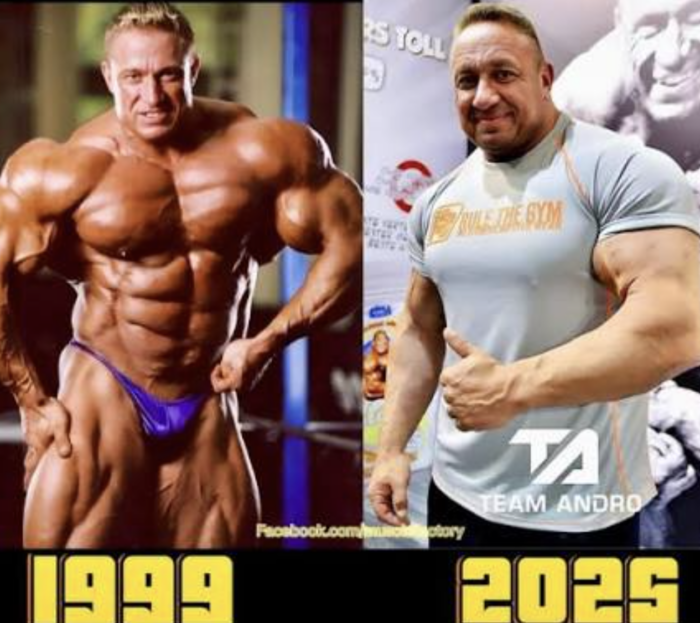
Marcus Ruhl is one of Germany’s best-known bodybuilders, who made a name for himself among IFBB pros in the early 2000s. In this 2001 MuscleMag interview, the bodybuilder talks about growing up in Darmstadt, why a footballer became a bodybuilder, and how a man who competes at 129 kg gets by in everyday life. Translated for Estonian readers from the 2001 issue of MuscleMag.
Marcus Ruhl: childhood in Germany and the road to the gym
Where and when were you born?
On February 22, 1972, in Darmstadt, Germany. I have one sister and one brother. My father died in 1979, when I was only 7 years old. My mother was a seamstress.
What kind of kid were you?
Very lively, a little bit crazy, and already big back then. A real adventure seeker. If other kids challenged me, I always accepted. I wasn’t a bad kid — just always on the lookout for something. The other kids liked me because I was so big and protected them from the bigger ones.
Which sports did you do as a teenager?
I was a pretty good football player. My dream was to become a professional footballer. Frankly, in Germany a professional footballer has a better life than a professional bodybuilder.
When did you first see a bodybuilder?
The first bodybuilder I ever saw was Arnold Schwarzenegger. I couldn’t believe such a person really existed — I thought the muscles were pumped full of air. Then I thought: “Maybe I can look like that too when I’m a man. Being that big and strong would be awesome!” Arnold inspired more young men to take up bodybuilding than anyone before or after. Even now we see him on magazine covers, even though it’s been more than 20 years since Arnold last competed. We have much bigger guys now, but Arnold will always be the best.
Who inspired you to start training?
I inspired myself. I was so big even before I lifted weights that I knew I could get a lot bigger. Later, Dorian Yates inspired me enormously. Dorian’s physique was ideal, but what amazed me even more was how hard Dorian trained and how heavy the weights were. A true warrior. Dorian didn’t know what fear was. Even injured, Dorian beat everyone else and defended the Mr. Olympia title.
Why did you start training later than most bodybuilders?
Most start at 14–16, I started at 20. I wanted to start earlier, as a teenager, but the nearest gym was too far to walk. I waited until I got my driver’s license. And I got that later than most young people, too.
Marcus Ruhl’s training philosophy and nutrition
Looking back, would you have done anything differently?
When I think back to my first years, I’m a little embarrassed. I did everything wrong. I didn’t eat enough — especially protein. I didn’t take any supplements at all, and my training program was one of the worst. Sometimes I trained four muscle groups a day, and every single day. That was too much, but at the time I didn’t know it. I was just so excited about training and growing. I wanted to get big fast, and I thought the more I trained, the faster I’d grow. Beginners make a lot of mistakes, but they still progress quite well.
When did you realize your natural potential was exceptional?
Other bodybuilders told me I had great potential and that one day I’d be a top bodybuilder. After a couple of months of training, I was the biggest man in the gym. Some of those men had been training for 10 or 20 years. I was always big. If I hadn’t trained and had eaten a lot of sweets, I’d just be a big fat man. Instead, I became big and muscular. Body shape counted too, of course — my back and shoulders were wide, my waist small. My chest and legs grew quickly. At only my second competition, I won the German championship title.
What did your friends and family think of the change?
I lost all my friends when I started working out every day. Suddenly it seemed we had nothing in common anymore. They laughed and asked: “Are you going to the gym again?” They found it ridiculous that I wanted to become a bodybuilder. It was a shame, because most of them were childhood friends. But I found new friends at the gym who shared my thoughts and interests.
How do people react to your size?
Especially in Germany, people can’t believe anyone could be this big. Sometimes it’s quite funny. Older people stare and then turn their heads away, but kids don’t know it’s impolite to stare, so they keep looking. They think I’m some kind of superhero. Sometimes people touch my arm to make sure it’s real. They’re shocked that I’m the same flesh and blood as they are.
Does being this size come with any inconveniences?
Sometimes I feel for very overweight people, because nothing in this world is made for big people. There’s no room on airplanes — I have to fly first class, and it’s not because I’m spoiled. Even if I squeezed into a regular seat, there would be no room for the people next to me. Small cars? Forget it. I feel like I can’t breathe when I have to drive a small Volkswagen. Clothes are a problem too, because nobody makes proper clothing for men who weigh 145 kg most of the year. If I want a suit, I have to have it tailor-made — it’s expensive. It isn’t easy being big, but I chose this path myself.
Career in the IFBB and competition results
What’s the funniest thing that has happened to you at a competition?
It’s more ironic than funny. I won a fancy motorcycle for first place at the Toronto Pro show, but I’ve never ridden a motorcycle. I have no idea how to ride one. Since I don’t have time to learn right now, I sold it. Everyone asks me how I like my new motorcycle, and I have to tell them I’ve never ridden it.
Many smaller bodybuilders complain that judges only look at muscle size. Do you agree?
No. Judges don’t always look at the same things — some like big muscles, others put more weight on muscle shape. Nobody can win just by being big. Look at Greg Kovacs. If size were the only factor that counted, Kovacs would be Mr. Olympia every year. You need your proportions in place and you need good muscle quality. Ronnie Coleman is a good example — a big man, but every other factor is in place too. The ones who complain are usually the guys who were big amateurs and are used to weight classes. There are no weight classes in the IFBB: if you weigh 70 kg, you have to compete against men who weigh 140 kg.
What did it feel like to win your first pro show, the Toronto Pro International?
It was the best feeling of my life, and I hope it won’t be the last win of my career. To work that hard and finally get the prize in your hands — you can’t put that into words. Now I know why Ronnie Coleman cries every time Coleman wins the Olympia.
And when the result isn’t as high as you expected — like at your first two Night of Champions?
I was very disappointed with my results. But after the show I was even more motivated to place higher at the next year’s Night of Champions.
Is the audience sometimes a better judge than the judging panel?
I think the audience gives the best verdict on the results of a show. The New York crowd is really good — they let the judges know when a decision is wrong and unfair. If someone who has neither the conditioning nor the health still wins, the crowd knows it isn’t right and won’t put up with it. The audience has eyes. They can see who should win and who shouldn’t.
Do judges favor famous names?
That’s true, but one day the famous names will be Ruhl, Cutler, Jackson — the next generation. It’s not so much about the name as about the reputation. Ronnie and Flex have been the best for many years. I’ve only been in the IFBB for a couple of years — I’m still building my reputation and showing what I’m capable of. It’s only a matter of time.
Is it easier to be a bodybuilder in America than in Germany?
In America it’s a bit different. There, bodybuilding gets more recognition as a sport. A bigger country, more fans, more gyms — more of everything. In Germany it’s much easier to train, because you’re not as famous and you get more peace. Some American bodybuilders I’ve talked to have to wear headphones when they train — otherwise people come over to chat and ask for training advice. There’s no such problem in Germany. As for gyms and supplements, I have everything I need in Germany.
Do you plan to move to the US?
Maybe later, but not right now. The quality of life is better in Germany, and all my friends and family are here. I couldn’t imagine leaving them behind and starting a new life in a new country. I love America, but Germany is my home.
How much bigger are you still capable of getting?
A bodybuilder is never too big. I don’t know how much bigger I can still get. At my first competition I weighed 104 kg, and at the last Olympia 129 kg. Many people say I don’t need to get any bigger, but it’s hard to train when you don’t have a clear goal in front of you. If you don’t want to grow your muscles, what are you training for at all? True, I need a bit more quality muscle to be more successful at the big shows.
People outside bodybuilding look at a photo and immediately say “steroids”. What’s your answer?
That’s an excuse for some people. You usually hear it from those who don’t work out, eat junk food and sit slumped in the corner of the couch. The idea that we look better thanks to substances makes them feel better about themselves. They don’t want to hear that we train six days a week and eat healthy food every two hours. Becoming a pro bodybuilder takes many years of hard work. If they thought about that, they’d realize they’re simply lazy and letting their bodies go. It’s easier to criticize than to take care of your own body.
Does a pro bodybuilder have to take health risks?
It isn’t dangerous if you’re sensible. Some take more risks because they don’t think ahead. If you have your blood checked regularly, know what you’re doing and keep developing yourself, the risk drops noticeably. People assume that pros take substances by the bucketful and that’s why they look better than the average gym-goer. The real truth is that top bodybuilders simply have the genetic predisposition. An average guy can take ten times more substances than the average top bodybuilder, train as much as he wants, and still won’t look like a pro bodybuilder. People exaggerate the amounts they think top bodybuilders use. And some of those anonymous interviews where a top bodybuilder talks about how much he takes — I think the writer makes them up.
What do you do to unwind?
I play games on my PlayStation. Actually, I have a PlayStation 2 now, which is even better. It’s good to dive into the world of games for a change and forget about the real world.
Do you have a girlfriend? How does she support your career?
I do, and she plans everything around bodybuilding. It’s a lifestyle that demands a lot of dedication, and I need someone who understands that. Very few women understand that eating and training are my priorities — it’s my job. She helps prepare the food and supports me while I’m dieting.
What do you like most about being a top bodybuilder? And what do you like least?
I like being well known and connecting with fans. They make me feel that all the hard time I’ve spent in the gym has paid off. What I like least is the “clean food” I have to eat while dieting. It’s funny when people say, “It’s easy for you — you like eating chicken breast and vegetables.” I laugh and tell them that’s not true. I like sweets, strudels and all that stuff. But I simply can’t eat it, because then I’d never get into shape.
If you weren’t a bodybuilder, what would you do instead?
I’d be a football player. Footballers are superstars in Europe, like basketball and baseball players in the US.
What does the future of bodybuilding look like?
Bodybuilding will become better known in the future, and I’m one of the world’s top five. I want to thank all my fans for their encouragement and support. I won’t let anyone else down.
FAQ on Marcus Ruhl
How old was Marcus Ruhl when he started bodybuilding?
Marcus Ruhl started lifting weights at 20 — later than most, because the nearest gym was too far to reach on foot. He had to wait until he could get a driver’s license.
How much did Marcus Ruhl weigh?
At his first competition he weighed 104 kg. At the 2000 Mr. Olympia he competed at 129 kg, and for most of the year he stayed at around 145 kg.
Who inspired Marcus Ruhl the most?
His first inspiration was Arnold Schwarzenegger, and later Dorian Yates — Yates’s training intensity and fighting spirit became the benchmark for Ruhl.
Source: MuscleMag, July 2001.
Author: Translated by Ken Hüüdma
Source: WHO – physical activity.
Come and train! ArtGym