Murumets and Zarubin: World championship gold for Estonia
Murumets and Aivar Zarubin made it a big day for Estonian strength sports in Barcelona. One brought home a world title, the other an Estonian record, and their achievements show just how strong that generation of police athletes was.
This was more than a dry list of results. There was world championship gold, a 327.5-kilogram deadlift and a new challenge ahead in Poland. For a small country like Estonia, that sounds pretty big.
Murumets and Zarubin in Estonian strength sports
Adding to our earlier coverage, it is worth highlighting that riot police officer and powerlifter Aivar Zarubin became a world champion in Barcelona, in the up to 110 kg weight class. That result alone deserves attention, because an international title never comes easily. Behind it lie years of training, competitive composure and the ability to deliver your lifts on the day.
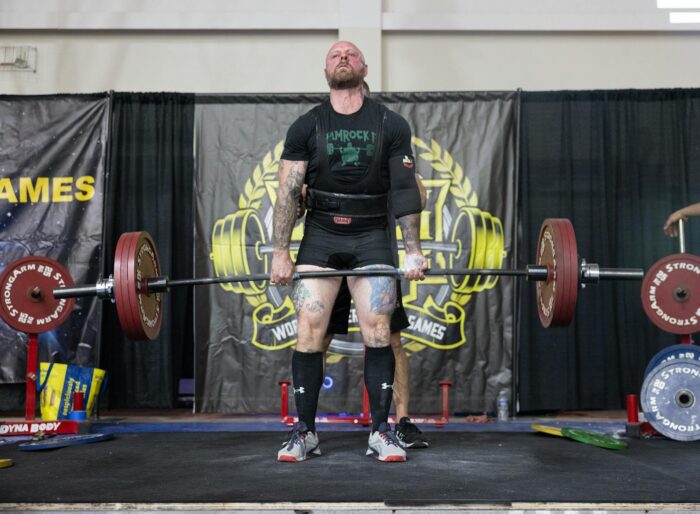
The other big name in this competition report is strongman Andrus Murumets, Estonia’s top police athlete the previous year. He set an Estonian record in the over 125 kg body weight category, recording a deadlift of 327.5 kilograms. That number needs little embellishment. If you have ever attempted a heavy deadlift in the gym, you understand what that kind of weight means.
Murumets bench pressed 200 kilograms. Another significant detail is that bench shirts were banned in Barcelona. That makes the result all the more telling, given how much supportive equipment can contribute in powerlifting. When equipment is restricted, the athlete’s own strength, technique and stability come more clearly to the fore.
Why does Murumets’ result resonate?
It is easy to look at results like these and focus only on the medal and the record. But there is a bigger picture. Estonian strength sports had a visible presence at the time, its athletes were competing at an international level, and names such as Andrus Murumets and Aivar Zarubin sent younger lifters a very clear message: you can reach the big stage from here, too.
Murumets’ background adds weight to the story. Working at the Tallinn Police Prefecture, he did not build his life solely around the gym. Combining work and training takes routine, patience and the ability to recover. That remains familiar territory for many recreational athletes today. The difference is simply that most of us do not deadlift 327.5 kilograms in competition.
The other Estonians also did well. Aivar Krupp from Tallinn finished with silver, while Aivar Reimann from Rakvere took bronze. This was more than an isolated successful performance; it was a strong showing overall. When several medals come from the same group, consistent work has gone on behind the scenes.
How do you build that level of strength?
The simple truth is that building serious strength takes more than adding weight to the barbell. A strong deadlift calls on your legs, back, grip, core and mind. If one link gives way, the lift fails. That is why a powerlifter’s training is rarely left to chance. Every heavy day has a purpose, as does every lighter week.
The starting position is especially important in the deadlift. The barbell must travel close to your body, your back must stay controlled, and the lift must not turn into frantic jerking. With heavy weights, every centimeter counts. In Barcelona, Murumets showed that his technique and strength held up even with an Estonian record’s worth of weight on the barbell.
A 200-kilogram bench press without a bench shirt is another strong indicator. It requires your shoulders, chest and triceps to work together, but even more than that, it takes repeated practice of the exact competition movement. Competition day is no time to experiment with a new technique. You have to trust what you have practiced in training.
Murumets prepares for his next big test
Police Director General Andropov is reportedly bringing his athletes together on 18 August. It is a small but telling detail. When athletes bring Estonia titles and records, they deserve recognition beyond the gym, too. The police chief himself competed in badminton at the world championships, adding a sporting connection of his own to the story.
For Murumets, the season does not end in Barcelona. On 21 August, he travels to Poland for another WRP event — in plain English, a competition for world record attempts. Competing at an event like this calls for a different kind of mental preparation. When you attempt records, you are doing more than defending a position. You are trying to push the limits.
So what happens when an athlete has just set a record and has to refocus straight away? They need to recover, maintain their form and keep their recent success from going to their head. That is often harder than it looks from the outside. The body is tired, but the calendar keeps moving.
FAQ: Murumets and the Barcelona world championships
Who became a world champion in Barcelona?
Aivar Zarubin became a world champion in Barcelona in the up to 110 kg weight class. A riot police officer and powerlifter, he secured an important international title for Estonian strength sports.
What record did Andrus Murumets set?
Andrus Murumets set an Estonian deadlift record in the over 125 kg body weight category. His recorded lift was 327.5 kilograms. He also bench pressed 200 kilograms.
What competition awaited Murumets in Poland?
On 21 August, Murumets traveled to Poland for WRP, a competition for world record attempts. It presented a major new challenge immediately after his result in Barcelona.
Author: Aare Kreilis
Source: WHO – physical activity.
Come and work out! ArtGym