
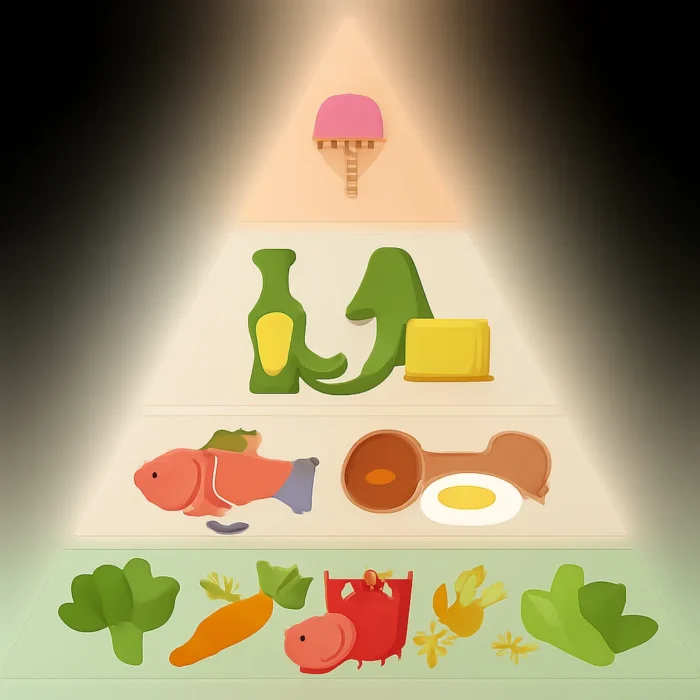
The new food pyramid that changes the game
This time, the new food pyramid represents more than a cosmetic change.
Major news is coming out of the US on the nutrition front: existing dietary recommendations have been completely reassessed. After decades, the emphasis on grains and carbohydrates is giving way to a model with a greater focus on protein and real food.
This does not mean going to extremes or demonizing carbohydrates altogether. Instead, it is a more measured, practical look at what actually supports health, body weight management and metabolism.
What does the new food pyramid actually say?
The focus has clearly shifted toward the following principles:
- More high-quality protein
Protein is not just for bodybuilders. It directly affects blood sugar, satiety, muscle mass maintenance and hormonal balance – especially after the age of 35. - Real food before ultra-processed food
Whole grains have not disappeared entirely, but they no longer form the foundation of the food pyramid. The recommendation is clear: the less refined, the better. - Significantly fewer carbohydrates
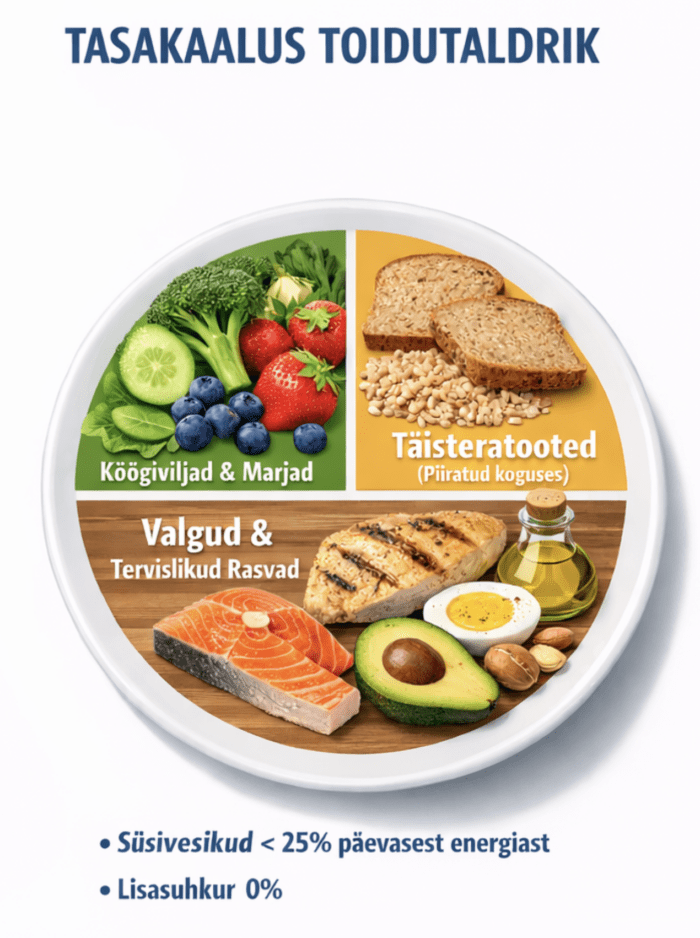
If your goal is weight loss and your insulin sensitivity is no longer ideal, carbohydrates should account for no more than ~25% of your daily energy intake. For some people, even less. By comparison, Estonia’s official recommendations allow carbohydrates to account for up to 60% of daily energy intake – which is simply too much for many people. - Fat is no longer the enemy
Fat is recognized as a normal part of energy intake and hormonal balance.
The limit on saturated fat (up to 10%) remains, but staying within it is entirely achievable if you prioritize:- olive oil
- avocados
- nuts and seeds
- Added sugars – preferably none at all
The recommendation is clear: the less, the better. Especially for children.
Why does all this matter?
Protein is more than just “muscle food.” When your diet contains too little protein, your body starts looking for quick energy – and that usually means sugar.
This is precisely why we see so many people in everyday life who:
- seem to eat “healthily”
- are constantly hungry
- feel tired
- struggle with cravings
The problem is not willpower. It is how the diet is structured.
The new US recommendations essentially confirm what practical experience has long shown:
When a meal starts with protein and is built around real food, everything becomes easier.
Cravings decrease, energy levels stabilize and eating no longer demands constant self-control.
Vegetables, fruit and meat – a fresh perspective
- Vegetables lower in starch, berries and fruit are preferred
- What matters is the glycemic index, not simply “plant-based vs. animal-based”
- Quality meat is fine, provided it does not come in the form of sausages or convenience products
Past fears about meat are giving way to a more balanced view: what matters is not whether you eat meat, but which meat you choose.
Children and sugar
For children under 4, the US recommendation is very clear: no sugar.
Practical experience also shows that this is entirely achievable – children do not “miss sugar” if they are not introduced to it at an early age. Often, the biggest stumbling blocks are the adults around them, who offer “a little treat” with the best of intentions.
Will all this reach Estonia too?
Hopefully so. US dietary recommendations have often set the direction for the entire Western world. If the focus shifts toward real food, protein and supporting metabolism, everyone stands to benefit – especially those who have spent years feeling, “I’m doing everything right, but I’m not seeing results.”
What Estonia’s nutrition heavyweights think: read here!
📚 References supporting the new pyramid’s main principles
- The principle behind the new US dietary guidelines reference link
- The official 2025–2030 U.S. Dietary Guidelines for Americans document is now publicly available and recommends prioritizing high-quality protein, healthy fats, fruit and vegetables, while avoiding heavily processed foods and added carbohydrates.
- Greater emphasis on protein reference link
- The new guidelines raise the recommended daily protein intake toward ~1.2–1.6 g/kg of body weight, supporting muscle mass, metabolism and the regulation of carbohydrate balance.
- Avoiding added sugar and processed foods reference link
- The new recommendations state that added sugar and ultra-processed foods are not part of a healthy diet and should be kept to a minimum or avoided altogether.
- The science behind nutrition
- The new guidelines draw on an extensive body of scientific literature emphasizing that minimally processed, nutrient-dense foods are associated with a lower risk of chronic disease and better metabolism.
🔬 Other relevant studies and theories
- The importance of protein in regulating appetite and metabolism reference link
- The Protein leverage hypothesis shows that the human body strives to get enough protein and that you may consume too many calories if your protein intake is too low.
- Protein, satiety and weight loss reference link
- Research suggests that a higher proportion of protein in your diet helps preserve muscle mass and increase satiety, which may support weight loss and metabolism.
Idea: Heikki Mägi — find detailed meal plans and activities here!
Edited by: Ai & ArtGym
Find out more: read here!




