
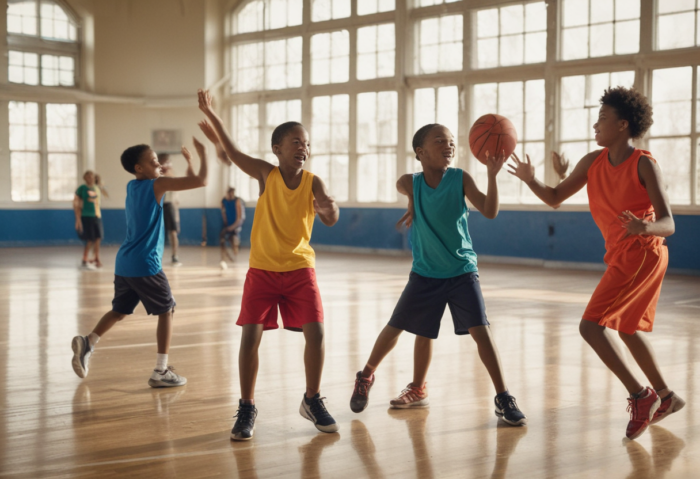
Physical education class and the joy of movement
The physical education class often sparks debate: should it be pure joy of movement, or a place to learn specific skills? With Estonian children moving less and less and overweight on the rise, it’s easy to blame the school lesson. The reality is more complicated. The national curriculum sets the learning outcomes students must achieve. And acquiring any new skill takes practice — it isn’t always comfortable or fun, but that is the very nature of the subject.
Why a physical education class isn’t just about the joy of movement
If someone claims that a physical education class should already be nothing but a source of joy in movement, they probably haven’t fully thought through what such a lesson would actually mean. Physical education is a school subject like math or the native language. Its content, goals and expected learning outcomes are set out in the national curriculum. And that is a good thing — a school system can’t function without shared goals.
Learning outcomes mean concrete skills. A child finishing third grade, for example, must be able to run one kilometer at a manageable pace. These days that can no longer be taken for granted for many children. You have to practice. Repeatedly and regularly.
It is precisely this need for practice that creates the conflict. Practicing is tedious and uncomfortable, whether you’re learning a new language, the piano or a sporting skill. Few people enjoy doing something they aren’t good at yet. But without practice, you get nowhere.
A simple truth: acquiring new skills is mostly hard and takes effort. Memorizing twenty new English words for the next lesson isn’t a pleasant task either. So why do we expect something completely different from physical education?
If we truly want the lesson to be pure play with no demands, the curriculum and assessment would have to be scrapped. But even then the real problem wouldn’t go away — many children can’t be bothered to move in their free time either, if nobody makes them. Good new habits rarely form on a voluntary basis. And plenty of things don’t seem fun at first but become easier and more enjoyable with practice.
A physical education class demands skills, not just running
When I hear this talk of the joy of movement, I always get the impression that people mean nothing but running, walking and aimless romping around in the gym. But a physical education class is much more than that. It includes ball games, gymnastics, skiing, jump rope exercises, relay races, formation drills and much more.
Every activity requires certain basic skills. How do you play volleyball if you can’t do an overhead pass? How do you do jump rope exercises if you can’t manage ten jumps in a row? How do you take part in formation drills if you don’t know the basic positions or can’t do turns on the spot? The answer is simple: you can’t.
And these skills don’t come after four or five trial attempts. They require consistency. The more exciting the activity, the more complex the skill set it demands. That is exactly why a foundation is laid first — and that foundation really is often routine.
Picture this: you’d like to do something fun, say organize a proper ball game tournament. But some of the children can’t dribble the ball while running. Another hasn’t mastered passing. A third doesn’t grasp the rules of the game. No game comes together — and then people say the lesson was boring. In reality, what was missing were skills that nobody bothered to spend time acquiring.
New skills and better physical fitness mean the freedom to choose. The more you can do, the more activities are open to you. That is the real source of the joy of movement — not abolishing the compulsory lesson, but building competencies that open doors.
Nor is the problem that teachers don’t try to vary the lesson. Every practitioner does their best to make the lesson interesting, achievable and matched to the class’s average level. But at some point the student, too, has to want to, bother to, and put in the effort. Without that, no lesson leads anywhere. Learning is always a two-way street.
Physical education class and physical activity at home
The real problem isn’t physical education as a school subject. Children mostly show up to the lesson and do move there. The problem lies in the fact that outside school hours, many children’s physical activity is critically low.
Think about it for a moment: a week has 168 hours. Physical education lessons appear on the timetable a couple of times a week, 45 to 90 minutes at a time. That’s a drop in the ocean. Even if every school lesson were perfect, it wouldn’t cover a child’s weekly need for movement.
The answer therefore lies in clubs, workouts, walking and family activities. Those are for parents to decide — school can’t force children into them. And this is where you can see what’s holding things back. The pattern is often like this: a child joins a workout class for a month or two, then starts saying they can’t be bothered anymore, and the parent gives in. No wonder the habit doesn’t form.
In summer, a family may go cycling and swimming. In autumn and winter, activity drops noticeably in many families. Some children play outside in the snow, but many sit in front of a screen. And in spring, when school once again has more important things going on, there simply isn’t time anymore.
A physical education class can’t make up for a week of too little movement. Expecting it to is naive. The class offers theory, technique instruction, an introduction to equipment and free movement, but all of it has to fit into a limited time frame.
That’s why we need to look at the bigger picture. If the whole family’s lifestyle is sedentary and built around comfort, no single school class will change that. Example works better than obligation.
The parent’s role and setting an example
A parent’s role in a child’s physical development is decisive. That doesn’t mean every mother or father has to be an athlete. But certain things leave a deep mark. If the family goes hiking every Sunday, the child grows up knowing that hiking is a normal thing to do. If the family spends the weekend on the couch, the child’s quiet choice stays the same.
The same applies to taking part in training sessions. If a child wants to quit an activity, a parent should think about why. Is the activity really a poor fit, or is it just the first hard patch? After the first six weeks, many people, adults included, want to drop a new habit. That doesn’t mean the activity is the wrong one.
In Estonia, young people’s physical fitness is also a problem. Every year a large number of young men are exempted from conscription on health grounds. We keep reading in the news about rising overweight and declining fitness. Yet at the same time there’s a loud outcry: “why do they have to,” “you can’t force them,” “you mustn’t make it compulsory.” That’s a contradiction worth thinking through.
The thinker Sven Grünberg has said: “Nothing happens suddenly; everything important comes only as the result of constant work. There is nothing that doesn’t become easier with practice.” That sentence holds true in sports, in school and in life in general. The question is why this wisdom tends to be denied when it comes to physical education.
FAQ
Should physical education be graded?
Grading encourages effort and independent practice. Without it, many children’s effort would drop noticeably and skill development would be left to chance. A grade doesn’t have to be a punishment. It’s feedback that helps you see where you are and where you should be heading.
How can you build a child’s movement habit outside school?
Start simple: walking to school, cycling to the shop, a hike or a swim on weekends. Pick one training activity and keep your child in it for at least half a year. Consistency matters most: a couple of times a week, regardless of weather and motivation.
What should you do if your child doesn’t want to go to training?
First, ask what the real reason is. Often the problem is specific: a difficult exercise, trouble with other kids or tiredness after a long school day. If the reason is temporary, it’s worth sticking with the habit. If the activity truly isn’t a good fit, find a new one together rather than giving up on movement altogether.
Author: Janar Rückenberg
Come to training! ArtGym




