Protein, fat and carbohydrates: the simple truth
Protein, fat and carbohydrates are the three words most gym nutrition talk revolves around. If you want to recover better, build muscle or simply feel stronger in training, you need to be clear on the role each of them plays.
The simple truth: none of them works alone. Protein provides the building material, carbohydrate provides fuel for training, and fat helps keep the whole system running. If one part is constantly missing, your body lets you know fairly quickly.
Why do protein, fat and carbohydrates matter at all?
Protein is like a set of building blocks for the body. When a house gets bigger, it takes more material. The same logic applies to muscles: training breaks muscle fibers down slightly, and amino acids help repair them and build them back stronger.
A practical starting point is an old bodybuilding rule: 2 grams of protein per 1 kilogram of body weight. This doesn’t mean you have to weigh every bite, but it gives you a simple direction. If you weigh 80 kg, you can already see that muscle won’t grow on a morning coffee and a single sandwich alone.
Carbohydrates are the main energy source for your muscles. When there are too few, training intensity drops, muscles tire faster and progress stays meager. You feel this especially on leg or back day, when the body asks for more fuel than it does in a smaller workout.
Fat is tied to calories, hormones and long-lasting energy. A moderate fat intake supports hormone release in men, especially testosterone. Cutting fat to zero doesn’t automatically make your nutrition better. Often it makes you feel much worse.
How do protein, fat and carbohydrates work on your plate?
Protein: recovery and muscle building
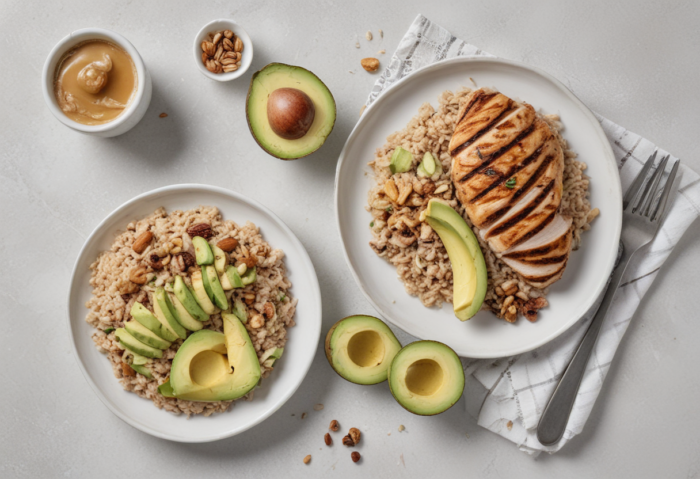
Good protein sources include chicken breast, turkey breast, lean red meat, eggs, low-fat dairy, fish and protein powders. Animal-based proteins contain eight essential amino acids that muscles need for growth and recovery.
If you have a very slim build and mass just won’t come, protein sources with a moderate fat content can be a sensible choice. If you want to gain mass but keep your body fat percentage under control, chicken, turkey, fish, leaner dairy and protein powders are a better fit.
Carbohydrates: fuel for training
For carbohydrates, the minimum given is 4 grams per 1 kilogram of your body weight. Depending on your body fat percentage, metabolism and how hard you train, the need can rise to as much as 6-8 grams.
When you train larger muscle groups, your body needs more fuel. If your strength training includes a day for legs, back and chest, your daily carbohydrate need can be 6-8 grams per 1 kilogram. Smaller body parts such as abs, calves, shoulders and arms often get by on 4-6 grams.
For a beginner or a woman trying to gain mass, body fat percentage may rise slightly at first. In that case it makes sense to keep carbohydrates at up to 6 grams on large muscle group days and up to 4 grams on smaller muscle group days, per 1 kilogram of body weight.
Fat: balance, not an enemy
Good fat should make up roughly 20-25% of your daily calories. If you choose low-fat protein products, you already get some of your fat from there. A handful of nuts, salmon, olive oil and other cold-pressed oils are also good options.
On the bad side, it’s worth limiting fried foods, fatty cuts of meat, burgers and fatty dairy products. You can eat them occasionally, but they shouldn’t become an everyday habit.
Practical tips for everyday eating
Don’t build your day around just 3-4 big meals. Smaller portions are easier to digest, and for many people they also work better while building muscle. The classic recommendation is to split your food into 5-6 meals and eat every 3-4 hours.
If you lead a busy life, shakes and planning help. This doesn’t have to mean a complicated menu. It’s enough to know in advance where the day’s protein will come from, when you’ll eat carbohydrates and which fats will stay on your plate.
For carbohydrates, mostly choose natural sources: potatoes, oat flakes, brown rice, fruit and yams. You can get carbohydrates faster from honey, raisins and grapes. Refined options such as low-fat ice cream, buns and bread can fit into your menu, but they shouldn’t be the foundation.
So what actually happens if you cut carbohydrates or fat too much? The body starts to conserve. Training gets harder, recovery gets slower, and protein is no longer used as well to build muscle.
FAQ: protein, fat and carbohydrates
Is protein alone enough to build muscle?
No, it isn’t. Protein provides the building material, but carbohydrates and fat provide calories and help the body use protein better. Without energy, building muscle is hard.
Should you avoid fat on a diet?
No. The amount of fat should be moderate, not zero. Good fat supports hormone production and supplies necessary fatty acids. The problem is rather too much fried and saturated fat.
When should you eat more carbohydrates?
More carbohydrates suit the heavier training days, especially leg, back and chest training. On lighter days the amount can be smaller.
Translated by Liis Arula from M&F magazine
Source: Turg.Fitness.ee
Come and train! ArtGym