
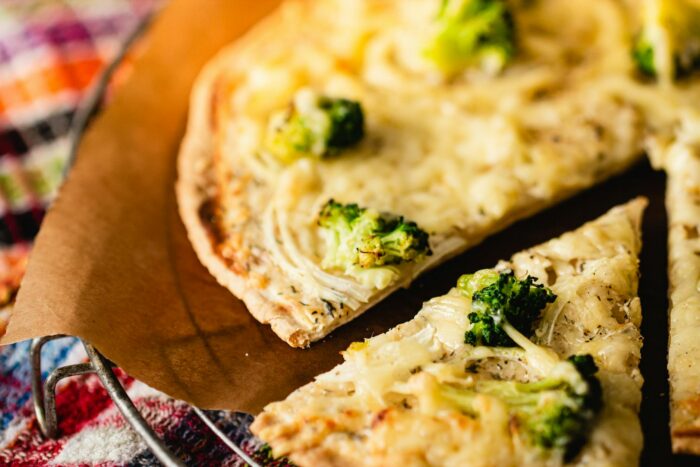
Protein pizza crust for homemade pizza
A protein pizza crust is a good option when you want pizza but don’t want to end the evening full of wheat flour and feeling heavy. This recipe makes a thin crust that’s high in protein and relatively low in carbohydrates. Ultimately, the flavor still comes from the toppings, so the base needs to be simple, sturdy and not too dry.
Why does a protein pizza crust work?
A regular pizza crust comes down to a simple formula: flour, liquid, a little fat and heat. In this recipe, protein powder and pea protein do some of that work. Rolled oats give the mixture body, egg white binds it together, and coconut oil helps the surface turn lightly crisp in the pan.
To be honest, you shouldn’t expect a classic Italian pizza crust. This is more of a homemade option for anyone who trains. Thin, quick and practical. It works well if you haven’t had much protein during the day or want something savory after a workout.
The most important thing is the consistency of the batter. If the mixture is too thick, the result will be dry. If it’s too runny, the crust will fall apart in the pan. It should have the consistency of pancake batter, just as the original recipe specifies.
Protein pizza crust: ingredients
This recipe makes 2 thin pizza crusts. It makes sense to cook both and give each a different topping. You could top one with chicken and vegetables, and the other with tuna or simply tomato paste, cheese and onion.
- Protein powder, unflavored 30g
- Pea protein 10g
- Wholegrain rolled oats 30 g
- Egg white 130g
- Salt / Pizza seasoning
- Coconut oil
Unflavored protein powder works better here than a sweet version. A vanilla or chocolate crust might sound interesting on paper, but it usually doesn’t work with tomato paste and pizza seasoning. Go easy on the salt at first, as some toppings are already salty.
How do you make a protein pizza crust?
The method is simple, but the pan temperature makes a big difference. If the pan is too hot, the crust will burn before it cooks through. If it’s too cool, the crust will stay soft and fragile.
- Blend all the ingredients using an immersion blender or food processor. The mixture should have the consistency of pancake batter.
- Heat a frying pan and add 3g of coconut oil. Pour 1/2 of the mixture into the pan and reduce the heat by half.
- Fry the pizza crust on both sides.
- Transfer the pizza crust to a baking tray and add your pizza toppings. Start with tomato paste, then add the rest…
- Place the pizza in the oven and bake for 10-15 minutes. Enjoy!
A quick tip: let the first side cook undisturbed until the edges hold their shape. That makes it easier to flip. If the crust tends to break, the mixture was probably too thin or you flipped it too soon.
The crust doesn’t need a long spell in the oven. The aim at this stage is to melt the cheese, heat the toppings and give the pizza its finishing touch. Very watery toppings, such as lots of tomatoes or mushrooms, can make the crust soft. Squeeze out excess moisture or briefly cook these toppings beforehand.
Practical tips and nutritional information
This recipe works well on days when you want to keep your carbohydrates in check but don’t want another dry chicken breast. The simple truth is that sticking to your plan is much easier when the food tastes decent.
The mixture makes 2 pizza crusts. The nutritional values for one pizza crust are:
- 190 KCal
- 5 Fat
- 24 Protein
- 9 Carbohydrate
- 2 Dietary fiber
Choose your toppings to suit your goal. If you want to keep the calories lower, use a thinner layer of cheese and more vegetables. If you need a more substantial meal, add chicken, ground beef or egg. Stick to plain tomato paste rather than a sugary pizza sauce.
So what actually changes? You still get the pizza experience, but the macros are different. One crust provides 24 protein and 9 carbohydrate, making it a pretty sensible choice even in the evening, when a regular bread crust no longer fits your plan.
Protein pizza crust FAQ
Can I use flavored protein powder?
You can, but unflavored powder is a better choice. Sweet flavors often clash with savory pizza toppings, especially if you add tomato paste and pizza seasoning.
Why does the crust break in the pan?
The usual cause is a mixture that’s too runny or flipping the crust too soon. Let the edges set before you try to move it, and keep the heat moderate.
Can I make this crust ahead of time?
Yes, you can fry one crust in advance and add the toppings later. It’s still best eaten the same day, though, because a thin protein crust dries out faster than regular pizza dough when left to stand.
Author: Peep Reinart
Come and train! ArtGym




