Recovery drink after a workout: when to drink it
A recovery drink is a simple way to give your body fluid, protein and carbohydrates quickly after a hard workout. It’s not a magic potion, but at the right moment it can make recovery more comfortable and help you be better prepared for your next training session.
Why does a recovery drink matter at all?
After a workout, your body has done its work. Your muscles have been under training load, glycogen stores have dropped and you’ve lost fluid through sweat. If the workout was a light walk or a short bit of movement, there’s no need to think about it. Regular food will do the job.
But if the training session was long, intense or left your muscles properly tired, recovery becomes more important. Then the question is simple: can you eat a proper meal soon, or will it be several hours until you eat? This is where a recovery drink comes in.
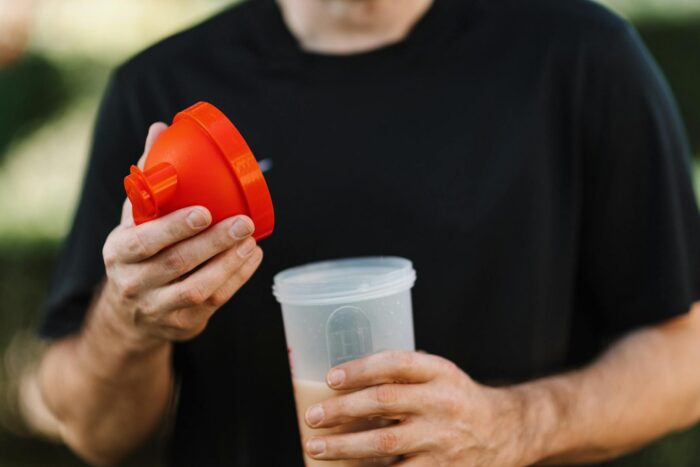
The original idea was very practical. After a workout, most people don’t feel like eating chicken breast and potatoes in the locker room. A shake is easier. Mix it with water, drink it and get on with your day. That convenience is exactly why many gym-goers end up reaching for a recovery drink.
A simple truth: a recovery drink doesn’t replace good nutrition. If you fall short on protein, carbohydrates and calories over the course of the day, one drink won’t save the situation. It can, however, help fill the gap right after a workout, especially when your meal is delayed.
How does a recovery drink work after a workout?
The idea of a recovery drink is to give your body quickly available energy and building material. In liquid form it’s easy to consume even when your appetite hasn’t returned yet. Some people are hungry right after a hard workout. For others it takes an hour before real food even sounds appealing.
Proteins provide amino acids, which the body uses to repair muscle tissue. Carbohydrates help refill energy stores. Water helps restore fluid balance. Some products also contain minerals or other ingredients that support recovery, but the basic logic stays the same: protein, carbohydrate and fluid.
So what actually happens? Training is a signal to the body that the muscles need to adapt. Food provides the material for that. If there’s a long gap after a workout and you eat nothing, it doesn’t mean your progress disappears. But from a recovery standpoint it isn’t the best habit, especially if you train often.
- A recovery drink is convenient, because it’s easier to drink than to start eating a big meal right after a workout.
- For many people, calories consumed in liquid form are easier to digest than solid food.
- A good recovery drink helps create better conditions for muscle mass development, as long as your nutrition across the whole day is in order.
- A quality recovery drink is formulated so that its ingredients support the same goal: recovery from training load.
- You don’t have to measure out every ingredient separately. Mix with water and drink.
How do you choose a good recovery drink?
A good recovery drink doesn’t have to be the most expensive or the flashiest tub on the shelf. First, check whether it suits your training and your daily diet. If your goal is muscle building, protein and carbohydrates play a bigger role. If your goal is simply light recovery after a moderate workout, regular food and water may be enough.
Look at the ingredients, not just the advertising slogan. Does the drink contain protein? Does it contain carbohydrates? How much sugar does it have? Is the flavor something you can actually drink regularly? That last one sounds simple, but it matters. The best formula won’t help if the drink just sits in the back of the cupboard.
Timing doesn’t have to be frantic. You don’t have to open the shaker a second after your last rep. It makes sense to drink or eat after a workout when it fits your daily schedule. If you know a proper meal is coming soon, a shake isn’t always necessary. If it will be a long time until you eat, a recovery drink is a practical solution.
Honestly, it’s worth starting with one question: what am I actually missing? Some people need more protein. Some need carbohydrates, because their workouts are long and they burn a lot of energy. Some just need the habit of having something sensible after a workout. The same drink isn’t equally necessary for everyone.
Recovery drink: common mistakes and FAQ
One common mistake is turning a recovery drink into a miracle product. You drink the shake, but for the rest of the day your nutrition is random. That doesn’t work. The other mistake is the opposite: being afraid of every extra calorie and leaving your body completely empty after a hard workout. In both cases, it’s worth looking at the big picture.
If you train several times a week, try to notice how you feel the next day. Are your muscles just tired, or are you genuinely running on empty? Does your strength drop quickly during workouts? After an evening workout, do you end up skipping the meal? These signs help more than any one general recommendation.
Do you need a recovery drink after every workout?
No. If the workout was light and you’ll eat a regular meal soon, a separate drink is often unnecessary. If the workout was hard or it will be a long time until you eat, it’s a convenient option.
Does a recovery drink build muscle by itself?
No. Muscle growth comes from the combination of training, enough energy, protein, sleep and consistency. A recovery drink can support this, not replace it.
Which is better: a drink or real food?
Real food is the foundation across the day. A drink is a convenient tool when you don’t have the time, appetite or opportunity to eat properly after a workout.
Author: Turg.Fitness.ee
Come and train! ArtGym